Chevrolet Spark
Importing a used Chevrolet Spark from the USA
The Chevrolet Spark is a genuine A-segment city car — the smallest vehicle Chevrolet sold in North America — and importing one from the United States is a niche but occasionally worthwhile exercise, usually for collectors, badge enthusiasts or buyers after a specific specification. USCar Trader acts as an independent broker for used US vehicles; we do not sell new cars and add no margin to the vehicle price. One point deserves emphasis up front: the Spark is not a US-built car, which directly affects the customs treatment described below.

Production years and key changes
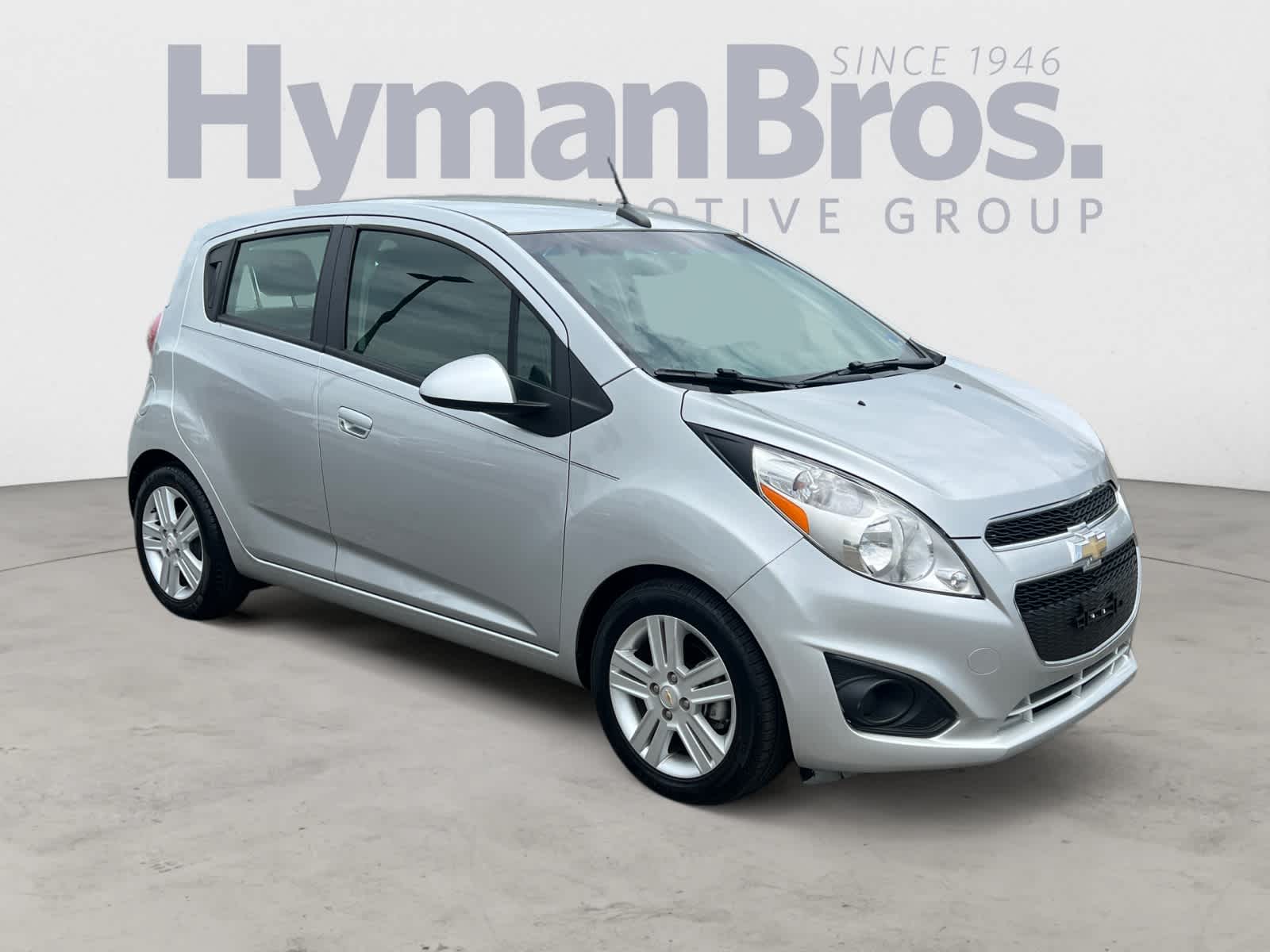
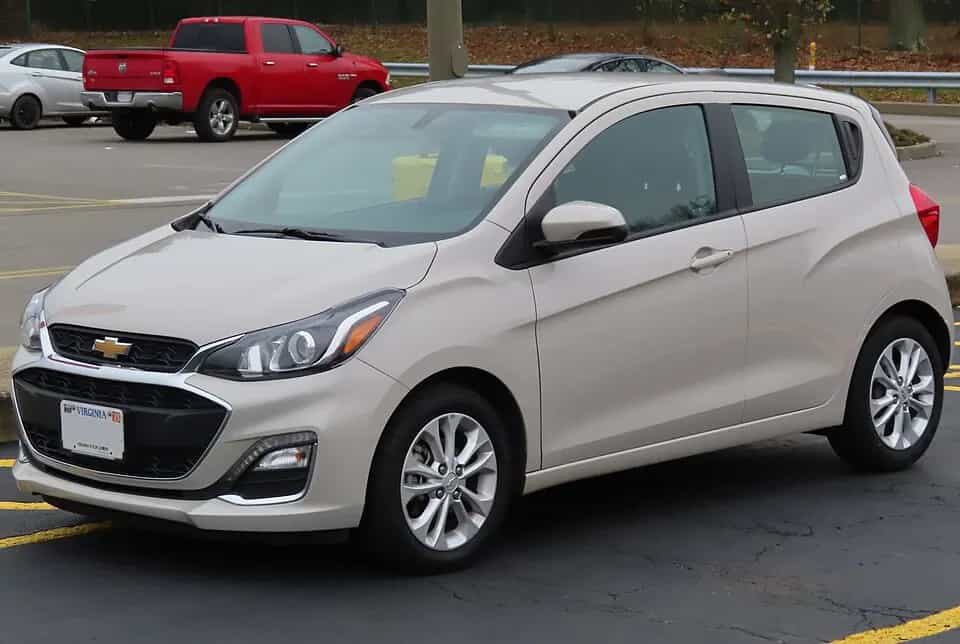
Chevrolet sold the Spark in the US from the 2013 model year onward. The third generation (M300) covered roughly 2013 to 2015, recognisable by its rounded, tall-hatch shape and hidden rear door handles. The fourth generation (M400) ran from 2016 to 2022, sharper in its styling and slightly longer, and it was the version that carried the Spark to the end of its US life. Alongside the petrol cars, Chevrolet offered the Spark EV between 2014 and 2016 in select markets — a fully electric variant with strong low-end torque that is now a curiosity in its own right.
What is under the hood
US Spark models are front-wheel drive with small four-cylinder petrol engines. The M300 used a 1.2-litre unit of around 84 hp; the M400 stepped up to a 1.4-litre Ecotec four producing about 98 hp. Buyers chose between a five-speed manual and a continuously variable transmission (CVT). Neither is quick — this is a car built for city commuting and fuel economy rather than motorway cruising — but the manual cars in particular are simple and light. The Spark EV, where available, used an electric motor with notably high torque for its size and a modest battery suited to urban range.
Trims and body styles
The Spark was sold only as a five-door hatchback. US trims ran through LS, 1LT and 2LT, with the ACTIV crossover-style version added on the fourth generation, bringing raised suspension, cladding and roof rails. Even top trims were modestly equipped by European standards, though later cars gained a touchscreen with smartphone integration, which was unusual for the class and price point at the time.
What the US market offers
Sparks were inexpensive when new and were often bought as first cars, fleet runabouts or budget commuters, so the US used pool tends toward higher mileage and cosmetic wear. Clean, low-mileage examples exist but require patience to find. Because the car is so small and cheap, it rarely receives the same careful maintenance an enthusiast car would, so history and condition vary widely. As always, a VIN check tells you which region a car came from and whether the odometer story holds up.
Who this import is for
Honestly, the Spark is a specialist import rather than a mainstream one. It appeals to someone who wants the specific US-market Spark or the rare Spark EV, a collector assembling small-car variants, or a buyer with a particular reason to own this exact car. For everyday A-segment motoring there are closer-to-home options; but if you specifically want a US Spark, the process below is straightforward.
Technical data and figures
| Vehicle class | A-segment city car (5-door hatch) |
| US model years | 2013–2022 |
| Generations | M300 (2013–2015), M400 (2016–2022) |
| Engine (M400) | 1.4 L Ecotec inline-4 |
| Output (M400) | approx. 98 hp |
| Engine (M300) | 1.2 L inline-4, approx. 84 hp |
| Transmission | 5-speed manual or CVT |
| Drivetrain | Front-wheel drive |
| Length | approx. 3,636 mm |
| Wheelbase | approx. 2,385 mm |
| Curb weight | approx. 1,050 kg |
| Seating | 4–5 |
| EV variant | Spark EV (2014–2016, where offered) |
| Fuel | Petrol (EV variant: electric) |
| Country of assembly | South Korea (GM Korea) |
Reliability: trouble spots to check
Mechanically the Spark is simple, and the little Ecotec engines are generally durable when serviced. The most-discussed weak point is the CVT: some owners report jerky low-speed behaviour, and the transmission is sensitive to neglected fluid changes, so a manual car sidesteps that concern entirely. Other typical items are minor — worn suspension bushings, tired clutches on high-mileage manuals, and the usual small-car interior wear. On the Spark EV, battery condition and available range are the decisive check. None of these are exotic, but on a cheap car a poor maintenance history matters more than the purchase saving.
US vs. Europe differences
US Sparks carry amber side markers, an mph-dominant speedometer and US headlight aim, and no factory rear fog lamp — all standard items to address for German registration. Equipment mapping differs slightly from any European small car of the era, but the Spark's simplicity means there is little complex electronics to adapt.
How the import works
The sequence is the same regardless of car size: choose a specific Spark, run the VIN and origin check, buy through escrow, ship by ocean freight to a European port, clear customs, pass TÜV individual approval (Einzelabnahme), and register. On a low-value car it is especially worth being clear-eyed about the fixed costs of freight and approval before committing.
Import duty, VAT and fees
Key point: duty depends on the plant of build; only a VIN check secures the 0% rate. Import VAT of 19% applies regardless.
This is where the Spark differs from a US-built vehicle. Because it is assembled in South Korea, it does not have US origin, so the 0% preferential duty under Regulations (EU) 2026/1455 and 2026/1461 generally does not apply — that relief is reserved for cars of provable US origin. The standard EU passenger-car import duty of 10% will normally apply instead; the exact rate depends on the plant origin documented for your specific car via the VIN. Separately and always, the 19% German import VAT (Einfuhrumsatzsteuer) applies on top, calculated on the customs value plus duty and freight. We never describe any import as duty-free, and we pass all charges through with no margin.
From modifications to registration
Expect to retrofit a rear fog lamp, adapt the lighting to European standards, and document the odometer in miles or convert to kilometres. Without a COC, the Spark goes through individual approval, where an inspector checks lighting, emissions paperwork and the car's basic conformity before releasing the documents for registration.
Pre-buy inspection points
Confirm the VIN matches car and title; obtain a Carfax or AutoCheck report and check for salvage, flood or odometer flags; on CVT cars review the service history for transmission fluid changes; inspect for rust on rocker panels and the underbody; verify the clutch on manual cars; and, for a Spark EV, insist on a battery health check.
What buyers ask most
Is the Chevrolet Spark built in the USA?
No. It is assembled by GM in South Korea, so it does not carry US origin.
Does the 0% EU import duty apply to a Spark?
Generally no. The 0% rate is limited to cars of provable US origin. A Korean-built Spark normally attracts the standard 10% duty, with the exact rate depending on the documented plant origin.
Do I still pay import VAT?
Yes. The 19% German import VAT (Einfuhrumsatzsteuer) always applies, regardless of the duty rate.
Should I choose the manual or the CVT?
The manual avoids the CVT's known low-speed and maintenance sensitivities and is simpler to keep running.
What about the Spark EV?
It is rare and appealing to collectors, but battery health and remaining range are the make-or-break checks.
Is the Spark reliable?
The petrol engines are durable when serviced; the CVT is the main concern, and cheap-car neglect is the real risk.
Does importing such a cheap car make sense?
Only for a specific reason — a wanted variant, the EV, or a collection — because fixed freight and approval costs are the same as for a larger car.
Can USCar Trader handle everything?
Yes. As an independent broker we manage sourcing, escrow, freight, customs and TÜV coordination.
To explore your options, see Chevrolet in the Carhub, compare the Spark with the Chevrolet Sonic or the compact Chevrolet Trax, and view current Spark listings.