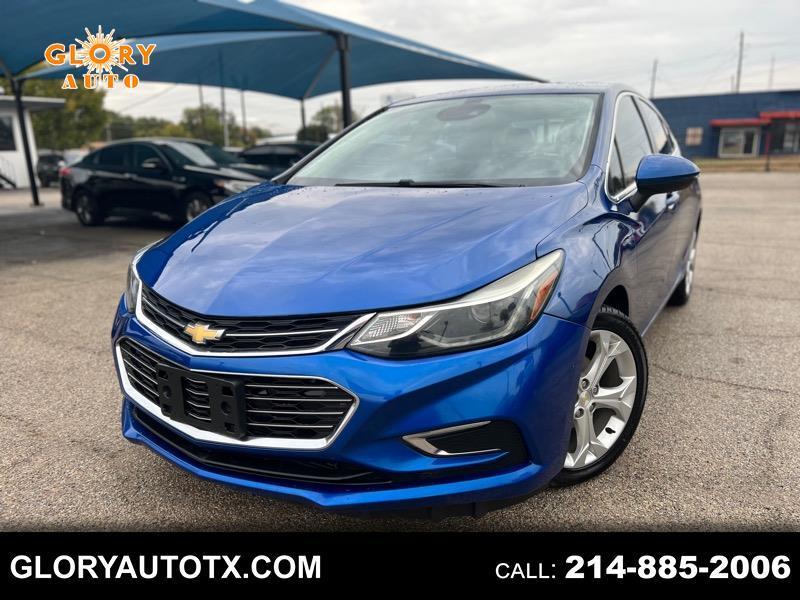
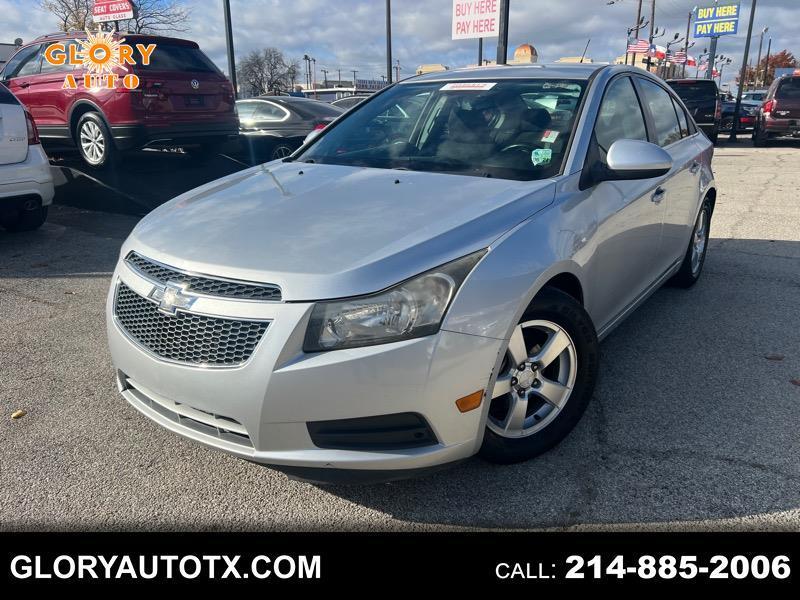
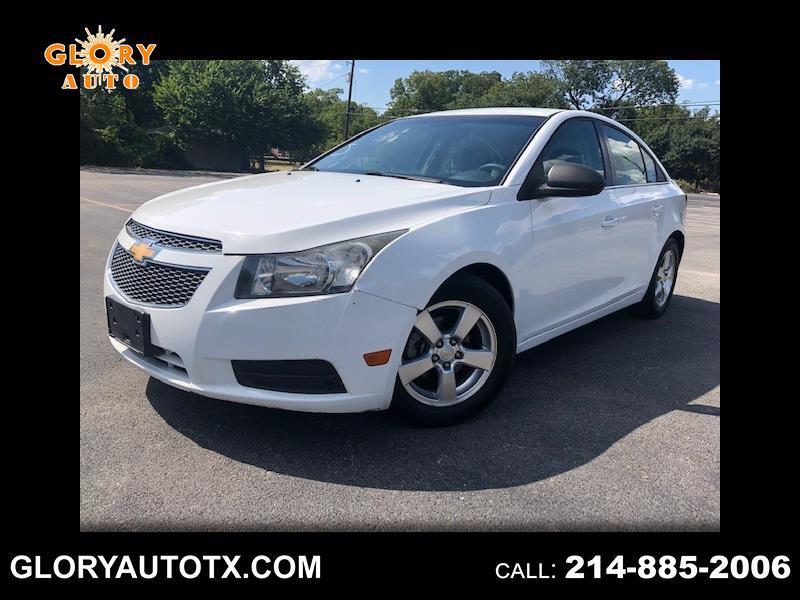
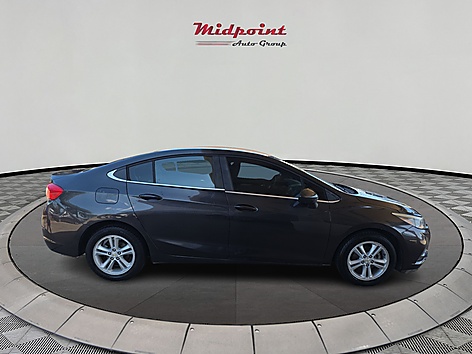
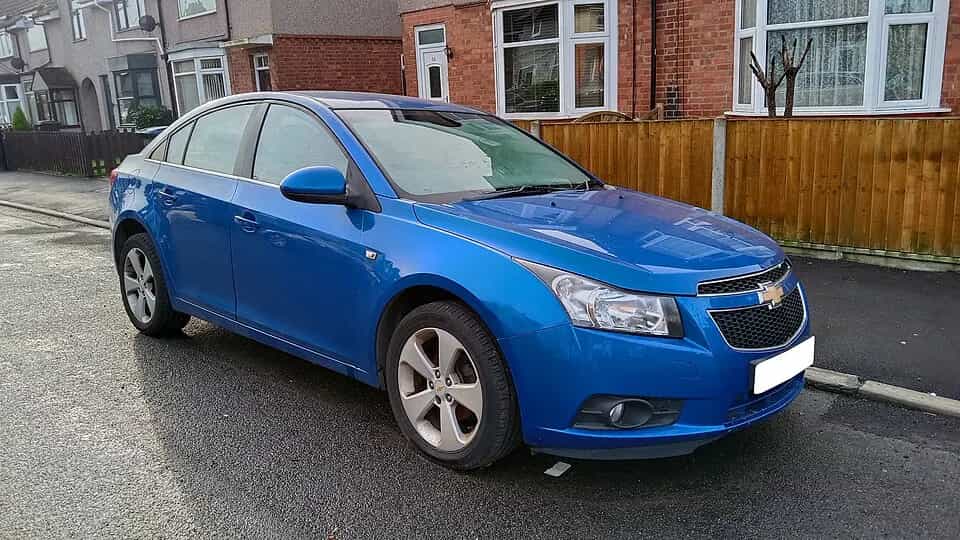
Chevrolet Cruze
Importing a used Chevrolet Cruze from the USA
The Chevrolet Cruze is a compact sedan (and, in its second generation, a hatchback) that America bought in enormous numbers before production ended in 2019. That volume is exactly what makes it interesting to import: the US used market is full of clean, low-mileage, single-owner cars at the affordable end of the spectrum. For buyers who want a turbocharged compact with an American history and a specific specification, sourcing one from the States is straightforward. USCar Trader works only as an independent broker — you buy the car, we organise the path from a US lot to your German registration.

Production years and key changes
The first-generation Cruze (chassis J300) reached the US for the 2011 model year and ran through 2015, built primarily at GM's Lordstown, Ohio plant. It replaced the Cobalt as Chevrolet's compact and was offered only as a four-door sedan in America. The second generation (D2LC) arrived for 2016, lighter and roomier, and added a five-door hatchback for 2017. Chevrolet ended Cruze production in North America in March 2019 when the Lordstown plant closed, which fixes the pool of importable cars at the 2011–2019 range.
What is under the hood
The engine that defines the Cruze is the 1.4-litre Ecotec turbo four. In the first generation it made around 138 hp; the second-generation 1.4 turbo (LE2) produced about 153 hp and paired with a six-speed manual or six-speed automatic. First-generation base cars used a naturally aspirated 1.8-litre. Chevrolet also offered diesels: a 2.0-litre turbo-diesel (about 151 hp) in 2014–2015, and a 1.6-litre turbo-diesel (about 137 hp) in the 2017–2018 second generation, the latter available with a nine-speed automatic or six-speed manual — a genuinely rare and economical import. All Cruzes are front-wheel drive.
Trims and body styles
US trim levels ran L, LS, LT and the top Premier (called LTZ early on), plus the fuel-focused Eco and the diesel models. Sedans dominate the used pool; the second-generation hatchback is scarcer and worth seeking if you want the extra practicality. Premier cars add leather, heated seats, and more driver assistance — worthwhile options that were common on lease cars.
What the US market offers
Because the Cruze was a fleet and retail volume seller, supply is deep and prices at source are among the lowest of any car we broker. Expect to find well-kept examples from 40,000 to 110,000 miles. Sun-belt cars avoid the road-salt corrosion that plagues rust-belt examples — an important filter, since many Cruzes lived in northern states near the Lordstown plant. We help you target dry-climate cars with clean histories.
Who this import is for
A used Chevrolet Cruze import suits buyers who want an inexpensive, economical compact with a distinctive American badge, a manual-transmission turbo car, or the unusual diesel variants that were never common in Germany. It is a pragmatic import rather than a status one — and the plentiful US supply is its strongest argument.
Technical data and figures
| Attribute | Detail (typical US-market examples) |
|---|---|
| Body styles | 4-door sedan (both generations); 5-door hatchback (2017–2019) |
| Generations | 1st (J300): 2011–2015; 2nd (D2LC): 2016–2019 |
| Turbo petrol | 1.4 L Ecotec turbo, ~138 hp (gen 1) / ~153 hp (gen 2) |
| Base petrol (gen 1) | 1.8 L naturally aspirated |
| Diesel options | 2.0 L TD ~151 hp (2014–15); 1.6 L TD ~137 hp (2017–18) |
| Transmission | 6-speed manual, 6-speed auto; 9-speed auto (1.6 diesel) |
| Drive | Front-wheel drive |
| Fuel | Petrol (regular) or diesel |
| Length (gen 2 sedan) | ~4,666 mm |
| Seating | 5 |
| Boot (gen 2 sedan) | ~408 litres |
| Fuel tank | ~47 litres |
| Assembly | Lordstown, Ohio (US) and Mexico — check VIN for plant/origin |
Reliability: trouble spots to check
The Cruze is generally cheap to run but has documented weak points, most tied to the 1.4 turbo. Coolant leaks are the headline issue: the plastic water-outlet housing and thermostat housing crack and weep, and the coolant reservoir cap can fail. The PCV system built into the intake manifold and valve cover is a known failure that causes vacuum leaks and rough running — a common, inexpensive fix once diagnosed. Some cars consume oil, and the valve cover itself can crack. A widely known recall covered a corroded negative battery cable that could cause no-start or, rarely, fire. The 6T40 automatic can shift harshly if fluid is neglected. None of this is unusual for the class; a car with service records and no coolant staining is a safe bet.
US vs. Europe differences
The Cruze was sold in Europe too, but US cars differ in detail: amber side-marker lamps, an mph speedometer, US-spec headlights, and — importantly — usually no rear fog lamp. Infotainment on US cars centres on Chevrolet MyLink with support for smartphone mirroring on later cars; the systems work here without issue. Diesel emissions hardware on US-market Cruze diesels was configured for US regulations, so registering one requires the individual-approval route to confirm compliance.
How the import works
The path is: choose the car and review its history report and build data; verify the VIN and the assembly plant to establish origin; use escrow rather than paying the seller directly; arrange inland US transport and ocean freight to a North European port; clear EU customs on arrival; take the car through TÜV inspection and individual approval (§21 StVZO); and finally register it locally. We coordinate each step so you are never chasing a US seller or a shipping line yourself.
Import duty, VAT and fees
Key point: duty depends on the plant of build; only a VIN check secures the 0% rate. Import VAT of 19% applies regardless.
Two charges apply and they are separate. First, EU import duty, whose rate depends on the car's actual origin. A Cruze built in Lordstown, Ohio can qualify for the 0% preferential rate under Regulations (EU) 2026/1455 and 2026/1461 — but only with provable US origin (VIN and plant), direct shipment, and within the window from 1 July 2026 to 31 December 2029. A Cruze built in Mexico or elsewhere does not qualify, and the standard 10% third-country car rate then applies. Second, the 19% German import VAT (Einfuhrumsatzsteuer) always applies, calculated on the customs value plus any duty and freight. We never claim guaranteed duty-free status and we add no margin — you pay the seller, the shipping and the state charges directly.
From modifications to registration
Typical adaptation includes fitting or activating a rear fog lamp, coding or replacing the instrument cluster so it reads in km/h, adjusting the headlights to the European beam pattern, and addressing amber side-marker function. The odometer reading must be in kilometres on the registration document. For diesel cars, emissions documentation is part of the approval.
Pre-buy inspection points
Before buying a used Chevrolet Cruze, confirm: (1) the VIN matches title and listing, and note the plant code for origin; (2) a clean Carfax or AutoCheck with no accident, salvage or flood record; (3) no coolant staining, cracked reservoir or overheating history — the key Cruze weak spot; (4) documented service, especially coolant and transmission fluid; (5) clear title (not salvage or lemon); (6) evidence the battery-cable recall was completed; (7) rust-free underbody, favouring a dry-state car.
What buyers ask most
Can a Chevrolet Cruze be imported with 0% customs duty?
Only if the specific car is of provable US origin — for the Cruze that means a Lordstown, Ohio build confirmed by VIN — shipped directly to the EU within the 2026–2029 window. Mexican-built cars do not qualify and pay the standard 10% duty. The 19% import VAT always applies regardless.
Which engine should I look for?
The 1.4 turbo is the mainstream choice and cheap to run once its coolant and PCV weak points are checked. The rare 1.6 diesel is the most economical but needs emissions documentation for German registration.
Is the Cruze reliable enough to import?
Yes, with a careful history check. Its issues are well documented and mostly inexpensive; a car without coolant leaks and with service records is a dependable, low-cost compact.
Sedan or hatchback?
Sedans dominate the US pool. The second-generation hatchback is scarcer but more practical, and worth seeking if space matters to you.
Do US Cruzes have a rear fog lamp?
Usually not, so fitting or activating one is a normal part of the TÜV adaptation.
How long does the import take?
Ocean freight is typically three to six weeks, on top of US inland transport, customs clearance and the approval process.
Can I still get parts in Germany?
Yes. The Cruze shares many components with other GM Ecotec cars, and service parts are available through aftermarket and specialist channels.
What mileage is realistic?
Clean US examples commonly fall between 40,000 and 110,000 miles; we focus on dry-state, single-owner cars with documented service.
Start your search with Chevrolet in the Carhub, compare related sedans such as the Chevrolet Malibu, the Chevrolet Impala and the smaller Chevrolet Sonic, or view current Cruze listings. As an independent broker we verify the VIN and plant origin and organise freight, while the choice of car stays entirely yours.