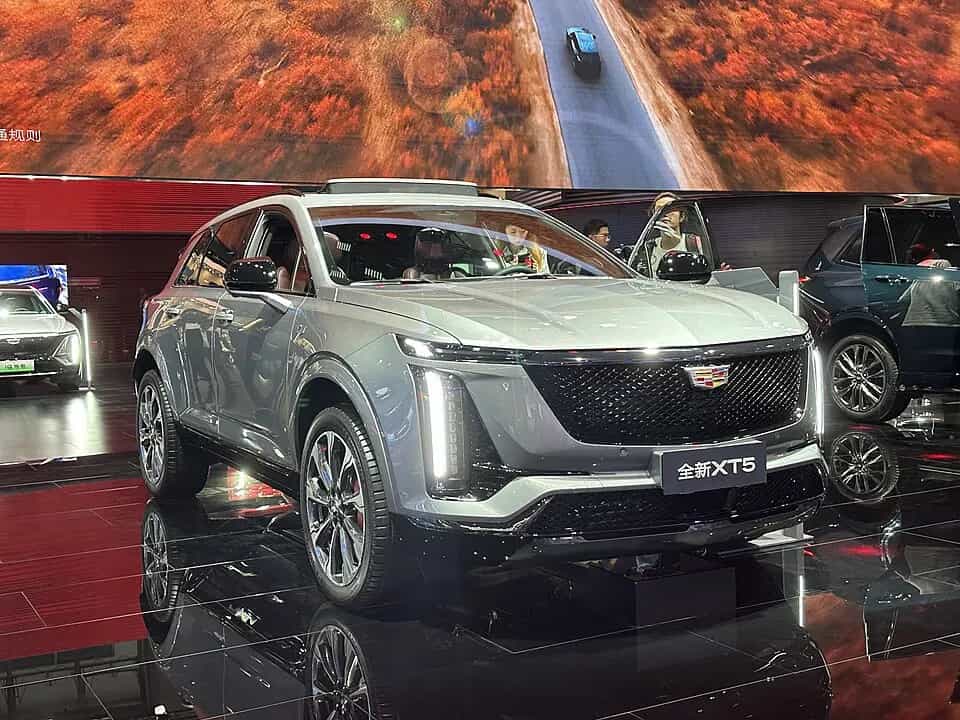
Cadillac XT5

Importing a used Cadillac XT5 from the USA

The XT5 is Cadillac's mid-size luxury crossover and by far the most common Cadillac SUV on the American used market. For a German or EU buyer it is one of the more sensible US imports: it uses widely shared GM mechanicals, parts are plentiful, and a clean two- or three-year-old example arrives with the kind of equipment and V6 refinement that costs noticeably more here. As an independent broker we source used XT5s directly from US sellers and auctions, verify the VIN and build origin, and handle the freight, customs clearance and TÜV path so you know exactly what you are buying before any money moves.

Cadillac xt5 – used car imported from the USA
Photo: JustAnotherCarDesigner · CC0 · Wikimedia Commons

Production years and key changes

The XT5 launched for the 2017 model year, replacing the SRX and moving Cadillac onto GM's C1XX (Chi) platform shared with the XT6 and the long-wheelbase versions of the GMC Acadia and Chevrolet Blazer. Early cars (2017–2019) came almost exclusively with the naturally aspirated 3.6-litre V6. Cadillac gave the XT5 a substantial mid-cycle update for 2020: a revised grille and lighting, a rotary-controlled infotainment system in place of the old touch-only CUE, and a new entry engine. Later cars are the ones to target if you want the cleaner electronics and the option of the turbo four.

What is under the hood

The staple engine is the 3.6-litre LGX V6, producing around 310 hp and 271 lb-ft, paired with a GM 8-speed automatic (8L45). It is smooth, torquey and the engine most European buyers should look for. From 2020 Cadillac added the 2.0-litre LSY turbocharged four (roughly 237 hp, 258 lb-ft) mated to a 9-speed automatic, aimed at buyers who want lower fuel use. Front-wheel drive is standard; the twin-clutch AWD system with a rear axle disconnect is a common and worthwhile option, especially for German winters. There is no diesel and no hybrid XT5 in the US.

Trims and body styles

The XT5 is a five-seat, five-door crossover only. US trims run Luxury, Premium Luxury and Sport (the Sport pairing with AWD and darker exterior trim). Premium Luxury is the sweet spot for imports: it typically bundles the panoramic sunroof, ventilated front seats, surround-view camera and the better audio without the Sport's firmer ride. Look for the Comfort or Technology packages if you want adaptive cruise, a heated wheel and a head-up display.

What the US market offers

Supply is deep. The XT5 sold in large volumes as a fleet and lease vehicle, which means the American market is full of well-kept two-to-four-year-old cars with complete service records and moderate mileage. Southern and western states offer rust-free examples; that matters for a car you intend to register and drive in Germany. Expect to find plenty of AWD Premium Luxury cars in the 30,000–80,000 km band, many still within GM's original warranty period documentation.

Who this import is for

The XT5 suits a buyer who wants a quiet, comfortable, American-flavoured luxury SUV without the running-cost complexity of a European premium brand. It is roomy, easy to live with and mechanically conventional. If you specifically want the 3.6 V6, AWD and a documented one-owner history, the US market gives you far more choice than the small grey-import pool in Europe.

Technical data and figures

ItemDetail (typical)
Body style5-door mid-size luxury crossover, 5 seats
Generations2017–present (2020 facelift)
Base engine (2020+)2.0 L LSY turbo I4, ~237 hp
Main engine3.6 L LGX V6, ~310 hp / 271 lb-ft
Transmission8-speed auto (V6) / 9-speed auto (turbo)
DrivetrainFWD standard, twin-clutch AWD optional
PlatformGM C1XX
Lengthapprox. 4813 mm
Wheelbaseapprox. 2857 mm
Widthapprox. 1903 mm
Kerb weightapprox. 1770–1920 kg
Cargo (seats up)approx. 850 L
FuelPetrol (premium recommended on V6)
OriginAssembled Spring Hill, Tennessee (verify by VIN)

Reliability: trouble spots to check

The XT5 is broadly dependable, but a few weak points recur. The 3.6 V6's stop/start and Active Fuel Management can cause rough idle or increased oil use on higher-mileage cars; check for a clean, non-milky oil and listen for lifter noise. The 8-speed automatic in some GM applications is known for a low-speed shudder traced to torque-converter fluid contamination, so confirm the transmission fluid has been serviced. Early cars occasionally had software gremlins in the infotainment and electric parking brake. On 2.0T cars, verify the timing components and watch for oil consumption. None of this is unusual for the class, but a documented service history is worth more than a low sticker mileage.

US vs. Europe differences

US XT5s run amber rear turn signals in many years and lack a rear fog lamp, both of which the TÜV will want addressed. Headlights are US-spec (SAE beam pattern) and the speedometer reads primarily in mph. Infotainment defaults to US navigation maps and imperial units, though metric display is selectable. Otherwise the car is mechanically identical to what Cadillac sold elsewhere, which keeps approval straightforward.

How the import works

Selection of a specific car with photos and history → VIN and build-origin check (plant code, Carfax/AutoCheck) → secure payment via escrow, never a direct wire to an unknown seller → inland transport to the export port and ocean freight (usually container or RoRo to Bremerhaven) → customs clearance in Germany → TÜV inspection and individual approval (Einzelabnahme per §21 StVZO) → registration at your local Zulassungsstelle.

Import duty, VAT and fees

In short: the 0% duty rate applies only with documented US origin (VIN/plant) – German import VAT of 19% is always due.

Two charges are separate and must not be blurred. First, the import duty: for a vehicle with provable US origin (confirmed by VIN and plant) the 0% rate under Regulations (EU) 2026/1455 and 2026/1461 can apply for direct-transported cars until 31 December 2029; if origin cannot be proven, the standard passenger-car duty applies. Second, and always, the 19% German import VAT (Einfuhrumsatzsteuer) is charged on the customs value plus duty and freight. The XT5 is generally assembled in Tennessee, which usually supports the origin case, but we confirm this per VIN rather than assume it. We are a broker and add no vehicle margin.

From modifications to registration

Typical changes for German approval are converting or adding a rear fog lamp, ensuring a compliant headlight beam pattern, and confirming the odometer is documented in the paperwork. The XT5's lighting and glass are usually straightforward to bring into line. A COC is generally not available for US cars, so the individual approval route is normal.

Pre-buy inspection points

Match the VIN on the dash, door jamb and title. Pull a full Carfax or AutoCheck for accident, title-brand and odometer history. Inspect the underbody for rust, especially on northern-state cars. Confirm service records for oil, transmission fluid and any recalls. Check the title is clean (not salvage/rebuilt unless you accept it knowingly). Verify AWD engagement and listen for driveline noise on a test drive or inspection report. Photograph the engine bay for oil leaks.

What buyers ask most

Is the Cadillac XT5 a reliable used import?

Yes, within class norms. The V6 and 8-speed are proven GM units; buy on service history and address the known AFM and torque-converter items during inspection.

Which XT5 engine should I import?

The 3.6 V6 for refinement and resale, or the 2020+ 2.0 turbo if lower fuel use matters more than smoothness.

Does the 0% EU import duty apply to the XT5?

Only with provable US origin by VIN and plant, direct transport, under the 2026 regulations. It is never guaranteed; we verify each car.

Do I always pay the 19% import VAT?

Yes. The German Einfuhrumsatzsteuer of 19% always applies on import, independent of the duty rate.

Will the XT5 pass TÜV?

Generally yes, after lighting adjustments (rear fog lamp, beam pattern). It goes through individual approval like most US imports.

What mileage is normal for a US XT5?

Two-to-four-year-old cars commonly sit in the 30,000–80,000 km range with full records; many are ex-lease.

Is AWD worth importing?

For German conditions, yes. The twin-clutch AWD with rear-axle disconnect improves winter traction with little running-cost penalty.

Are parts available in Europe?

Wear parts are widely available thanks to shared GM components; some Cadillac-specific trim may need US sourcing.

Ready to start? Browse Cadillac in the Carhub, compare the related Cadillac XT6 and Cadillac XT4, or view current XT5 listings.