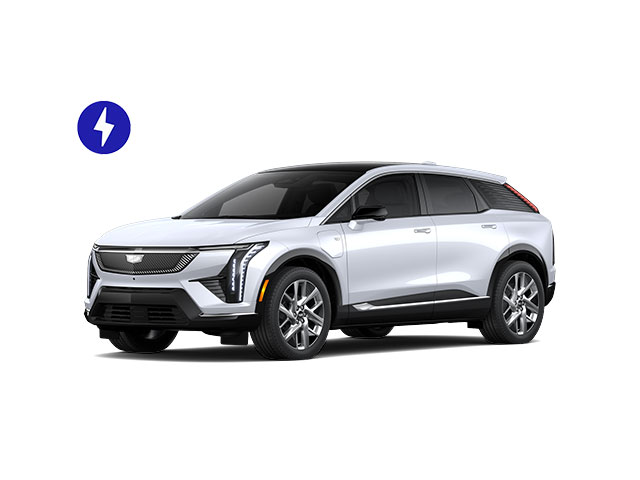
Cadillac OPTIQ

Importing a used Cadillac OPTIQ from the USA

The Cadillac OPTIQ is General Motors' compact luxury electric SUV, positioned below the larger LYRIQ and built on GM's Ultium battery architecture. It is one of the newer entries in Cadillac's all-electric line-up, aimed squarely at premium compact EV buyers, and it is only just beginning to appear on the US used market. For a German buyer that combination — a modern, well-equipped electric Cadillac with a distinctive design language — is interesting, but it also demands care around charging standards and origin. USCar Trader handles the OPTIQ as an independent broker: we source, verify and ship used cars, we take no margin, and we do not represent Cadillac.

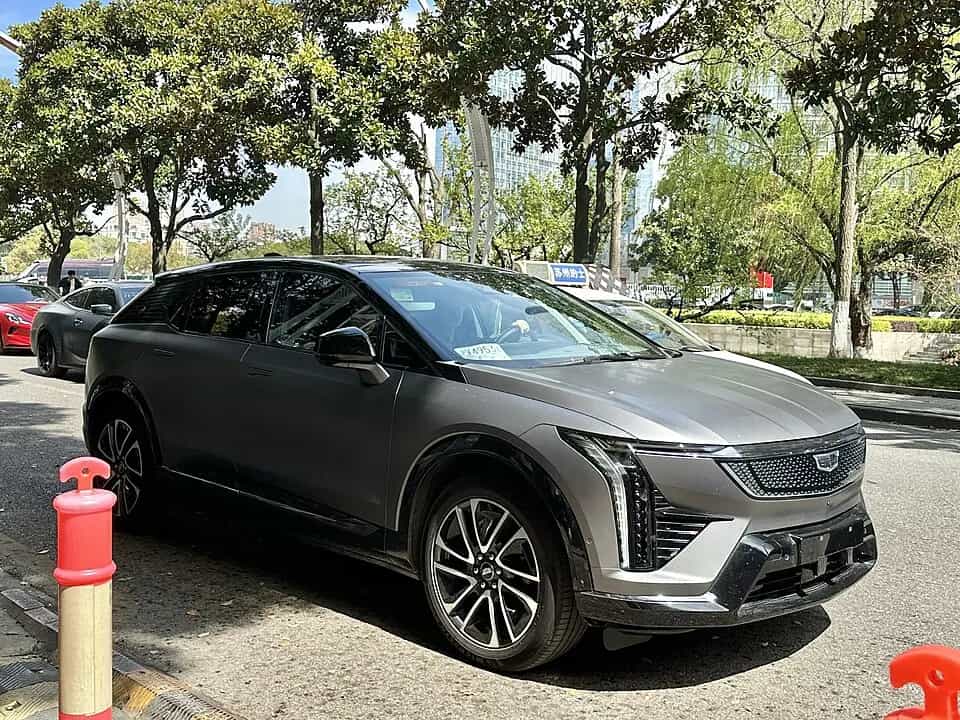
Cadillac optiq – used car imported from the USA
Photo: JustAnotherCarDesigner · CC0 · Wikimedia Commons

Production years and key changes

The OPTIQ launched for the 2025 model year as a ground-up electric vehicle — there was never a combustion version, so there is no legacy generation to compare against. It shares its Ultium underpinnings with GM stablemates such as the Chevrolet Equinox EV and Blazer EV and the Acura ZDX, which is useful context for parts and platform knowledge. Because it is so new, "used" OPTIQ cars are almost entirely low-mileage, early-build examples — ex-demonstrators, short leases and early adopters trading up. Any buyer should treat this as importing an essentially current-generation car rather than a mature used model.

What is under the hood

The OPTIQ uses a dual-motor, all-wheel-drive layout drawing on an Ultium battery of roughly 85 kWh usable capacity. Standard output sits around 300 hp with strong low-speed torque typical of EVs, giving brisk but not extreme acceleration. A higher-performance OPTIQ-V variant lifts output substantially for buyers who want the sportier flavour. EPA range for the standard car lands in the region of 300 miles (around 480 km) on the US cycle, which translates to a somewhat lower real-world WLTP-equivalent figure. There is no engine, transmission or exhaust to service — the drivetrain conversation here is about battery health, DC charging speed and software.

Trims and body styles

Body-wise the OPTIQ is a single five-door compact crossover. What varies is trim and the performance split between the standard OPTIQ and the OPTIQ-V. US cars are typically generously equipped as befits the segment: a large curved display running Cadillac's Google-based infotainment, driver-assistance systems (including GM's hands-free Super Cruise on equipped cars and routes), premium audio and a panoramic roof. When assessing a US car, confirm exactly which driver-assist and connectivity features are fitted, since some GM connected-services functions are geofenced to North America.

What the US market offers

Availability is limited and will stay that way for a while — this is a young model. Expect early build years, very low mileage and near-new condition on most cars that surface. That youth cuts both ways: you get a modern EV with plenty of battery life ahead, but the used discount is smaller than on an established model and the data pool on long-term durability is still thin. Because the OPTIQ is assembled outside the United States (GM builds it in Mexico), the country-of-origin question is central and must be settled by VIN before any duty assumption is made.

Who this import is for

The OPTIQ appeals to a buyer who wants a genuinely current premium electric SUV with an American luxury identity rather than the usual German or Korean choices. If you are comfortable with EV ownership, have suitable charging, and want something visually distinctive, it is a compelling import. Buyers who need a proven long-term reliability track record, or who want combustion flexibility, should wait or look elsewhere — this is early-adopter territory, imported.

Technical data and figures

ItemDetail (typical US-spec)
SegmentCompact luxury electric SUV
Model years2025 onward
PlatformGM Ultium (BEV)
PowertrainDual-motor, all-wheel drive
Battery (usable)approx. 85 kWh
Output (standard)approx. 300 hp
Output (OPTIQ-V)substantially higher (performance variant)
EPA range (standard)approx. 300 miles / ~480 km
DC fast chargingup to ~150 kW class
Charge port (US)CCS1 (adapter/NACS considerations apply)
DriveAWD
Seating5
AssemblyMexico (verify by VIN)
Fuel typeElectric

Reliability: trouble spots to check

As a brand-new Ultium-based model, the OPTIQ has no long history of documented faults, so honesty means saying the durability record is still being written. What is known from the wider Ultium family is worth watching: early software maturity (infotainment glitches and over-the-air update behaviour), occasional module and 12-volt battery quirks, and the usual early-production sensor and trim niggles. Battery state-of-health is the single most important check on any used EV — request the car's battery health data and DC charging history where available. There have been broader GM Ultium software and recall campaigns across the line-up, so confirm all recall work has been completed before shipping.

US vs. Europe differences

The most consequential difference is charging. US OPTIQ cars use the North American charging ecosystem — historically CCS1, with GM transitioning toward the NACS connector — whereas European public DC infrastructure is built around CCS2. This means an imported OPTIQ will need a suitable charging solution (adapter and/or verified compatibility) for both AC and DC charging in Germany, and this should be planned before purchase, not after. Beyond charging, expect US amber side markers, SAE headlight beam patterns, a miles-based display, and some GM connected services that may not function in Europe. Lighting must be brought to German standards and a rear fog lamp fitted.

How the import works

The sequence: agree specification and shortlist suitable low-mileage cars; run the VIN and origin check to establish the build country and confirm recall status and battery health; hold funds in escrow until the car is verified; book ocean freight (EVs require compliant state-of-charge handling); clear customs at the European port; present the car for TÜV individual approval, including EV-specific and lighting checks; then register at the Zulassungsstelle. We manage each stage and keep the documentation coherent.

Import duty, VAT and fees

Key point: duty depends on the plant of build; only a VIN check secures the 0% rate. Import VAT of 19% applies regardless.

Origin is decisive and, for the OPTIQ, likely unfavourable to the duty-free route: GM assembles the OPTIQ in Mexico, so a typical car will not be US-origin. The 0% EU import duty under Regulations (EU) 2026/1455 and 2026/1461 (in force since 1 July 2026 through 31 December 2029) applies only where the vehicle is provably US-built and shipped directly — the VIN and plant code settle this, and for the OPTIQ the honest expectation is that the standard customs rate for the vehicle usually applies rather than 0%. Separately, and in every case regardless of origin, the 19% German import VAT (Einfuhrumsatzsteuer) is charged on the import value. We never describe an import as duty-free and we never add a margin.

From modifications to registration

Beyond the usual lighting work (beam pattern correction and a functioning rear fog lamp) and switching the display to km/h, EVs carry specific approval considerations around high-voltage safety documentation and charging compatibility. The odometer reading is recorded and checked against the history. Once the individual inspection passes and the paperwork is issued, registration proceeds normally.

Pre-buy inspection points

Before committing: verify the VIN and confirm the build country; obtain the battery state-of-health and DC charging history; check that all GM recall and software campaigns are closed; pull a Carfax or AutoCheck report for title and accident records; confirm the title is clean, not salvage or rebuilt; verify which driver-assist and connected features are fitted and which will work in Europe; and confirm a workable CCS2 charging plan for Germany.

What buyers ask most

Can I fast-charge an imported OPTIQ in Germany?

Only with the right setup. US cars use the North American charging standard, so you must confirm CCS2 compatibility and use a suitable adapter or solution before relying on European DC chargers.

How much range does the OPTIQ have?

The standard car is rated around 300 miles (roughly 480 km) on the US EPA cycle, which corresponds to a somewhat lower real-world European figure.

Is the OPTIQ US-built, so does it qualify for 0% duty?

Generally no. GM assembles the OPTIQ in Mexico, so most cars are not US-origin and the standard duty rate usually applies. The VIN must confirm origin, and the 19% import VAT always applies.

Is there a performance version?

Yes, the OPTIQ-V raises output significantly over the standard dual-motor car for buyers who want more performance.

Does Super Cruise work in Europe?

GM's hands-free assistance and some connected services are geofenced to North America and may not function in Germany even if the hardware is fitted.

Is the OPTIQ reliable?

It is too new for a long-term verdict. Focus on battery health, completed recalls and software status rather than assuming a track record either way.

Will an imported OPTIQ be low mileage?

Almost always. Because the model is so new, used examples are typically early-build cars with very low mileage.

Is USCar Trader connected to Cadillac?

No. We are an independent broker for used US vehicles with no manufacturer partnership and no margin.

Explore Cadillac in the Carhub, compare related electric SUVs such as the Cadillac LYRIQ, the Chevrolet Equinox EV and the Chevrolet Blazer EV, or view current OPTIQ listings.