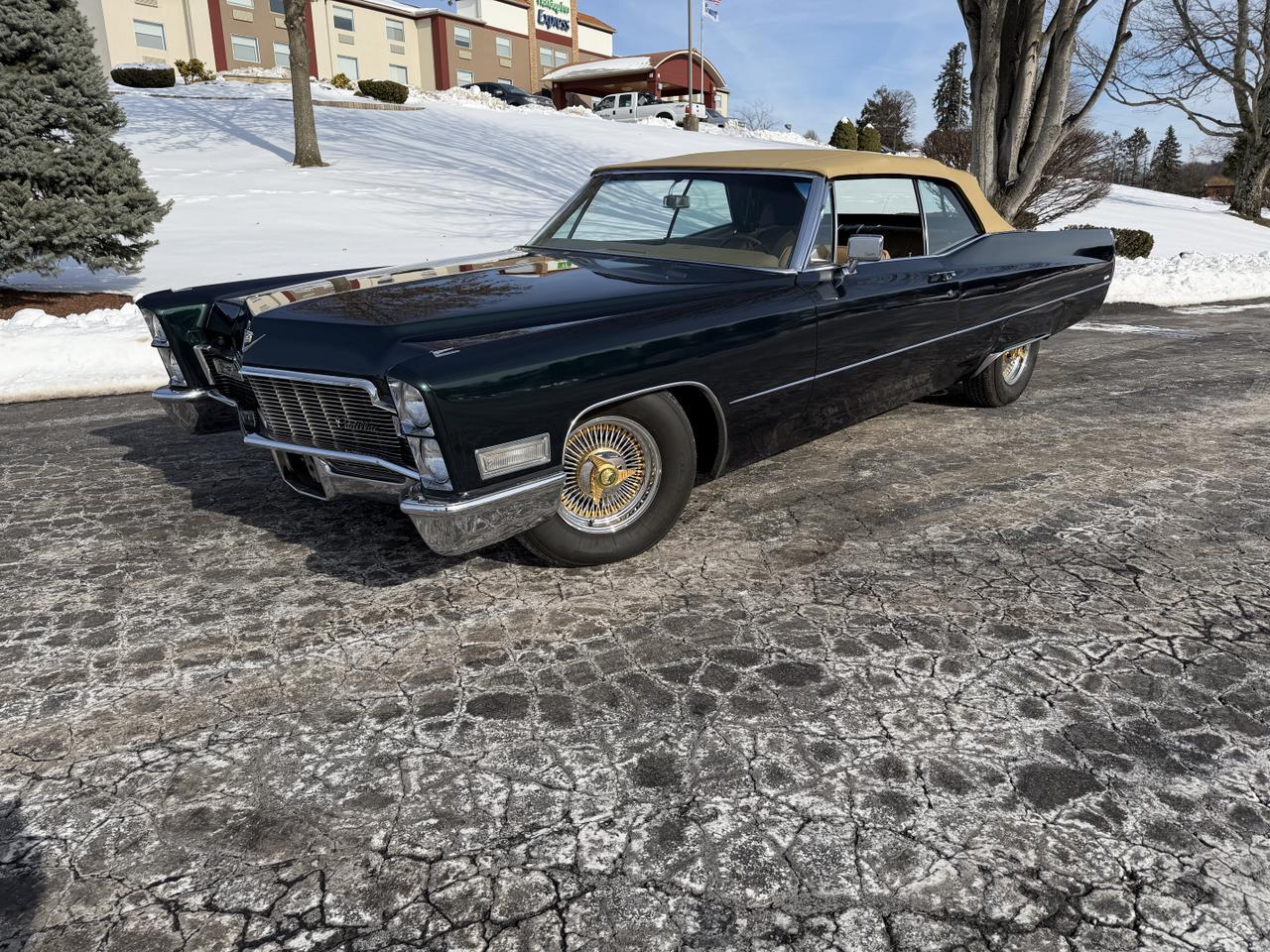
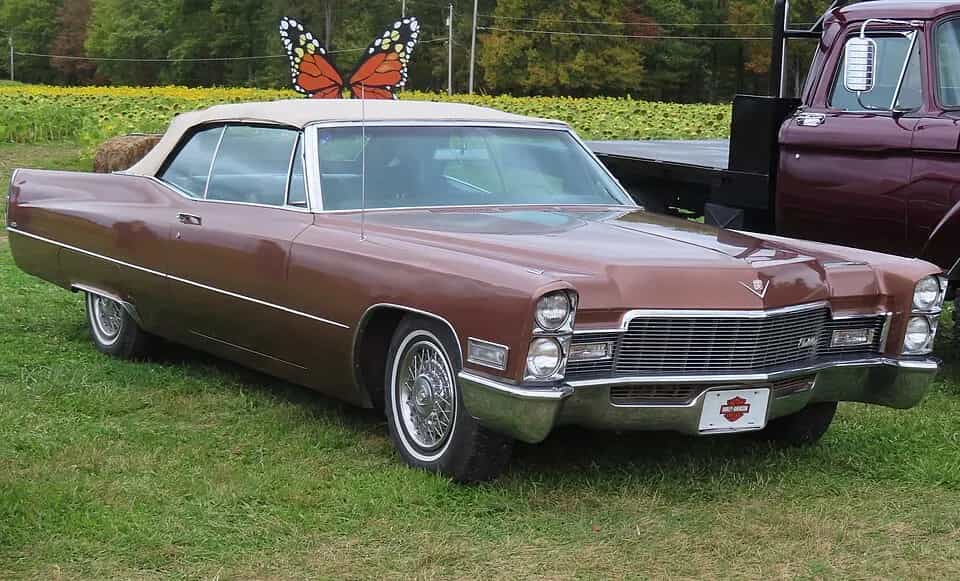
Cadillac DeVille
Importing a used Cadillac DeVille from the USA
The Cadillac DeVille is quintessential American luxury: a big, soft, front-wheel-drive sedan built for effortless highway cruising rather than back-road agility. It carried one of the longest-running nameplates in the industry before Cadillac retired it in 2005 in favour of the DTS. For a European buyer, importing a used Cadillac DeVille from the USA is a way into genuine full-size American character — a Northstar V8, a bench-like ride and interior space that dwarfs anything comparable from Germany. USCar Trader acts as an independent broker: we source, verify and import used DeVilles from the American market and handle customs, TÜV and registration. This guide covers the generations that matter, the Northstar engine's strengths and its well-documented weak points, and what to expect from the US used pool.

Generations at a glance
The DeVille name reaches back to the 1949 Coupe de Ville, but the cars most relevant to a US used import today are the front-wheel-drive full-size sedans of the 1990s and 2000s. The 1994–1999 generation introduced the Northstar V8 across the range. The final DeVille generation ran from 2000 to 2005, built on GM's G-body platform, and split into the base DeVille, the touring-oriented DTS (DeVille Touring Sedan) and the luxury-focused DHS. When this car was replaced for 2006, the DTS became a standalone model. Any DeVille on the market now is a genuine youngtimer, twenty years old or more, which shapes both the buying strategy and the inspection.
Powertrain lineup
Every modern DeVille runs the 4.6-litre Northstar V8, an all-aluminium DOHC engine that was advanced for its era. Output depends on tune: the base DeVille makes around 275 hp, while the DTS's higher-output version produces roughly 300 hp. Power goes exclusively to the front wheels through the 4T80-E four-speed automatic — a heavy-duty transaxle designed to handle the V8's torque. There is no manual, no rear-drive and no diesel. The Northstar is smooth and quiet, pulling the two-tonne body with easy authority, and it is the defining feature of the car's driving personality.
Trims in the US market
The DeVille was sold only as a four-door sedan. Trim walk was straightforward: the standard DeVille prioritised comfort and a soft ride; the DHS added rear-seat luxury touches such as heated and reclining rear seats and extra sound insulation; the DTS leaned sporty with a firmer suspension, the high-output engine and Magnetic Ride Control on later cars. Common options that make an imported example more appealing include heated leather seats, the Bose audio system, Night Vision (a rare and notable feature on early-2000s cars), and adaptive suspension on DTS models.
The used market stateside
DeVilles were sold in large numbers and many led gentle lives with older, careful owners, so low-mileage survivors still surface regularly across the US — particularly in the south and southwest where road salt never touched them. The typical candidate is a 2000–2005 sedan with a well-kept interior and complete service history. Because these are older cars, condition and maintenance records outweigh mileage: a rust-free, well-serviced 150,000-km DeVille is a far better buy than a neglected low-mileage one. Prioritise dry-state cars and documented cooling-system and Northstar maintenance.
Who should import one
Importing a used Cadillac DeVille suits the buyer who wants authentic American luxury-barge character — comfort, space and V8 smoothness — and appreciates a car with presence and a bit of history. It is ideal as a cruiser, a collector's youngtimer or a distinctive alternative to yet another German executive sedan. It is not the choice if you want sharp handling, rear-wheel-drive balance or low running costs; the Northstar demands informed maintenance. For the right owner, though, a clean DeVille is characterful and rewarding.
Key specifications
| Item | Detail |
|---|---|
| Generation / years | Final generation 2000–2005 (Northstar era from 1994) |
| Body style | 4-door full-size luxury sedan |
| Engine | 4.6 L Northstar DOHC V8 (aluminium) |
| Power output | approx. 275 hp (DeVille) / 300 hp (DTS) |
| Transmission | 4T80-E 4-speed automatic |
| Drivetrain | Front-wheel drive |
| 0–100 km/h | approx. 7.5–8.5 s depending on tune |
| Top speed | approx. 200–225 km/h (limited) |
| Length | approx. 5232 mm |
| Wheelbase | 2926 mm |
| Curb weight | approx. 1830 kg |
| Fuel tank | approx. 70 litres |
| Trunk volume | approx. 540 litres |
| Seats | 5–6 (front bench available) |
| Assembly | USA (Detroit-Hamtramck, Michigan) |
| Fuel type | Petrol |
How reliable is it?
Any honest DeVille buyer's guide starts with the Northstar V8's Achilles' heel: head-gasket failure caused by the aluminium block's steel head-bolt threads pulling out over time, usually triggered by overheating. Once the threads let go, coolant loss and combustion-gas intrusion follow. The fix — thread inserts (a Time-Sert repair) with the engine partially removed — is labour-intensive, so a car with documented cooling-system care and no history of overheating is worth a premium. Beyond that, watch for oil leaks from the case-half and rear main seal, StabiliTrak and ABS sensor faults, worn suspension bushings, and ageing electronics and climate-control actuators. Keep the cooling system in perfect health, use the correct coolant, and address small leaks immediately — that discipline is what separates a reliable DeVille from a money pit.
What US models do differently
As an American-market car, the DeVille has amber-integrated or red rear turn signals, no rear fog lamp, an mph-dominant speedometer and US headlight aiming — all handled at approval. The trip computer and any onboard telematics use US settings and units. Equipment often runs high: heated leather, premium Bose audio and features like Night Vision were fitted to well-optioned cars and transfer with the vehicle, giving an imported DeVille a level of kit that stands out among period European sedans.
Seven steps to your import
The sequence is: select a suitable car from US listings; verify the VIN and the plant/build origin; place funds in escrow so money is released only once the car and title check out; book ocean freight to a European port such as Bremerhaven; clear customs on arrival; complete TÜV and an individual approval (Einzelabnahme per §21 StVZO) with the required modifications; and register the car locally. USCar Trader manages every step and keeps the paperwork consistent so the clearance and approval run smoothly.
Customs, taxes and costs explained
Key point: duty depends on the plant of build; only a VIN check secures the 0% rate. Import VAT of 19% applies regardless.
Two separate charges apply. Customs duty comes first: the DeVille was assembled at Detroit-Hamtramck in Michigan, so it may qualify as US-origin — and where US origin is provable from the VIN and plant code, the 0 percent preference under Regulations (EU) 2026/1455 and 2026/1461 (in force since 1 July 2026, direct transport) can apply. We never promise this in advance; origin is confirmed on the documents before clearance, and if it cannot be proven the standard 10 percent passenger-car duty applies instead. Second, always, the 19 percent German import VAT (Einfuhrumsatzsteuer) is charged on the customs value plus duty and freight. Both are government charges passed through without any USCar Trader margin.
German TÜV and registration
Typical approval work includes fitting a rear fog lamp, adjusting or replacing headlights to European aiming, adapting side-marker and turn-signal lighting where needed, and verifying the odometer and speedometer against the documented history. On a twenty-year-old car the inspector will also expect sound brakes, tyres and emissions behaviour, so a pre-shipment mechanical check pays off. Once the Einzelabnahme is issued you receive the papers to register, insure and plate the car.
The buyer checklist
Work through these before buying: confirm the VIN matches title, dash and doorjamb; pull a Carfax or AutoCheck report for accidents, title branding and mileage consistency; ask directly about any overheating history and inspect for coolant loss or head-gasket symptoms; check the underbody and rockers for rust, favouring dry-state cars; verify a complete service record with cooling-system maintenance; confirm the title is clean and not salvage or flood; and photograph the odometer against the reported mileage.
Questions and answers
Can I still import a Cadillac DeVille to Germany?
Yes. Even as an older youngtimer, a used DeVille can be imported, customs-cleared, approved via individual TÜV inspection and registered. USCar Trader handles the process as your broker.
Does the DeVille qualify for 0 percent import duty?
Possibly. It was built in Michigan, so where US origin is provable from the VIN, the 0 percent preference can apply; otherwise the standard 10 percent duty applies. We never guarantee duty-free clearance.
What is the biggest reliability concern?
The Northstar V8's head-bolt thread and head-gasket failure, usually linked to overheating. A car with documented cooling-system care and no overheating history is essential.
What is the difference between DeVille, DHS and DTS?
The DeVille is the comfort-focused base; the DHS adds rear-seat luxury; the DTS is sportier with the high-output engine, firmer suspension and, on later cars, Magnetic Ride Control.
How much import VAT will I pay?
The German import VAT (Einfuhrumsatzsteuer) is 19 percent on the customs value plus duty and freight. It always applies and is stated separately from any duty.
Is the DeVille expensive to run?
Fuel use is high and Northstar maintenance must be done correctly, but a well-kept car serviced by someone familiar with the engine is manageable.
Which years are best to import?
The 2000–2005 final generation offers the most refined package; within it, prioritise a rust-free, well-documented example over the lowest mileage.
What TÜV changes are needed?
Typically a rear fog lamp, European headlight aiming and lighting adjustments, plus verification of the odometer and speedometer.
Discover more Cadillac in the Carhub, compare its direct successor the Cadillac DTS, the rear-drive Cadillac CTS and the flagship Cadillac CT6, or browse the current Cadillac DeVille listings.