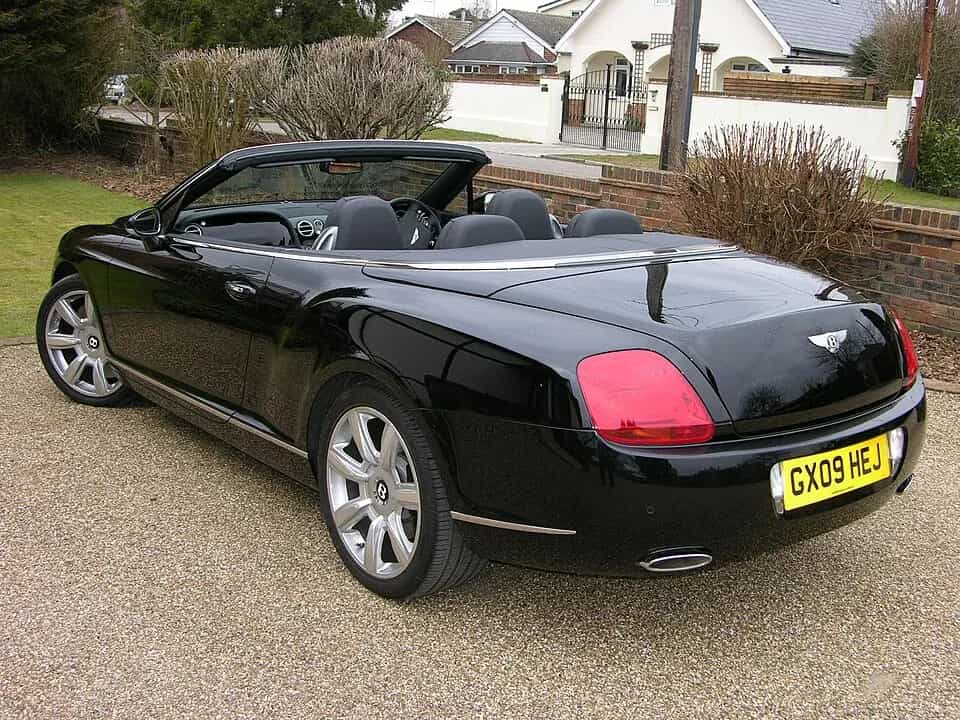
Bentley Continental GTC
Importing a used Bentley Continental GTC from the USA
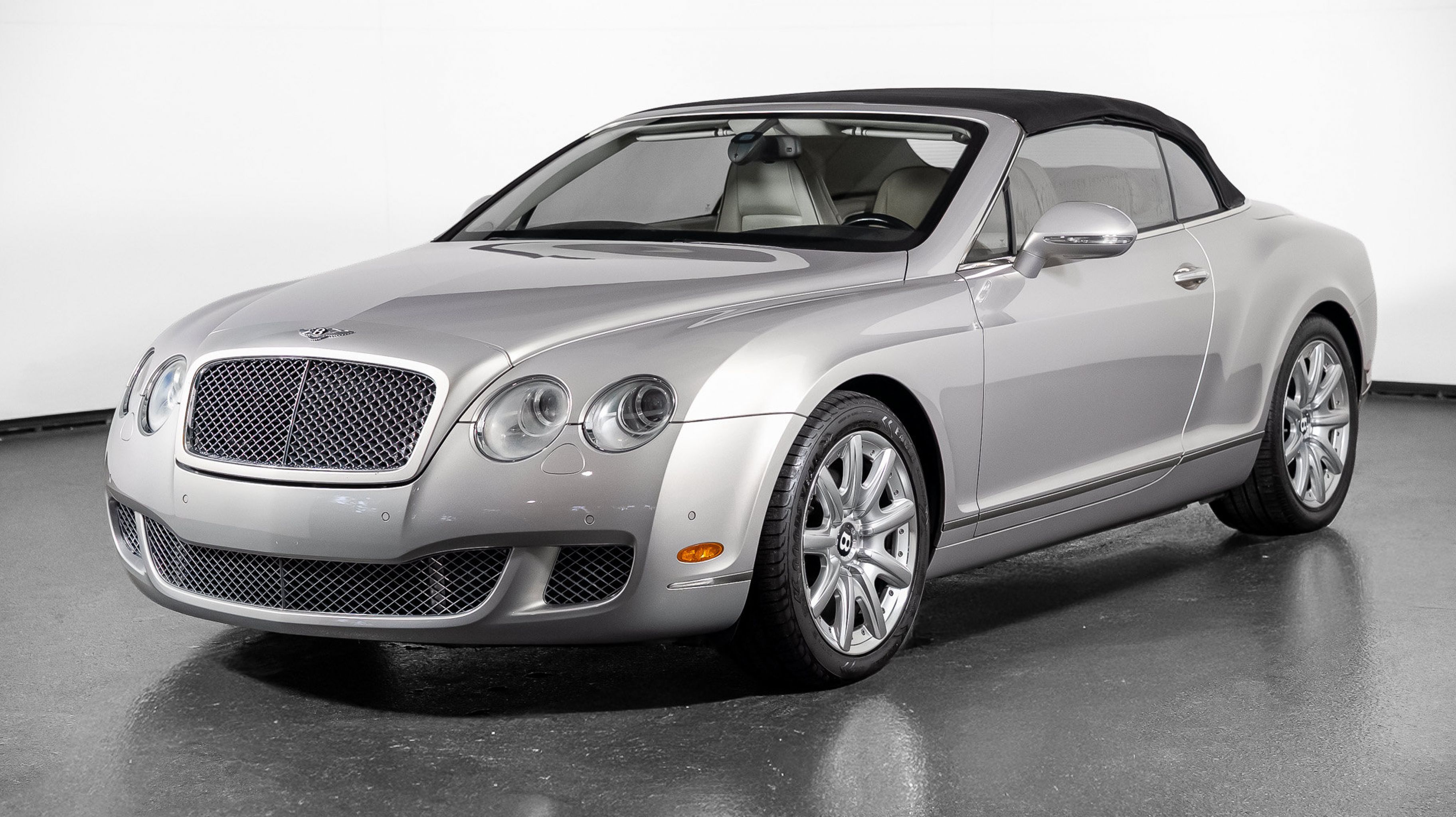
The Bentley Continental GTC is the open-top expression of Crewe's grand tourer: a hand-trimmed, all-wheel-drive convertible that pairs monstrous forced-induction power with a cabin of quilted leather and knurled metal. The United States has always been Bentley's single largest market, which means the used pool of GTCs there is broad and, importantly, often specified in the warm-weather colours and open-top-friendly options that buyers actually want. For a European enthusiast willing to import a used Bentley Continental GTC from the USA, that depth of supply is the real draw — you can find the exact engine, generation and specification rather than settling for whatever the thin domestic market offers.

Model history: years and generations
The Continental GTC arrived in 2006 as the convertible sibling to the first-generation Continental GT coupe. That first car (2006-2011) is defined by its 6.0-litre twin-turbo W12, with the hotter GTC Speed joining later. The second generation (2011-2018) modernised the styling and electronics and, crucially, introduced a 4.0-litre twin-turbo V8 alongside the W12 from 2013, giving buyers a lighter, more agile and more efficient option. The third generation launched at the end of the decade; the GTC convertible followed the GT coupe into showrooms around 2019-2020 with a heavily revised W12 and, again, a V8 variant. Each generation kept the same core idea: effortless cross-continent pace with the roof down.
Engines, transmissions and drive
The signature engine is the 6.0-litre twin-turbocharged W12, producing roughly 552 PS in the earliest cars and rising past 600 PS in Speed and later forms. From 2013 Bentley offered the 4.0-litre twin-turbo V8, developed with Audi, at around 500-521 hp; it is smoother to run, lighter over the nose and returns noticeably better economy while still delivering a deep V8 soundtrack. Early cars used a six-speed ZF automatic; second- and third-generation cars moved to an eight-speed unit (the newest GTC uses a dual-clutch). Every Continental GTC drives all four wheels, which is a large part of why a two-and-a-half-tonne convertible feels so planted. US cars are almost entirely automatic, as expected in this class.
Equipment lines and body styles
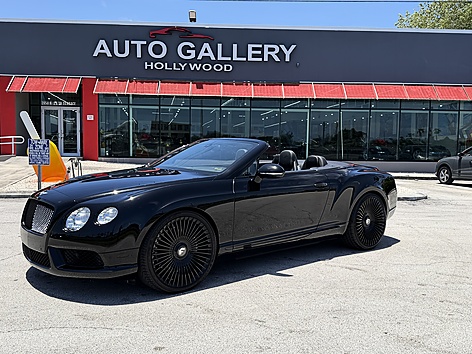
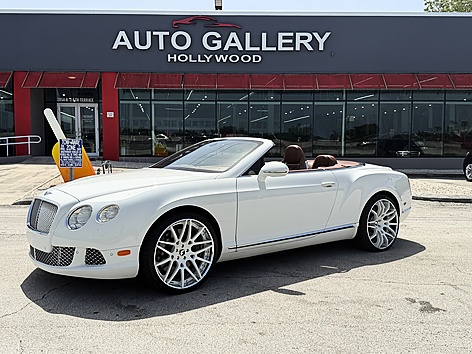
The GTC is exclusively a two-door, four-seat convertible with a fully lined fabric roof — Bentley deliberately kept a soft top for its acoustic refinement rather than a folding hard top. Beyond the W12/V8 engine choice, the key variants are the standard GTC, the more powerful GTC Speed, and various numbered special editions. Options define these cars far more than trim names: Mulliner driving specification, contrast stitching, veneer choices, upgraded audio (Naim), ceramic brakes and 21-inch wheels all appear frequently on US examples.
The US used market
America bought these cars in numbers, and many led pampered, low-annual-mileage lives as second or third vehicles. That means genuinely well-kept GTCs with full main-dealer history are findable, though condition varies widely — some were used hard, others barely driven and left to sit, which brings its own problems. Cars from dry states arrive rust-free, and a comprehensive service file is worth more than a low odometer reading on a car this complex. Prioritise documented maintenance over apparent bargains.
Is an import right for you?
The Continental GTC suits the buyer who wants presence, hand-built luxury and huge real-world performance in an open car, and who understands that running one properly is a commitment. The V8 is the pragmatic choice for someone who will drive regularly; the W12 is for the buyer who wants the full twelve-cylinder Bentley experience. It is not a car for anyone hoping for low running costs.
Specs at a glance
| Specification | Bentley Continental GTC (representative) |
|---|---|
| Body style | Two-door, four-seat convertible |
| Engine (W12) | 6.0 L twin-turbo W12 |
| Engine (V8) | 4.0 L twin-turbo V8 (from 2013) |
| Power (W12) | approx. 552-635 PS depending on year |
| Power (V8) | approx. 500-521 hp |
| Torque (W12) | approx. 650-900 Nm depending on generation |
| Transmission | 6-speed (early) / 8-speed automatic; dual-clutch on newest |
| Drivetrain | All-wheel drive |
| 0-100 km/h (W12) | approx. 4.0-4.5 s |
| Top speed (W12) | approx. 300 km/h |
| Length | approx. 4,806 mm (first generation) |
| Kerb weight | approx. 2,400-2,500 kg |
| Roof | Fully lined fabric soft top |
| Fuel | Premium petrol |
| Suspension | Air suspension, adaptive damping |
Common issues buyers should know
These are complex, heavy cars and the running costs reflect it, so due diligence pays. Air suspension components are a known expense; sagging corners or a car that takes time to rise are warning signs. The W12's twelve ignition coils fail over time and are often replaced preventively — ask when they were last done. Oil leaks, coolant weeps and worn front tyres (the all-wheel-drive system and weight chew through rubber) are common. On convertibles, exercise the roof mechanism fully during inspection and check for water ingress. Battery drain from cars left standing is frequent. None of these are unusual for the class, but a GTC with a thin service history can become very expensive very quickly.
Differences from the European version
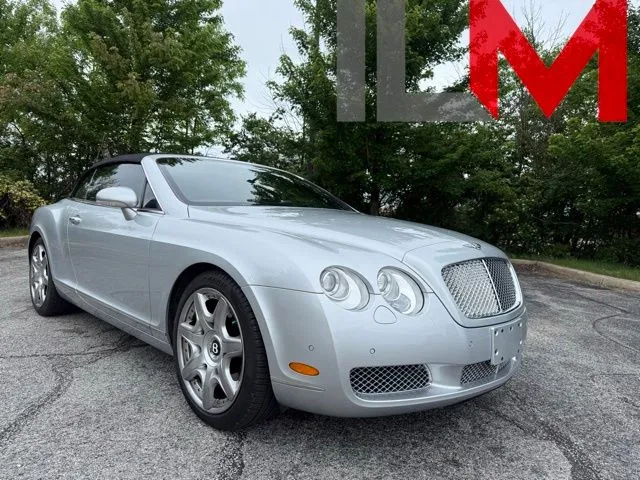
US-market cars carry amber side markers, headlamps aimed for right-hand traffic, mph instrumentation and North American infotainment/navigation settings. Emissions and lighting hardware are broadly the same underlying components as European cars, which simplifies approval, but the headlight aim and the missing rear fog lamp are the items that need attention. US specification is frequently very high, so an imported GTC often arrives lavishly equipped.
Import step by step
Expect a clear sequence: identify the specific car and confirm generation, engine and options; carry out a VIN and origin check to establish the build plant; use escrow so payment is protected until terms are met; arrange ocean freight (enclosed container is popular for cars of this value); complete customs clearance at an EU port; present for TUEV and any individual approval; then register in Germany. As an independent broker, USCar Trader coordinates the steps without taking a hidden margin.
Customs and taxes: what applies
Key point: duty depends on the plant of build; only a VIN check secures the 0% rate. Import VAT of 19% applies regardless.
The Continental GTC is built at Bentley's factory in Crewe, England — it is not a US-origin vehicle. The 0% preferential EU import duty introduced by Regulations (EU) 2026/1455 and 2026/1461 (in force since 1 July 2026, valid until 31 December 2029, requiring provable US origin by VIN/plant and direct transport) therefore does not apply to a British-built GTC on US-origin grounds. The standard third-country car duty (normally 10%) applies unless another preference is proven. Separately and additionally, the 19% German import VAT (Einfuhrumsatzsteuer) always applies, calculated on the customs value plus duty. We never promise duty-free import and never add a margin.
Modifications and single-vehicle approval
Typical adaptation work covers headlight conversion or adjustment for left-hand traffic, fitting a rear fog lamp, and confirming the odometer and speedometer are properly documented (mph versus km/h). Because the GTC shares much of its engineering with European-market cars, homologation is usually straightforward once lighting is addressed. The examiner will check side markers and instrument display alongside the standard roadworthiness items.
What to verify before buying
Confirm the essentials before buying: 1) the VIN matches title and documentation; 2) a Carfax or AutoCheck report shows no accident, salvage or flood history; 3) the air suspension holds the car level and rises promptly; 4) the service file documents coil, fluid and major-service work; 5) the title is clean, not salvage or rebuilt; 6) the convertible roof operates fully and seals; 7) tyre age and wear are acceptable given the car's weight.
Common questions
Should I choose the W12 or the V8 GTC?
The V8 (from 2013) is lighter, more economical and easier to live with; the W12 delivers the classic twelve-cylinder Bentley character. For regular use the V8 is the sensible import.
Are running costs really that high?
Yes. Air suspension, tyres, brakes and W12 servicing are all expensive, so budget for maintenance as part of ownership.
Does the Continental GTC qualify for 0% import duty?
No. It is British-built, so US-origin preference does not apply; standard car duty plus 19% import VAT applies.
Why import from the USA at all?
The US used pool is large and often better specified, letting you choose the exact engine, colour and options rather than accepting a scarce local car.
How reliable is the soft-top roof?
The fabric roof is durable when maintained, but always test the full cycle and check seals for water ingress before purchase.
Will a GTC pass TUEV easily?
Because it shares engineering with European cars, approval is usually straightforward once lighting and a rear fog lamp are sorted.
What about the ignition coils?
The W12's twelve coils wear over time and are often replaced preventively; ask for records of when this was last done.
How long does the import take?
Generally several weeks from purchase to registration, mostly determined by ocean freight and customs scheduling.
To begin, explore Bentley in the Carhub, compare the Bentley Continental GT, the Bentley Flying Spur and the Bentley Bentayga, or view the current Continental GTC listings.