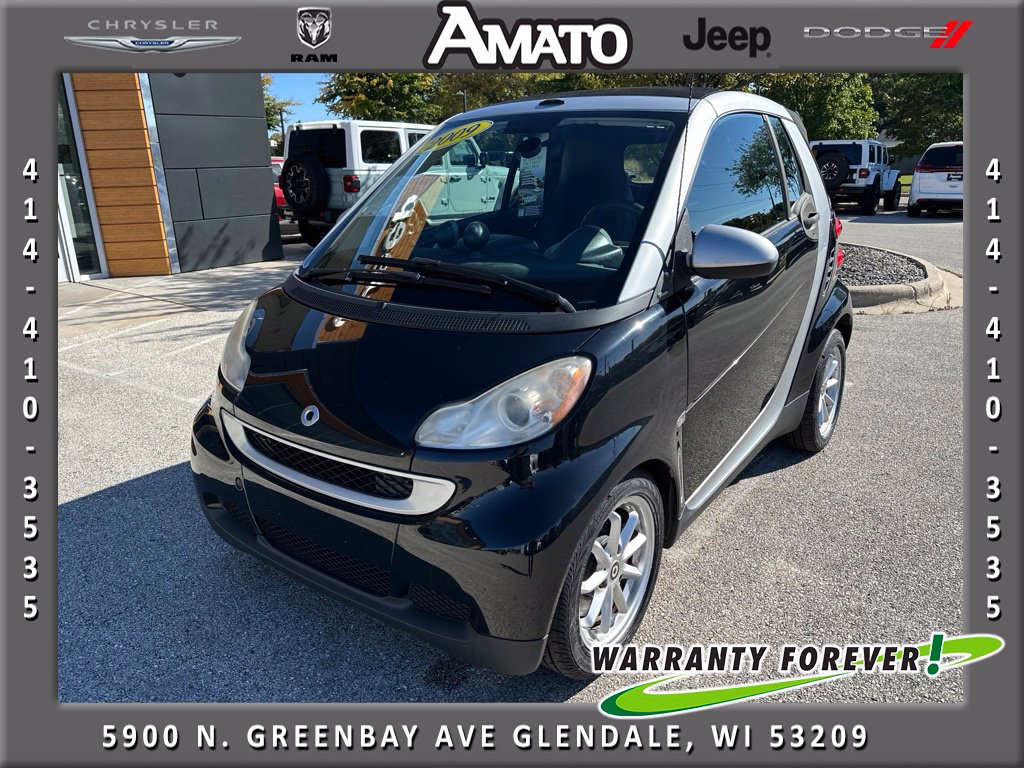
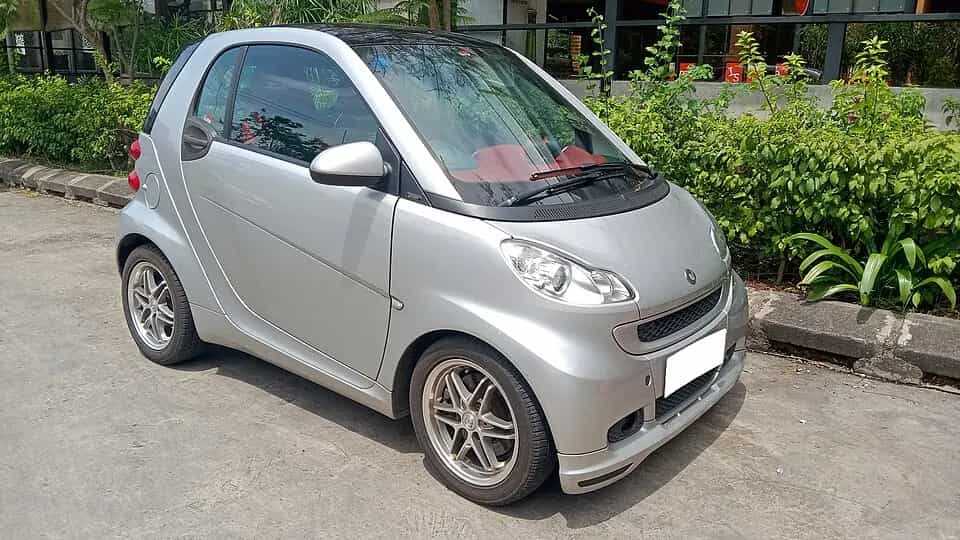
Smart Fortwo
Importing a used smart fortwo from the USA
The smart fortwo is the quintessential city car: barely 2.7 metres long, rear-engined and able to slot into gaps other cars simply drive past. Plenty of them found homes in American cities between 2008 and 2019, and those cars now form a small but interesting pool for anyone who wants to import a used smart fortwo from the USA. One fact matters before you begin, because it drives the customs calculation: the fortwo was assembled in Hambach, France, so its documented origin is European rather than American. USCar Trader works purely as an independent broker — we locate the car, verify it and organise the logistics, without acting as a dealer or taking any margin on the vehicle itself.

Model history and generations
Two generations reached American roads. The second-generation W451 (US model years 2008–2015) launched the brand in the States under a Mercedes-Benz USA distribution arrangement and was sold as the fortwo pure, passion and the open-top passion cabriolet. The third-generation W453 arrived for 2016, developed jointly with Renault on the platform that also underpins the Twingo. It brought a wider track, a more grown-up cabin and, importantly for US buyers, a genuinely turbocharged engine. smart withdrew the combustion fortwo from America after the 2017 model year and offered only the electric fortwo EQ for 2018–2019 before leaving the market entirely.
Engines and drivetrain
The W451 used a 1.0-litre three-cylinder (Mitsubishi-derived) of roughly 70 hp driving the rear wheels through a five-speed automated manual. That single-clutch automated gearbox is the fortwo's most-discussed trait: shifts are slow and nodding unless you lift off to help it. The W453 replaced it with a 0.9-litre turbocharged three-cylinder of about 89 hp paired to a six-speed dual-clutch "twinamic" transmission, a far smoother pairing. The rear-engine, rear-wheel-drive layout stayed throughout. The Electric Drive / EQ used a roughly 60 kW motor and a battery of about 17.6 kWh, giving an EPA range in the high-50-mile bracket — strictly an urban car.
Which trim makes sense
Body choice is simple: a two-seat coupe or a full cabriolet with a folding fabric roof and removable roof bars. US trims ran pure, passion, prime and proxy depending on year, with the exposed tridion safety cell in a contrasting colour as the signature styling cue. Equipment was modest — panoramic glass roof, heated seats, upgraded audio and, on later cars, a small touchscreen with smartphone integration.
Supply on the US market
American fortwos were usually second cars or city runabouts, so mileage is often low for the age, though many lived hard urban lives with frequent cold starts and tight parking. Expect the greatest numbers among 2008–2015 W451 cars, smaller supply of W453 turbo cars from 2016–2017, and electric examples concentrated in California and other EV-friendly states. Inspect kerbed wheels, uneven tyre wear from tight parking and the cabriolet roof mechanism. Availability and condition vary widely and no prices are quoted here.
Who benefits from importing
A used fortwo suits buyers who want a distinctive, genuinely tiny city car, a collectible drop-top, or the novelty of a US-market example. It is not a motorway cruiser and not a family car. Character, easy parking and low running costs are the draw, not space or outright pace.
Technical data
| Reference model | smart fortwo W453 turbo (US 2016–2017) |
| Body styles | 2-seat coupe; cabriolet |
| Earlier generation | W451 (US 2008–2015), 1.0 L I3 |
| Engine (W453) | 0.9 L turbo inline-3 (petrol) |
| Displacement | 898 cc |
| Power | approx. 89 hp (66 kW) |
| Torque | approx. 135 Nm |
| Transmission | 6-speed dual-clutch (twinamic) |
| Drive layout | rear engine, rear-wheel drive |
| Length | approx. 2695 mm |
| Width | approx. 1663 mm |
| Height | approx. 1555 mm |
| Wheelbase | approx. 1873 mm |
| Kerb weight | approx. 975 kg |
| Seats | 2 |
| Electric variant | fortwo Electric Drive / EQ, ~17.6 kWh |
Known weak points and maintenance
Mechanically the fortwo is simple, but a few points recur. The W451's automated manual gives clunky low-speed shifts and its clutch actuator can wear; smoothness improves noticeably if you ease off the throttle at each change. The W453's dual-clutch is far better behaved. Across both, watch engine and gearbox mounts, the auxiliary drive belt, coolant hoses and the small 12-volt battery, which can drain on cars that sit. The tridion cell is galvanised and the coloured body panels bolt on, so accident repairs are usually straightforward and rust is limited — though steel subframes, brake lines and exhausts suffer in salted regions. On cabriolets, test the folding-roof motor through a full cycle. Electric cars need a battery state-of-health check and evidence of regular use. Overall a used fortwo is dependable when serviced, but it rewards a careful pre-purchase inspection.
US and EU spec compared
US-market fortwos differ in detail. They run amber side-marker lamps, a miles-per-hour speedometer and headlamps aimed for right-hand traffic. European registration requires the correct beam pattern, a rear fog lamp and, in most cases, removal or acceptance of the US side markers. The electric fortwo in the US uses the J1772 (Type 1) charging standard, so an adapter or interface for European Type 2 AC charging must be planned for.
The import process in detail
The process runs in a clear sequence: shortlist and inspect the car; confirm the VIN and plant/origin; place funds in escrow for security; arrange ocean freight to a German or Dutch port; complete customs clearance on arrival; obtain the TÜV inspection and individual approval (Einzelabnahme) for a US-spec vehicle; then register the car locally. USCar Trader coordinates each stage as your broker.
What customs clearance really costs
In short: the 0% duty rate applies only with documented US origin (VIN/plant) – German import VAT of 19% is always due.
Because the fortwo is a French-built car, its documented origin is European, so the 0% preferential rate for goods of proven US origin under Regulations (EU) 2026/1455 and (EU) 2026/1461 generally does not apply here — that rate is tied to a verifiable US plant via the VIN. Expect the standard passenger-car customs duty to be assessed on the customs value unless another relief is separately established. On top of that, the 19% German import VAT (Einfuhrumsatzsteuer) always applies, calculated on the vehicle value plus duty and freight. Nothing here is duty-free or guaranteed; the exact treatment follows the paperwork.
TÜV, modifications and registration
Typical work for approval includes converting the headlamps to a European beam pattern, fitting or activating a rear fog lamp, switching the speedometer to km/h, confirming the odometer reading, and ensuring tyres carry the correct European markings. On the electric car, the charging interface is checked. Once the TÜV report and individual approval are in hand, local registration follows.
Check before you buy
- Decode the VIN and confirm the assembly plant and documented origin.
- Pull a Carfax or AutoCheck history for accidents, title status and odometer records.
- Inspect the tridion cell, subframe and brake lines for corrosion in salt-belt cars.
- Cycle the cabriolet roof fully and check the panoramic glass seals.
- On W451 cars, test the automated-manual shift quality on the road.
- On electric cars, verify battery state of health and charging behaviour.
- Confirm a clean, transferable title before any funds move.
Common questions
Can I import any used smart fortwo from the USA?
Yes, provided it has a clean, transferable title and passes German technical approval. The most common candidates are 2008–2015 W451 cars and 2016–2017 W453 turbo cars.
Does the fortwo qualify for 0% import duty?
Generally no, because it was built in France, not the USA. The 0% rate applies only to vehicles with provable US origin. Documented origin is confirmed by the VIN and plant.
Is the 19% import VAT always charged?
Yes. German import VAT of 19% applies to every import regardless of origin, calculated on value plus duty and freight.
How reliable is a used smart fortwo?
Mechanically simple and dependable when serviced. The main quirks are the W451's automated manual and the usual small-battery and roof-mechanism checks.
Can the US electric fortwo charge in Germany?
It uses the J1772 (Type 1) AC standard, so a suitable adapter or interface for European Type 2 charging should be arranged.
How long does the import take?
Ocean freight plus clearance, TÜV and registration typically span several weeks once a car is secured; timing depends on shipping schedules and inspection slots.
What paperwork proves the origin?
The VIN identifies the manufacturing plant, and this is cross-checked with the title and manufacturer documentation during customs clearance.
Is a US-spec fortwo hard to register in Germany?
No, but it needs an individual approval (Einzelabnahme) covering lighting, speedometer and other conversions before registration.
Ready to look further? Browse smart in the Carhub, compare small US-market imports such as the FIAT 500, the MINI Cooper or the Volkswagen Beetle, or view current fortwo listings ready to import.