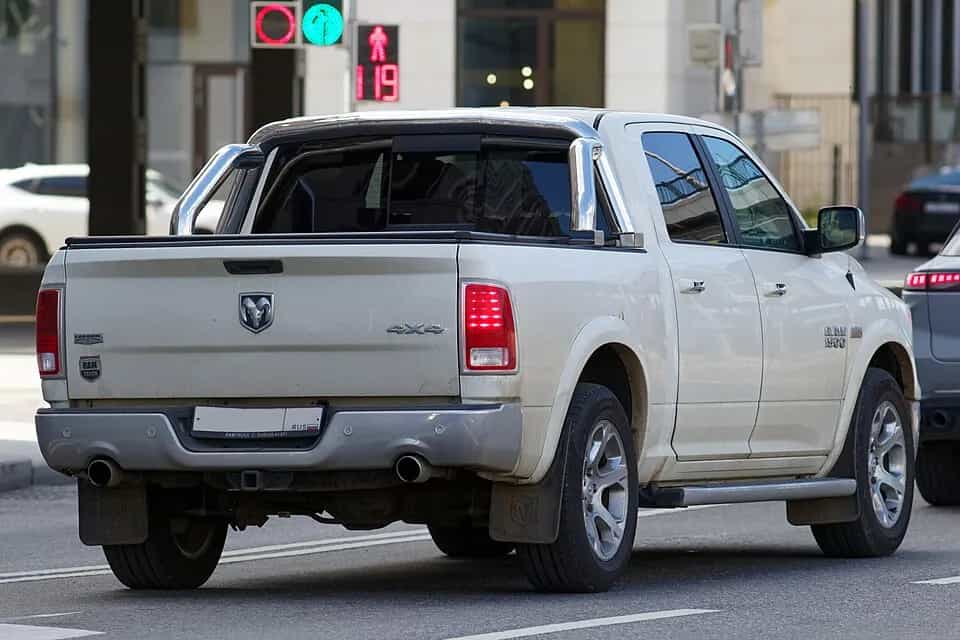
Ram Ram 1500 Pickup

Importing a used RAM 1500 from the USA

The RAM 1500 changed how buyers think about full-size pickups. Its coil-sprung (and optionally air-sprung) rear suspension gives it a ride quality closer to a large SUV than a work truck, and the interiors of higher trims are genuinely upmarket. For a European buyer, that combination is the draw: a proper American V8 pickup that is also comfortable to live with. USCar Trader acts as your independent broker to source a used RAM 1500 in the United States, verify its build origin and history, and manage freight and customs clearance. We take no dealer margin — you buy the truck, we handle the path from a US driveway to German registration.

RAM Ram 1500 Pickup – used car imported from the USA
Photo: Retired electrician · CC0 · Wikimedia Commons

Model history and generations

The fourth-generation RAM 1500 (chassis code DS) ran from 2009 and introduced the coil-spring rear axle and the class-defining RamBox side storage. From 2019 the fifth generation (DT) launched on a new frame with a lighter body, a large Uconnect touchscreen (up to a portrait 12-inch), and available rear air suspension. Chrysler kept the previous truck in production alongside it as the RAM 1500 Classic, so used listings mix DS-based Classics and the newer DT — a distinction that matters for both equipment and, importantly, the assembly plant behind the VIN.

Engines and drivetrain

The signature engine is the 5.7-litre HEMI V8 (~395 hp), offered with and without the eTorque mild-hybrid belt starter-generator. Below it sits the 3.6-litre Pentastar V6, also available with eTorque. From 2020 to 2023 RAM offered a 3.0-litre EcoDiesel V6 (~260 hp, strong low-end torque) prized for touring range. All modern RAM 1500s use the excellent 8-speed ZF-based TorqueFlite automatic. Drive is rear-wheel or selectable four-wheel drive with a transfer case. The high-performance TRX uses a 6.2-litre supercharged HEMI — dramatic, thirsty, and a niche import.

Which trim makes sense

US RAM 1500s span Tradesman, Big Horn/Lone Star, Laramie, Rebel (off-road), Limited Longhorn and Limited. Cabs are Quad Cab and the roomier Crew Cab; beds are 5'7" or 6'4". The Crew Cab Laramie or Limited with the 5.7 HEMI and air suspension is the configuration most European buyers want and the most rewarding to import.

Supply on the US market

RAM sells in huge numbers, so used supply is deep across every trim. Well-kept Laramie and Limited trucks from private owners are plentiful; Tradesman and Big Horn examples skew toward fleet and higher mileage. As with any US pickup, sourcing from dry southern and western states reduces the risk of frame and brake-line corrosion, which pays off at the TÜV inspection. Typical import candidates are three to eight years old.

Who benefits from importing

Choose a used RAM 1500 if you want full-size towing and hauling capability without the harsh ride of a traditional work truck, or if the plush Limited interior appeals more than anything a European brand offers in this class. It is a wide, thirsty vehicle best suited to owners with the space and the use case. If you want a specific HEMI-and-air-suspension build that was never sold new in the EU, importing is usually the only way to get exactly that.

Technical data

AttributeTypical figure (US-market)
Body stylesQuad Cab / Crew Cab pickup
DrivetrainRWD or selectable 4WD with transfer case
V6 petrol3.6 L Pentastar (eTorque optional), ~305 hp
Signature V85.7 L HEMI (eTorque optional), ~395 hp
Diesel3.0 L EcoDiesel V6, ~260 hp
Performance6.2 L supercharged HEMI (TRX), ~702 hp
Transmission8-speed automatic (TorqueFlite)
Rear suspensionCoil spring; optional air suspension
Towing (approx.)Up to ~5,700 kg (properly equipped)
Length~5.9–6.3 m depending on cab/bed
FuelPetrol (regular) or diesel
GenerationsDS (4th, incl. Classic) / DT (5th)
Assembly plantsSterling Heights (US), Saltillo (MX)
InfotainmentUconnect, up to 12-inch portrait screen

Known weak points and maintenance

The 5.7 HEMI is a proven engine, but the well-known 'HEMI tick' — a lifter/rocker noise on some units — is worth listening for, and cam and lifter wear appears on higher-mileage examples, particularly those that skipped oil changes. The eTorque mild-hybrid system adds a 48-volt battery and belt starter-generator; verify it operates correctly. The 3.0 EcoDiesel had EGR-cooler and emissions-system recalls, so a full recall and service record is essential on diesel trucks. Air suspension compressors and height sensors can fail with age and are worth checking through their full range. Interior electronics and the large Uconnect screen are generally robust. As always, a documented history beats a low odometer reading.

US and EU spec compared

US RAM 1500s are calibrated and lit for American rules: mph speedometer, psi tyre pressures, and rear lighting that typically needs a rear fog lamp added and side markers assessed for European approval. The RAM 1500 was not an EU homologated model, so it is brought in and approved as an individual import rather than by a European type certificate.

The import process in detail

We help you select the right truck, then run a VIN and origin check that determines the customs treatment. Payment moves through escrow for your protection. The RAM is transported to a US port and shipped by ocean freight to a European port such as Bremerhaven, where it clears customs. It then passes TÜV individual approval (Einzelabnahme) and is registered in Germany.

What customs clearance really costs

Key point: duty depends on the plant of build; only a VIN check secures the 0% rate. Import VAT of 19% applies regardless.

Keep the two charges separate. EU import duty: since 1 July 2026, Regulations (EU) 2026/1455 and 2026/1461 permit a 0% rate for used cars of proven US origin, imported by direct transport, through 31 December 2029. This is never guaranteed in advance — a RAM 1500 built in Sterling Heights, Michigan qualifies on origin, while a Classic assembled in Saltillo, Mexico does not and would take the standard rate. The VIN settles it. Separately, and always: 19% German import VAT (Einfuhrumsatzsteuer) on the customs value. USCar Trader adds no margin to either figure.

TÜV, modifications and registration

Common adaptations include fitting a rear fog lamp, adjusting headlights and side markers, and documenting or converting the odometer reading. After the Einzelabnahme is passed, the truck is registered and road-legal in Germany.

Check before you buy

Confirm before you buy: the VIN decodes to a US plant (not Saltillo) if you are counting on 0% duty; a Carfax or AutoCheck report is free of salvage, flood or lemon flags; the frame, brake lines and bed are rust-free; oil-change history exists, ideally with any HEMI lifter or EcoDiesel recall work documented; the title is clean and transferable; and an independent pre-purchase inspection has checked the engine, transmission and air suspension.

Common questions

Is a used RAM 1500 import automatically duty-free?

No. The 0% EU duty rate applies only with proven US origin by VIN and direct transport; the 19% German import VAT always applies.

Which RAM 1500 engine should I import?

The 5.7 HEMI V8 is the most popular and best supported; the 3.0 EcoDiesel offers range but needs a complete recall history.

What is the HEMI tick?

A lifter or rocker noise heard on some HEMI engines; have it assessed, as it can point to valvetrain wear.

Does the RAM 1500 have air suspension?

It is optional. If fitted, test it through its full height range for compressor and sensor faults.

Which plant builds the RAM 1500?

The current DT is built in Sterling Heights, Michigan; the Classic was built in Saltillo, Mexico — origin affects the duty rate.

Will it pass German TÜV?

Yes, via individual approval once lighting and details are adapted.

Do you take a dealer margin?

No. USCar Trader is an independent broker and intermediary.

Get started: explore RAM in the Carhub, compare the Chevrolet Silverado 1500 and the GMC Sierra 1500, or view current RAM 1500 listings.