Mitsubishi Outlander

Importing a used Mitsubishi Outlander from the USA

The Mitsubishi Outlander is one of the more sensible ways into a seven-seat compact SUV, and the US used market carries a deep pool of well-equipped examples that rarely surface in the same volume in Germany. Because USCar Trader works strictly as an independent broker for used US vehicles, we source individual cars to your brief rather than moving stock, which matters with a model that spans two very different generations. If you want to import a used Outlander from the USA, the first thing to settle is which generation and drivetrain suit you, because the pre-2022 and post-2022 cars are almost unrelated under the skin.

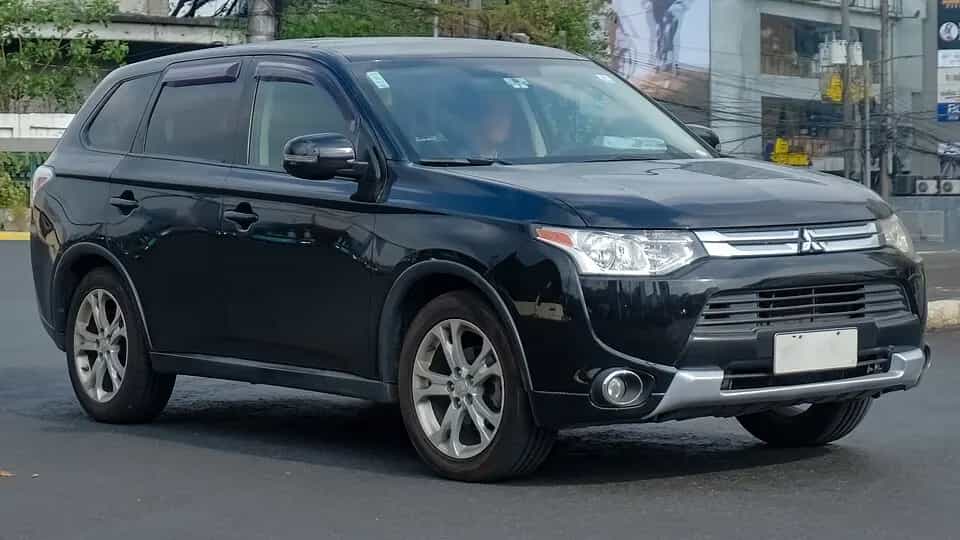
Mitsubishi outlander – used car imported from the USA
Photo: Ethan Llamas · CC BY-SA 4.0 · Wikimedia Commons

Model history and generations

For import purposes the relevant cars are the third generation (2013–2021, chassis code GF/GG) and the current fourth generation (2022 onwards, GN/GM). The third-gen Outlander received meaningful facelifts in 2016 (the "Dynamic Shield" nose) and again in 2019, along with steady interior and NVH improvements. The fourth generation is the important leap: it shares its CMF-C/D platform with the Nissan Rogue, grew noticeably in width and refinement, and moved to a far more modern cabin. Note that the Outlander Plug-in Hybrid is treated as a separate model in the US market and is not covered here.

Engines and drivetrain

US third-gen cars were sold with the 2.4-litre 4B12 four-cylinder (around 166 hp) driving a CVT, and, on GT trims through roughly 2020, the 3.0-litre 6B31 V6 (about 224 hp) with a conventional six-speed automatic. The V6 GT is the one enthusiasts hunt for. The fourth generation runs the Nissan-sourced 2.5-litre PR25DD four-cylinder (roughly 181 hp) with a CVT and Mitsubishi's well-regarded S-AWC all-wheel-drive system. Front-wheel drive was standard on lower US trims, with AWD optional across the range, so confirm exactly which layout a given VIN carries.

Which trim makes sense

The Outlander is a five-door SUV with a standard third row, making it a genuine 5+2. US third-gen trims ran ES, SE, SEL and GT; the fourth generation offers ES, SE, SEL, and the loaded LE and Platinum-style top grades. American cars are frequently generously specified, so heated seats, a panoramic roof, adaptive cruise and a surround-view camera are common on SEL and above.

Supply on the US market

Availability is strong. Third-generation cars turn up across a wide mileage band, from lightly used one-owner SEL examples to higher-mileage fleet and family cars. Fourth-generation Outlanders (2022–2024) are increasingly available off-lease with low mileage and full options. Because the Outlander sold in large numbers, you can afford to be selective on condition and history rather than taking the first car that appears. We do not quote Euro prices here; the point is that choice is broad enough to match a specific spec, colour and mileage target.

Who benefits from importing

A used US Outlander import makes sense if you want three rows of seating in a compact footprint, prefer the newer fourth-generation cabin and S-AWC traction, or specifically want the discontinued V6 GT that Europe never received in this form. Buyers who value a proven four-cylinder family SUV with a long warranty history behind it will find plenty here. If you need maximum towing or a diesel, the Outlander is not that car, and other imports will serve you better.

Technical data

AttributeDetail (generation-dependent)
Body style5-door compact SUV, standard third row (5+2)
Generations (import-relevant)Gen 3 (2013–2021), Gen 4 (2022–present)
Petrol engine (Gen 3)2.4L 4B12 I4, ~166 hp
V6 (Gen 3 GT)3.0L 6B31 V6, ~224 hp (to ~2020)
Petrol engine (Gen 4)2.5L PR25DD I4, ~181 hp
TransmissionCVT (4-cyl); 6-speed automatic (V6)
DrivetrainFWD or AWD; S-AWC on Gen 4
SeatingUp to 7
FuelPetrol (regular)
Length (Gen 4)approx. 4,720 mm
Towing (typical)approx. 680–1,600 kg depending on drivetrain
Fuel tankapprox. 55–63 litres
Origin markingNeutral — duty depends on actual build plant

Known weak points and maintenance

The Outlander's reputation for reliability is solid but not flawless. The most-discussed weak point on third-generation cars is the CVT: earlier units can show shudder, whine or premature wear if fluid was never serviced, so a documented CVT fluid change history is worth its weight in gold. Infotainment lag and occasional Bluetooth/USB glitches are common on pre-2019 cars. Some owners report air-conditioning condenser failures and minor electrical niggles. The 2.4L and 2.5L engines are chain-driven and generally durable; the older V6 is robust but thirstier. On fourth-generation cars, the Nissan-derived CVT is smoother, though the same principle applies — check for smooth, shudder-free acceleration on the test drive and confirm software updates were applied.

US and EU spec compared

US Outlanders typically run amber rear turn signals or combined red units, headlight aiming and beam patterns set for US roads, and daytime running lights that may need reconfiguration. Infotainment is set to miles, and the built-in navigation may lack European maps. The V6 GT trim and certain option combinations were never offered in Europe. None of this is a barrier — it simply defines the small list of items to address at approval time.

The import process in detail

The process runs in a fixed order: model and VIN selection; a VIN and build-plant origin check to establish the correct customs treatment; a secure escrow payment so funds are only released on agreed terms; booking ocean freight (container or RoRo) from a US port to a North European port such as Bremerhaven; customs clearance on arrival; TÜV inspection with individual approval (Einzelabnahme under §21 StVZO where no matching EU type approval exists); and finally German registration. We coordinate each handover so the car moves cleanly from the US seller to your local registration office.

What customs clearance really costs

In short: the 0% duty rate applies only with documented US origin (VIN/plant) – German import VAT of 19% is always due.

Because the Outlander is marked neutral for origin, the applicable import duty depends on where the specific car was actually built, proven via the VIN and plant code. Where provable US origin exists and the conditions of Regulations (EU) 2026/1455 and 2026/1461 are met (in force since 1 July 2026, direct transport, until 31 December 2029), a 0% EU import duty can apply; otherwise the standard rate for the actual plant applies. Separately, and in every case, the 19% German import VAT (Einfuhrumsatzsteuer) is due on import. We never describe an import as duty-free or guaranteed, and we add no hidden margin — you see freight, duty and VAT as distinct line items.

TÜV, modifications and registration

Typical approval work is modest: converting or verifying rear lighting, fitting a rear fog lamp (mandatory in Germany and absent on US cars), confirming the speedometer reads in km/h or adding a conversion, and headlight adjustment. The odometer must be documented and consistent with the history. Once the individual approval is issued, the car is registered like any other vehicle.

Check before you buy

  • Run the VIN and confirm the build plant for the correct customs treatment.
  • Order a Carfax or AutoCheck history and review accident, title and ownership records.
  • Check title status — a clean title is essential; salvage/rebuilt titles complicate approval.
  • Verify CVT fluid service history and test for shudder under acceleration.
  • Inspect for underbody rust, especially on cars from northern/rust-belt states.
  • Confirm mileage matches service records and the digital odometer.
  • Check that AWD/S-AWC (if fitted) engages correctly.

Common questions

Can I import a used Mitsubishi Outlander from the USA to Germany?

Yes. Both the third and fourth generations can be imported as used vehicles and approved for German registration via individual approval where required.

Does the 0% EU import duty apply to the Outlander?

Only if the specific car has provable US origin under the current regulations and all conditions are met. The Outlander is often built outside the US, so the rate depends on the actual plant shown by the VIN.

Is the 19% import VAT always due?

Yes. The 19% German import VAT applies to every import regardless of origin or duty rate.

Which Outlander engine is best for import?

The fourth-generation 2.5L with S-AWC is the modern all-rounder; the third-gen 3.0L V6 GT appeals to buyers who want something Europe never offered.

Are Outlander CVTs reliable?

They are reliable when serviced. Insist on documented CVT fluid changes and test for smooth, shudder-free acceleration.

Will US navigation and infotainment work in Europe?

Menus work but maps and units are US-set; European maps and km/h display are usually addressed at approval.

How long does the import take?

Typically several weeks, driven mainly by ocean freight scheduling and the customs and TÜV steps on arrival.

Can I choose a specific colour and trim?

Yes. As a broker we search the US market to your exact spec rather than selling from stock.

Explore more Mitsubishi in the Carhub, compare the related Mitsubishi Outlander Sport and Mitsubishi Eclipse Cross, or browse current Outlander listings.