Importing a used Mitsubishi Outlander Sport from the USA
Because this model is closely related to versions already familiar in Europe, an import can be a sensible way to find a specific colour, trim or condition.
 0049 (0)89 2000 791 00
 Mo - Fr 8:00am - 8:00pm
USCar Trader import service
Choose a specific vehicle. Where data is available, its detail page shows the import cost calculation. We assess any possible duty benefit with you before purchase.
Important: A 0% EU import-duty rate may be available for a vehicle covered by Regulation (EU) 2026/1455 that has US origin and is imported directly into the EU. CETA may apply to a vehicle with preferential Canadian origin. Whether the requirements are met is assessed for the individual case. Please contact us before purchase; we review the possible duty benefit and provide non-binding support through the process. Import VAT and other costs are assessed separately.
CarHub · Mitsubishi
The Mitsubishi Outlander Sport is the compact crossover many Europeans know as the ASX or RVR — a small, practical SUV that Mitsubishi sold in the United States for well over a decade.
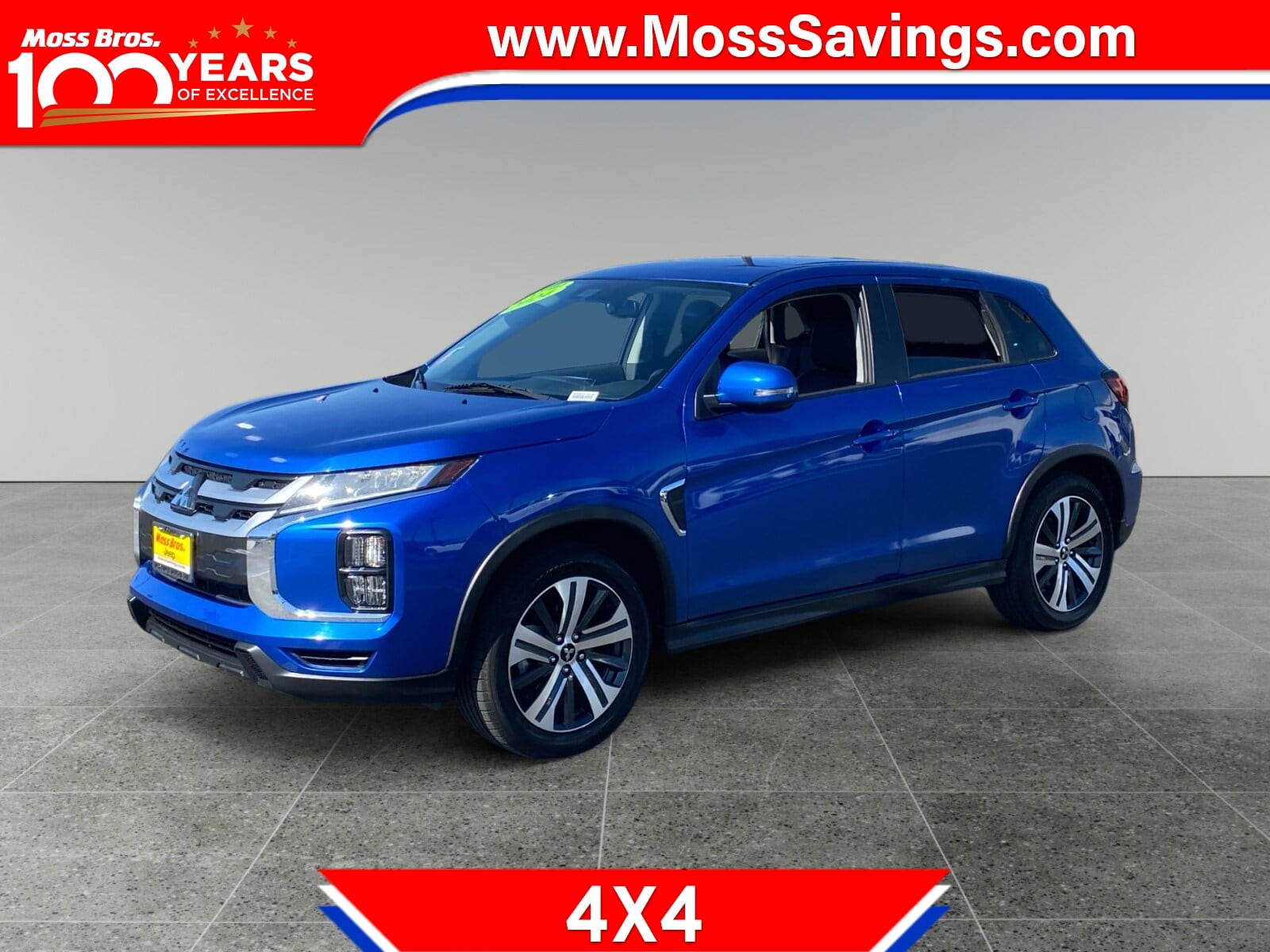
Price:19,222.00 USD

Price:10,639.00 USD

Price:17,145.00 USD

Price:17,633.00 USD

Price:18,373.00 USD
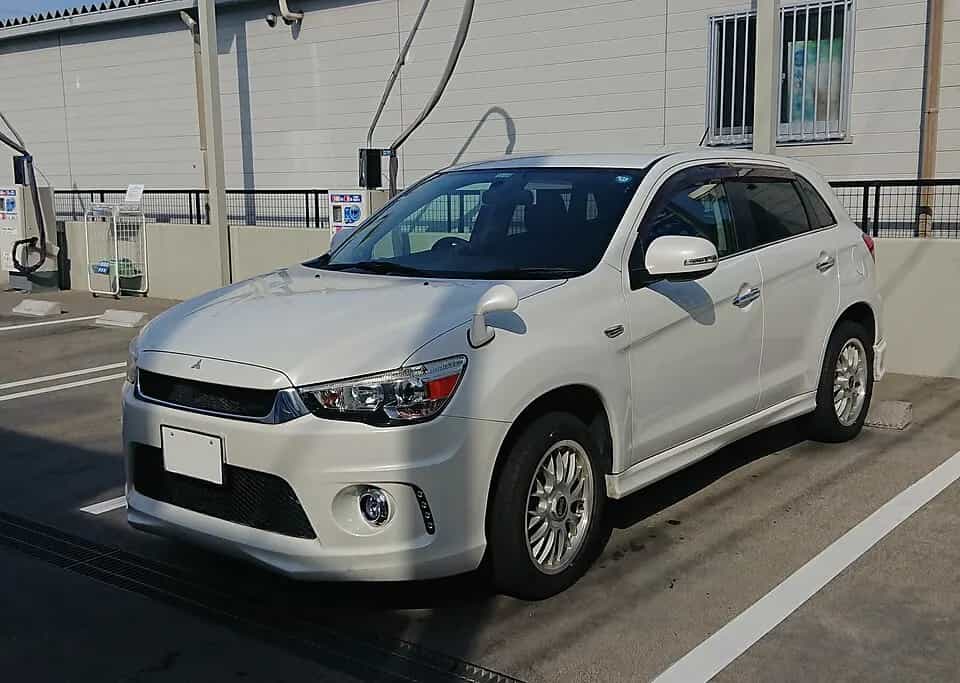
Model profile
Because this model is closely related to versions already familiar in Europe, an import can be a sensible way to find a specific colour, trim or condition.
The Outlander Sport launched for the 2011 model year on Mitsubishi's GS platform, sharing much with the ASX/RVR sold elsewhere.
Powertrain and equipment
Two petrol four-cylinders cover the range. The 2.0-litre 4B11 MIVEC produces around 148 hp and is the volume engine; the larger 2.4-litre 4B12 MIVEC (around 168 hp) appeared on higher trims for a bit more urge.
The body is a single five-door compact crossover.
Vehicle selection
Supply is reasonable rather than enormous — Mitsubishi is a smaller player in the States, but the Outlander Sport sold consistently as an affordable crossover, so late-model, low-to-moderate-mileage cars are readily found.
A used Outlander Sport suits buyers who want a small, easy-to-park crossover with the option of all-wheel traction and low running costs.
Vehicle data
| Body style | 5-door compact crossover SUV |
|---|---|
| Length | approx. 4,365 mm |
| Wheelbase | approx. 2,670 mm |
| Width | approx. 1,770 mm |
| Curb weight | approx. 1,350–1,500 kg |
| Seating | 5 |
| Base engine | 2.0 L 4B11 MIVEC, approx. 148 hp |
|---|---|
| Upper engine | 2.4 L 4B12 MIVEC, approx. 168 hp |
| Transmission | CVT (early 5-speed manual) |
| Drive | FWD or All-Wheel Control (AWC) |
| Fuel type | Gasoline (petrol) |
| Fuel tank | approx. 63 litres |
| Global names | ASX / RVR (Outlander Sport in North America) |
|---|---|
| Platform | Mitsubishi GS |
| Production years | 2011–early 2020s (facelifts 2013, 2016, 2020) |
| Assembly | Okazaki, Japan (some early Normal, Illinois) |
Values are reproduced verbatim from the existing article table. The documents for the specific vehicle govern.
Pre-purchase review
For the Mitsubishi Outlander Sport, the agreed inspection plan focuses in particular on vehicle history, visible body and underbody condition, fluid leaks, warning messages, tyres, brakes and accessible suspension components. USCar Trader can document these points through a separately commissioned on-site inspection; inaccessible areas or unauthorised road tests are explicitly recorded as unchecked.
Germany and Europe
US cars have amber front side markers, mph-priority instruments, and typically no rear fog lamp — all TÜV items.
Plan for European-approved headlights or a beam conversion, a retrofitted rear fog lamp, and a km/h speed display.
USCar Trader services
As a buyer based in Germany, you do not have to inspect the vehicle yourself in the United States or Canada. Within the agreed scope, USCar Trader can coordinate document review, a separately commissioned on-site inspection and purchase processing.
Covered inspection points are agreed in advance. An on-site inspection records condition at the appointment and is not a guarantee.
Next step: Before commissioning, USCar Trader and the customer agree which document, history, inspection and transaction checks suit the vehicle and are included in the service. This records what was actually checked.
Import process
The assessment depends on the specific vehicle and the circumstances of the transaction. Please contact USCar Trader before purchase; we review any possible duty benefit and provide non-binding support. Import VAT and other costs are considered separately.
Questions and answers
Essentially yes — it is sold as the ASX or RVR in Europe and other markets. The North American "Outlander Sport" shares the platform and engines, with different trim names and equipment.
No, not automatically. A 0% EU import-duty rate may be available for a vehicle covered by Regulation (EU) 2026/1455 that has US origin and is imported directly into the EU. CETA may apply to a vehicle with preferential Canadian origin. Whether the requirements are met is assessed for the individual case. Please contact USCar Trader before purchase; we review the possible duty benefit and provide non-binding support. Import VAT and other costs are assessed separately.
Import VAT and other taxes or costs are assessed separately under the applicable rules and the circumstances of the individual case. A blanket answer for every vehicle would not be reliable.
The CVT. Confirm documented fluid changes and test for judder or overheating under load; a well-maintained CVT is generally reliable.
AWC adds traction for winter and light off-road use; FWD is lighter and slightly more economical. Choose by climate and use.
By container or roll-on/roll-off from a US port, with escrow protecting your funds until the car is verified and loaded.
Later 2016-and-newer cars have the updated styling and equipment while keeping the proven mechanicals, making them the most rounded choice.
Available VIN, title and history information can be reviewed in the vehicle profile. USCar Trader can also arrange a separately booked on-site inspection within a scope agreed in advance.
More vehicles