Mini Cooper
Importing a used MINI Cooper from the USA
The MINI Cooper is one of the most recognisable small cars on the road, and the American used market holds a surprisingly deep pool of well-kept examples. Because MINI sold strongly in coastal US states with mild climates, many cars have spent their lives away from road salt, which matters a great deal when you plan to import a used MINI Cooper from the USA and put it through German registration. USCar Trader works as an independent broker on your behalf — we do not hold stock, take a manufacturer margin or sell new cars. We source the specific used Cooper you want, verify its history and organise transport and clearance into Germany or the wider EU.

Model history and generations
The modern BMW-built MINI arrived in 2001 with the R50 (Cooper) and supercharged R53 (Cooper S), both powered by a 1.6-litre Tritec four. In 2007 the R56 introduced the Prince-series 1.6, co-developed with PSA, switching the Cooper S to a twin-scroll turbo. The F56 generation launched for the 2014 model year on the UKL platform and is the one you will encounter most often in US classifieds: it moved to BMW's modular three- and four-cylinder turbo engines, grew slightly in size and gained a far better interior. A mild facelift arrived around 2018 with Union-Jack tail lights and a 7-speed dual-clutch option. Understanding which generation you are looking at is the first step, because parts, running costs and known faults differ sharply between them.
Engines and drivetrain
US-market F56 Coopers use BMW's B38 1.5-litre turbocharged three-cylinder, rated around 134 hp and with a distinctive off-beat thrum. The Cooper S steps up to the B48 2.0-litre turbo four at roughly 189 hp, and the John Cooper Works (JCW) pushes the same block to about 228 hp with a sport exhaust and uprated brakes. Transmissions in the US are predominantly the six-speed Aisin torque-converter automatic, though a proper six-speed manual was offered and later a seven-speed Getrag dual-clutch. All are front-wheel drive. Earlier R56 cars run the 1.6 Prince engine, naturally aspirated in the Cooper and turbocharged in the Cooper S.
Which trim makes sense
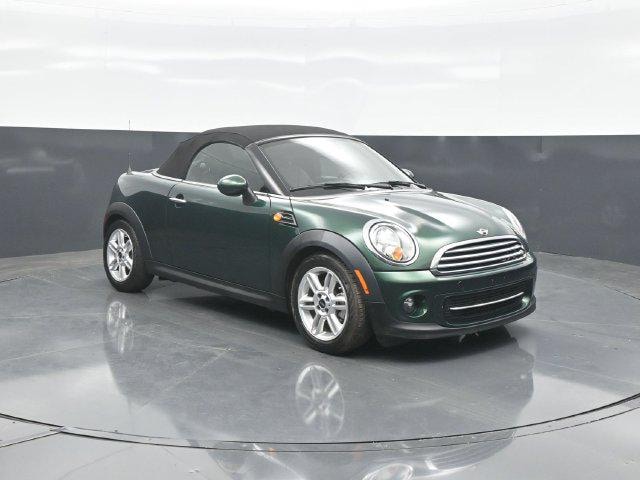
For the Cooper nameplate specifically, the American market focused on the two-door and four-door hardtop hatchbacks. Trim walk typically runs Cooper, Cooper S and JCW, with option packages such as Signature and Iconic bundling navigation, a panoramic roof, LED headlamps and leatherette or leather. Many US cars carry the larger alloy wheels and the sport-tuned suspension, so check the build sheet if you prefer a softer ride on German road surfaces.
Supply on the US market
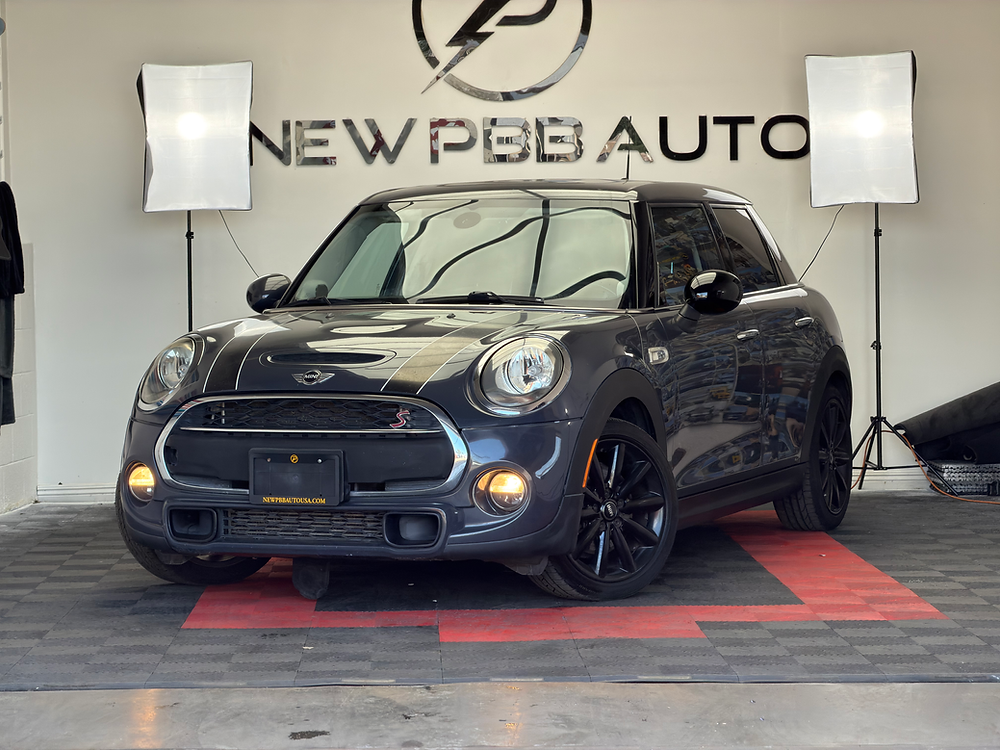
Supply is strong, especially for 2014-2019 F56 cars with automatic transmissions. Typical mileage for a five-to-eight-year-old Cooper sits in a reasonable range for a commuter hatch, and southern and western states offer the cleanest, rust-free bodies. Colours are varied and personalisation was heavy in the US, so bonnet stripes, contrast roofs and unusual interior trims are common. As always with a used MINI Cooper, condition and service history matter more than the odometer alone.
Who benefits from importing
A US import makes sense if you want a specific colour-and-spec combination that is hard to find locally, a clean-bodied example from a dry state, or simply better value than the comparable German-market car. Enthusiasts chasing a manual Cooper S or a JCW in a particular configuration often find the American pool larger and more colourful than the domestic one.
Technical data
| Specification | MINI Cooper (F56, typical US spec) |
|---|---|
| Body styles | 2-door / 4-door hardtop hatch |
| Cooper engine | 1.5 L turbo 3-cyl (B38) |
| Cooper power | approx. 134 hp |
| Cooper S engine | 2.0 L turbo 4-cyl (B48) |
| Cooper S power | approx. 189 hp |
| JCW power | approx. 228 hp |
| Transmissions | 6-speed manual, 6-speed auto, 7-speed DCT |
| Drivetrain | Front-wheel drive |
| Length (2-door) | approx. 3.87 m |
| Width | approx. 1.73 m |
| Wheelbase | approx. 2.50 m |
| Fuel | Petrol (premium recommended) |
| Fuel type | Gasoline |
| Seats | 4 (2-door) / 5 (4-door) |
| Generations covered | R56 (2007-2013), F56 (2014-2023) |
Known weak points and maintenance
MINI Cooper reliability improved noticeably with the F56, but there are known weak points to check. The earlier R56 1.6 is the troublesome one: timing chain tensioner rattle (the infamous cold-start "death rattle"), carbon build-up on the intake valves from direct injection, turbo failures on the Cooper S, and leaking VANOS solenoids and valve-cover gaskets. On F56 cars the picture is much better, though carbon deposits still accumulate on high-mileage direct-injection engines, and the electric water pump, thermostat housing and oil-filter housing gasket are worth inspecting. Manual cars should be checked for clutch wear. None of these are deal-breakers on a well-maintained car, but a pre-purchase inspection pays for itself.
US and EU spec compared
American Coopers run amber front side-marker lights, US-spec headlamps and often a different tyre-pressure and speedometer setup. The infotainment is configured for US navigation and radio bands. For German registration the lighting will need attention, and a rear fog lamp is required — most MINIs already have the fog-lamp provision, which simplifies the conversion.
The import process in detail
The process runs in a clear sequence: selection of the exact car, a VIN and origin check, a secure payment via escrow rather than a direct transfer to a stranger, ocean freight in a container or RoRo vessel to a North-European port such as Bremerhaven, customs clearance on arrival, TÜV inspection and individual approval (Einzelabnahme) where needed, and finally registration at your local office. USCar Trader coordinates these stages so you are not left chasing forwarders and customs brokers yourself.
What customs clearance really costs
In short: the 0% duty rate applies only with documented US origin (VIN/plant) – German import VAT of 19% is always due.
Because the MINI Cooper is predominantly built at Oxford in the United Kingdom, it is treated as non-US origin, so the 0% preference for provably US-built vehicles under Regulations (EU) 2026/1455 and 2026/1461 does not normally apply. The customs duty rate follows the actual country of manufacture shown by the VIN and plant code, and is charged on the customs value. Separately, and always, the German import VAT (Einfuhrumsatzsteuer) of 19% applies on top. We never quote "duty-free" and never fold a hidden margin into these figures — duty and VAT are pass-through costs.
TÜV, modifications and registration
Expect the inspector to look at the headlamp beam pattern, the amber side markers, the presence of a rear fog lamp and the speedometer. Odometer readings must be documented and consistent with the history. Most Coopers need only modest lighting work to pass. Once the TÜV certificate and the CoC or individual approval are in hand, registration is straightforward.
Check before you buy
Before you commit: confirm the VIN matches the documents; pull a Carfax or AutoCheck history for accidents, title brands and odometer roll-back; inspect for underbody rust despite the dry-state reputation; verify service records, especially oil changes and any timing-chain work on R56 cars; check the title is clean rather than salvage or rebuilt; and on turbo Cooper S and JCW cars listen for boost leaks and check for oil consumption.
Common questions
Is it worth importing a used MINI Cooper from the USA?
It can be, particularly for a specific colour-and-trim combination, a clean dry-state body, or a manual Cooper S that is scarce locally. The value depends on the individual car and the total landed cost.
Which MINI Cooper generation is most reliable?
The F56 (2014 onward) is generally the stronger bet; the R56 1.6 needs careful history checks for timing-chain and turbo issues.
Does the 0% US import duty apply to a MINI Cooper?
Usually not, because most Coopers are UK-built. The 0% preference requires provable US origin. The applicable rate follows the actual plant, and 19% import VAT always applies.
What is the difference between Cooper and Cooper S?
The Cooper uses a 1.5 turbo three-cylinder (~134 hp); the Cooper S uses a 2.0 turbo four (~189 hp) with sportier chassis tuning and brakes.
Will a US MINI pass German TÜV?
Yes, after modest lighting adjustments and confirmation of a rear fog lamp and correct headlamps. Documentation of the odometer is required.
How is a used MINI shipped from America?
By container or RoRo across the Atlantic to a North-European port, followed by customs clearance and inland transport.
What are the most common MINI Cooper problems to check?
Timing-chain tensioner and carbon build-up on older engines, water pump and thermostat, oil-filter housing gaskets, and clutch wear on manuals.
Can USCar Trader find a manual Cooper?
Yes. As a broker we search the US market for the exact specification you want, including manual gearboxes and JCW cars.
Ready to start? Browse the MINI in the Carhub, compare related models such as the MINI Hardtop 2 Door, the MINI Clubman or the roomier MINI Countryman, or view current MINI Cooper listings and let us handle the import.