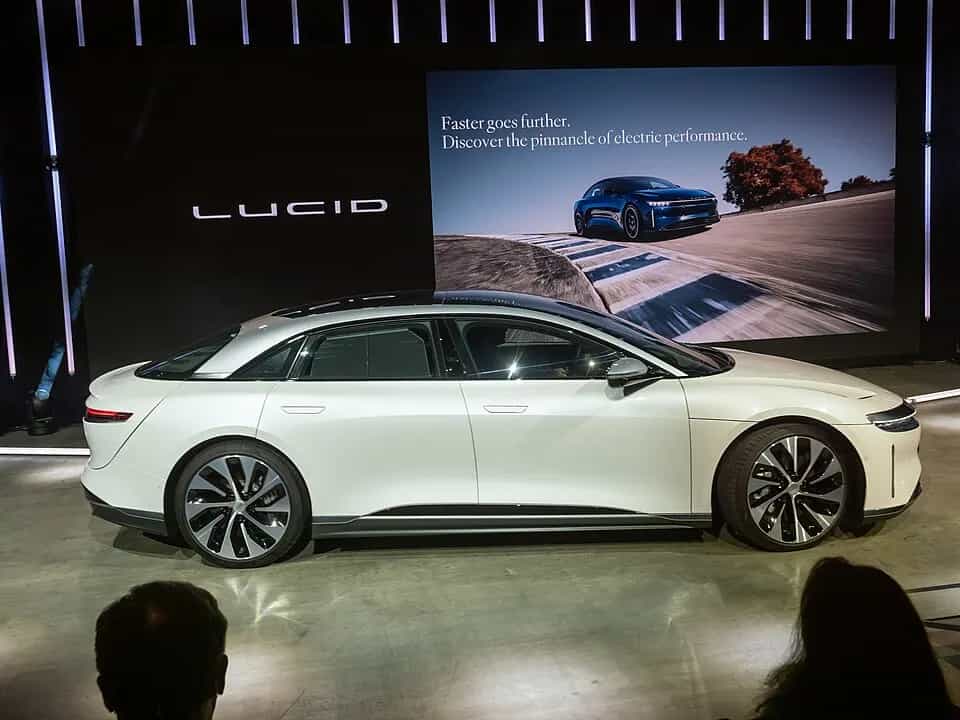
Lucid Air
Importing a used Lucid Air from the USA
The Lucid Air is the electric luxury sedan that set the range benchmark, and it is built in a single factory in Casa Grande, Arizona. Lucid has only a token presence in Europe, so importing a used Lucid Air from the USA is the practical route to ownership on a German registration. USCar Trader works as an independent broker: we source the car on the American used market, verify the VIN and US plant of build, arrange escrow and ocean freight, and steer the German approval. We are not a Lucid dealer and we do not sell new cars — our role is purely as your intermediary.

Generations at a glance
Lucid began Air deliveries in late 2021 with the limited Dream Edition, then rolled out the range: Grand Touring, the mid-tier Touring, and the entry Pure. In 2023 Lucid added the tri-motor Air Sapphire, a roughly 1,234 hp performance flagship. Across model years Lucid has refined the software, added a smaller battery Pure, and updated the driver-assistance suite (DreamDrive). Because the Air is a young model, the used market is essentially 2022-2024 cars, and the exact variant makes a large difference to range, power and equipment — so decode the VIN carefully.
Powertrain lineup
Every Air is electric and uses Lucid's compact, highly efficient drive units on a class-leading 900-volt-class architecture (around 924 V). Pure starts near 430 hp (rear- or all-wheel drive), Touring sits around 620 hp, Grand Touring produces roughly 819 hp, and Sapphire hits about 1,234 hp with a sub-2-second 0-60 mph claim. Battery capacity runs from about 88 kWh in Pure to roughly 112 kWh in Grand Touring. The high voltage enables DC charging peaks above 300 kW, among the fastest in the segment.
Trims in the US market
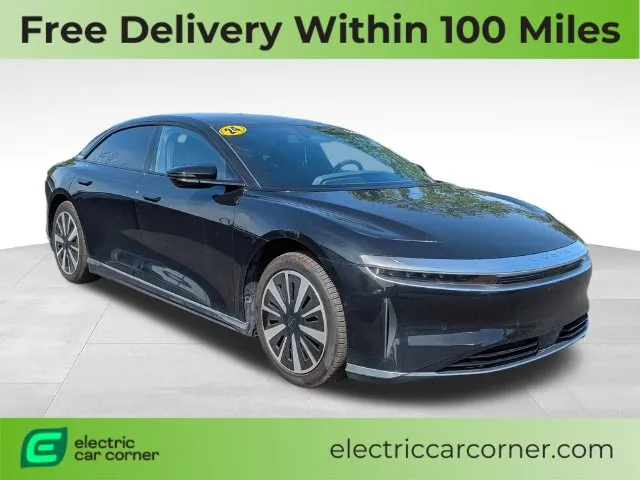
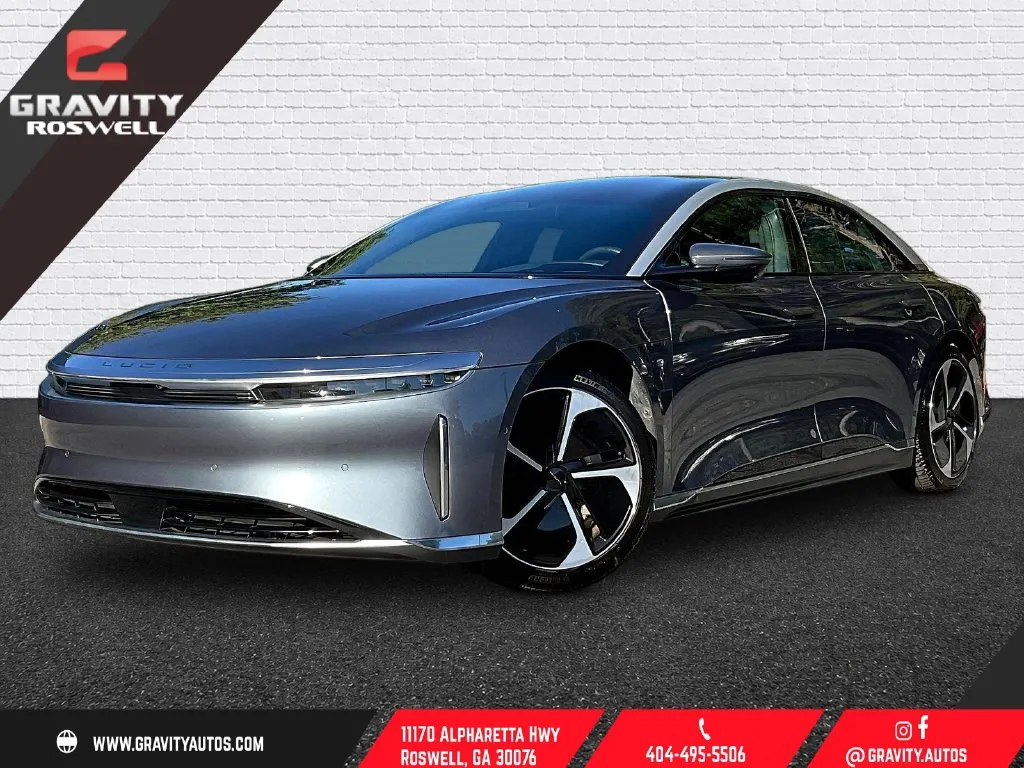
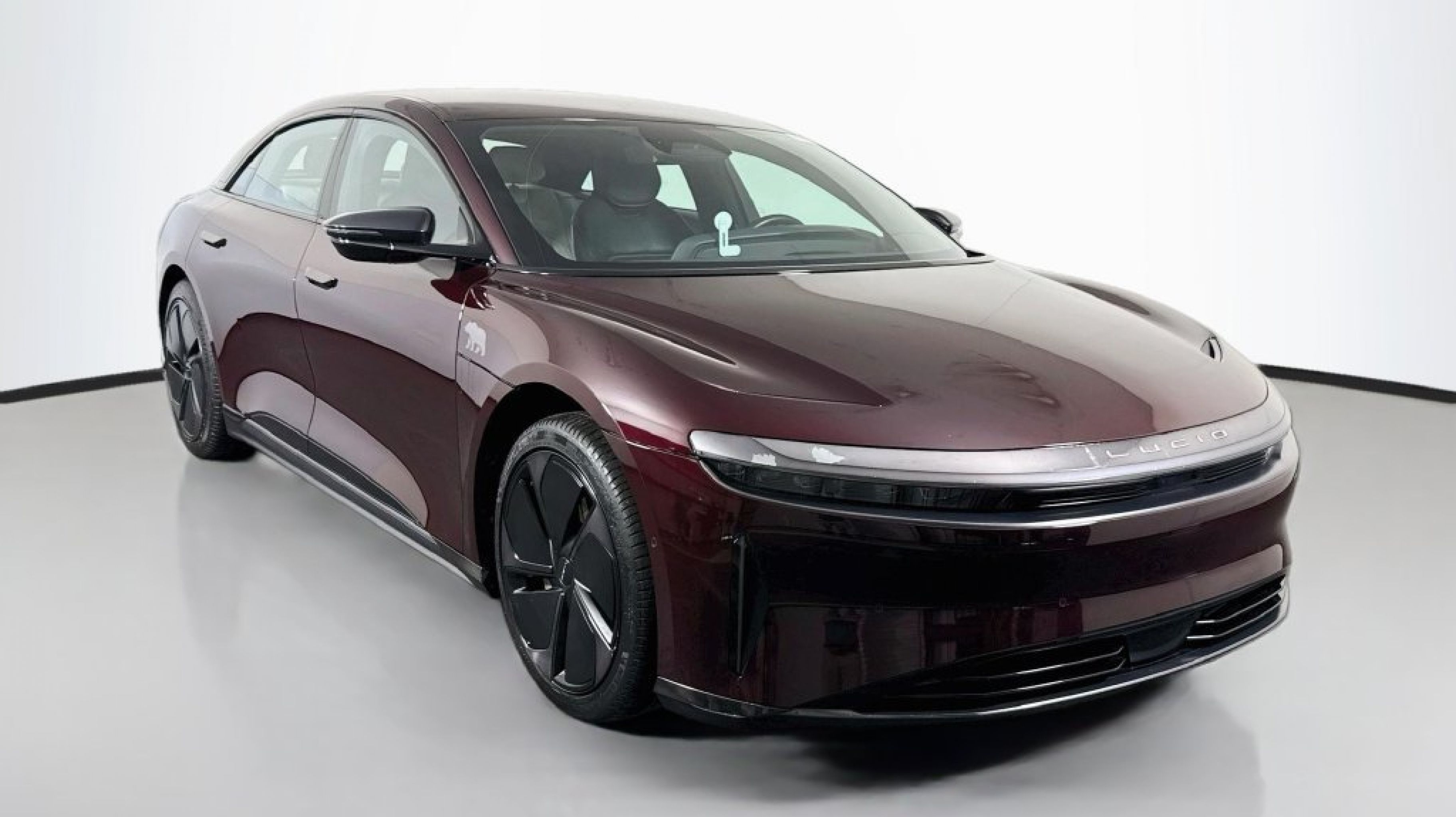
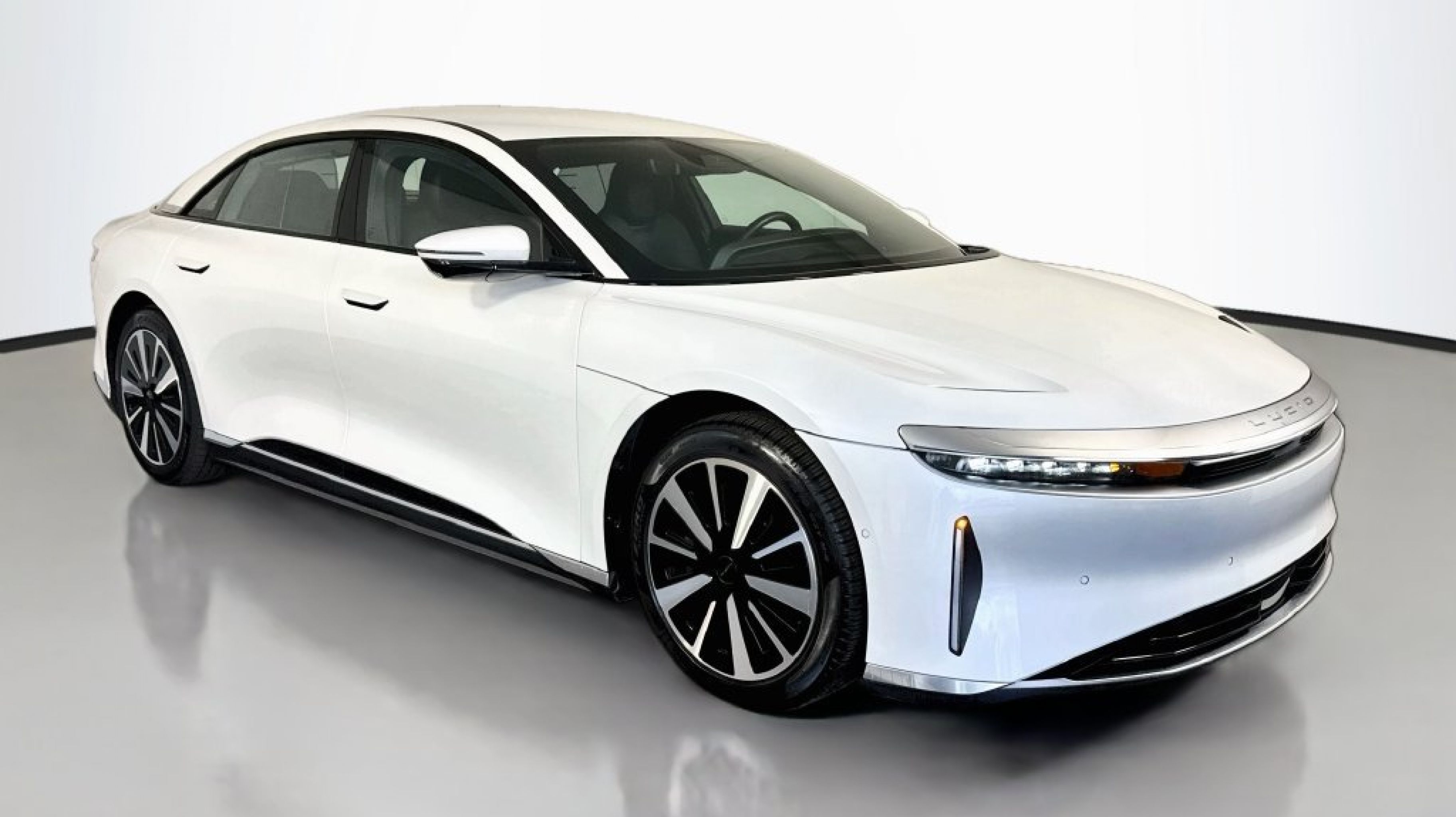
The Air is a single body: a low, aerodynamic five-seat luxury sedan with a glass canopy roof, a huge frunk and Lucid's curved 34-inch "Glass Cockpit" display. Trims — Pure, Touring, Grand Touring and Sapphire — differ mainly in power, battery, wheels and interior appointments. Options that move used values include the larger battery, 20"/21" wheels, the surreal-sound audio, and the Dream Drive Pro sensor suite.
The used market stateside
US supply is modest but real, dominated by 2022-2024 Grand Touring and Touring cars, typically with low mileage because these are recent, high-value vehicles. Condition tends to be excellent, though the earliest cars carried the software immaturity of Lucid's launch phase. A used Lucid Air should always be bought on the strength of a full Carfax or AutoCheck record and its current software build, not on listing photos.
Who should import one
The Air suits a buyer who wants a genuinely long-range luxury EV that stands apart from the usual German executive saloons, and who is comfortable with a very thin European service network. If class-leading efficiency, real 900V fast charging and a quiet, spacious cabin matter more to you than dealer convenience, importing a used Lucid Air is a distinctive choice. Be realistic about parts lead times and specialist repair before you commit.
Key specifications
| Attribute | Detail (typical) |
|---|---|
| Body style | Five-seat luxury electric sedan |
| Trims | Pure, Touring, Grand Touring, Sapphire |
| Length | approx. 4,975 mm (195.9 in) |
| Width (excl. mirrors) | approx. 1,939 mm |
| Height | approx. 1,410 mm |
| Wheelbase | approx. 2,960 mm (116.5 in) |
| Battery | approx. 88 kWh (Pure) / 112 kWh (Grand Touring) |
| Architecture | approx. 900 V (924 V) |
| Power | Pure ~430 hp / Touring ~620 hp / GT ~819 hp / Sapphire ~1,234 hp |
| 0-60 mph | GT ~3.0 s / Sapphire ~1.9 s |
| EPA range | Grand Touring up to approx. 516 mi |
| DC fast-charge peak | above approx. 300 kW |
| Drivetrain | RWD or AWD |
| Frunk volume | approx. 283 L |
| Curb weight | approx. 2,200 kg |
| Seating | 5 |
How reliable is it?
Lucid Air reliability is respectable for a young brand, but early cars have documented quirks. The most common complaints concern infotainment and software — occasional display reboots, glitchy over-the-air updates and connectivity drops — plus the odd 12-volt battery issue and door-handle or seal complaint. Lucid has issued recalls covering high-voltage components and software on some builds, so checking that all campaigns are closed is important. Mechanically the drivetrain has held up well. For an imported car the real friction is support: Lucid parts and trained technicians are extremely scarce in Europe, so factor in longer repair times.
What US models do differently
US-market Air sedans run miles-per-hour instrumentation, North American navigation and infotainment, no rear fog lamp, and a charge port configured for the US network (CCS with NACS adapters emerging). Lighting signatures and indicator behaviour follow FMVSS rather than ECE rules. These are precisely the items a German inspector examines, so plan for lighting and instrument adaptation during approval.
Seven steps to your import
The sequence is fixed: we help you choose a suitable car, verify the VIN and confirm the Arizona plant of build, then secure payment through escrow. The Air is booked onto ocean freight to a North European port, cleared through customs on arrival, and presented for a TÜV individual approval (Einzelabnahme). After it passes, you register the car locally and receive German plates.
Customs, taxes and costs explained
Bottom line: what matters is the factory shown by the VIN – proven US origin unlocks 0% duty. The 19% import VAT always applies.
Two charges apply separately. The standard EU car import duty is 10%, but under Regulations (EU) 2026/1455 and 2026/1461 a 0% rate applies to vehicles of provable US origin shipped directly, in force from 1 July 2026 to 31 December 2029. The Air is assembled in Arizona, so the VIN generally supports the 0% rate — though this is never guaranteed until origin is confirmed. Independently, the 19% German import VAT (Einfuhrumsatzsteuer) always applies and is calculated separately on the customs value plus any duty. We add no margin.
German TÜV and registration
Typical changes for approval include fitting a rear fog lamp, adapting the rear indicators, and confirming headlight compliance with ECE rules. The speedometer must read in km/h and the odometer must be legible. As an EV there is no emissions work, which keeps the Einzelabnahme simpler than for a combustion import.
The buyer checklist
- Decode the VIN and confirm the Casa Grande, Arizona build and trim.
- Pull a full Carfax or AutoCheck history for accidents and title status.
- Confirm a clean title (no salvage or rebuilt brand).
- Check current software version and that all recalls are closed.
- Verify battery pack and range rating for the variant.
- Inspect wheels, tyres and 12V system.
- Confirm the charge port type and any adapters supplied.
Questions and answers
Can I import a used Lucid Air to Germany?
Yes. It is imported as a used vehicle from the US market and approved through TÜV individual acceptance.
Will the Lucid Air qualify for 0% EU import duty?
It is built in Arizona, so the VIN usually supports 0% under the 2026 regulations, but we verify origin before promising anything.
Does the 19% import VAT still apply?
Yes, the German Einfuhrumsatzsteuer of 19% always applies and is calculated separately.
Can it fast-charge in Europe?
Yes, on CCS with the right adapter; its 900V architecture supports very high DC charging speeds.
How is service handled in Europe?
Lucid has almost no European network, so maintenance relies on independent EV specialists — plan for longer lead times.
Which variant has the longest range?
The Grand Touring is rated up to roughly 516 miles EPA on smaller wheels.
How long does the import take?
Usually several weeks, mostly driven by ocean freight, customs and approval.
Are early cars worth avoiding?
Early 2022 builds had more software immaturity; confirm the current software version and closed recalls.
Explore more in the Lucid in the Carhub, compare with the Tesla Model S, the Mercedes-Benz EQS and the Audi e-tron GT, or browse the current Lucid Air listings.