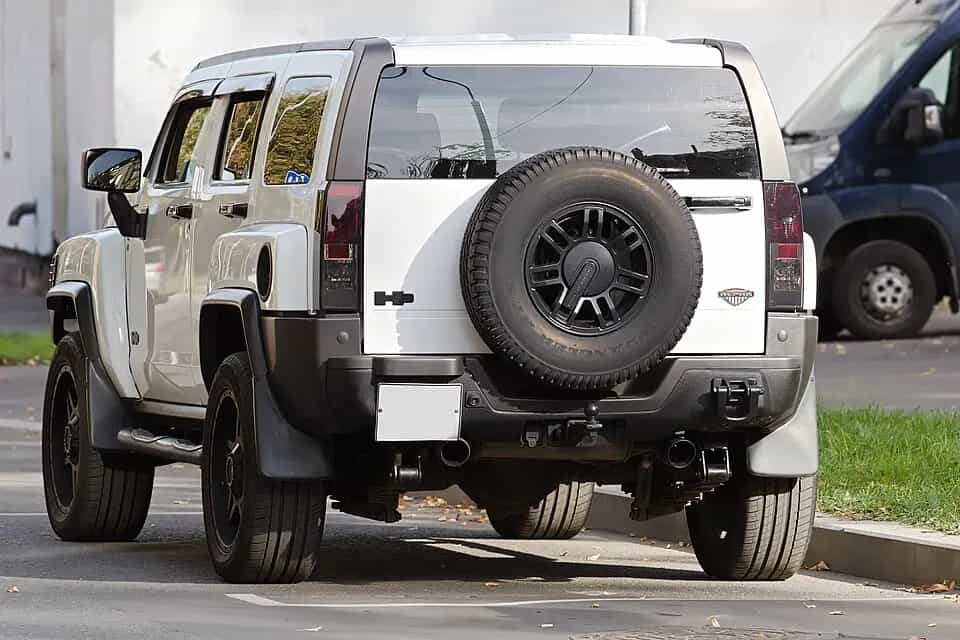
Hummer H3

Importing a used Hummer H3 from the USA

The H3 is the most usable Hummer for European roads: smaller than the H2, genuinely capable off-road, and now firmly a modern classic. If you want to import a used Hummer H3 from the USA, America is the natural source, since that is where almost all were sold and where the best-kept examples remain. USCar Trader acts as your independent broker — we source, inspect and ship the truck and take no vehicle margin. Here is what you should know before importing one.

Hummer h3 – used car imported from the USA
Photo: Retired electrician · CC0 · Wikimedia Commons

Model history: years and generations

The H3 was produced for the 2006 to 2010 model years, built mainly at GM's Shreveport, Louisiana plant (with some export production in Port Elizabeth, South Africa). It sat on the GMT355 platform shared with the Chevrolet Colorado and GMC Canyon, which gave it car-like manners on-road and serious hardware off it. A pickup version, the H3T, joined for 2009–2010. Production ended when GM wound down the Hummer brand in 2010, so every H3 is now a used vehicle with a well-understood history — which is exactly why importers can shop for condition rather than compromise.

Engines, transmissions and drive

Early H3s used a 3.5-litre inline-five (LK5, around 220 hp); from 2007 this grew to a 3.7-litre inline-five (LLR, around 242 hp). The desirable H3 Alpha (2008–2010) added a 5.3-litre V8 (LH8) with roughly 300 hp and 320 lb-ft, transforming the truck's pace and towing. Transmissions were a four-speed automatic or a five-speed manual (Aisin) on the five-cylinder cars. All H3s use full-time four-wheel drive with a two-speed transfer case; an electronically locking rear differential was optional, and the Adventure and Off-Road packages added shorter gearing and, on some, a front locker. Approach and departure angles are excellent and the H3 will ford water to a genuine depth — this is a proper off-roader, not a soft crossover.

Equipment lines and body styles

Body styles are the four-door SUV and the H3T four-door pickup. Trims spanned the base H3, the Adventure and Luxury packages, the Off-Road package, and the V8-powered Alpha. Options included the locking rear diff, sunroof, Chrome or Off-Road appearance packages, and various wheel sizes. For European use, buyers often seek the 3.7 five-cylinder for simplicity or the Alpha V8 for performance, ideally with the off-road hardware if the truck will actually be used off pavement.

The US used market

H3 supply in the States is steady, with a good spread of well-kept trucks from dry southern and western states. Typical examples are 2007–2010 with moderate to higher mileage, reflecting their age. Alpha V8 trucks and clean H3Ts carry a premium and deserve the closest inspection. Rust is the main enemy on salt-belt cars, so origin state matters; sun-belt trucks are usually the better bet for a straight body and clean underbody.

Is an import right for you?

The H3 suits a buyer who wants a distinctive, capable off-roader with real presence and does not mind running costs typical of a body-on-frame American SUV. It is ideal for someone chasing a specific configuration — an Alpha V8, an H3T pickup, or a well-optioned off-road truck — that is scarce in Europe. If you want economy or easy parking, this is not the car; if you want character and capability, the US import route opens up the widest choice.

Specs at a glance

SpecificationDetail (US-market Hummer H3)
Body styles4-door SUV / H3T 4-door pickup
Engine (2006)3.5 L inline-5, approx. 220 hp
Engine (2007–2010)3.7 L inline-5, approx. 242 hp
Alpha engine5.3 L V8, approx. 300 hp / 320 lb-ft
Transmissions4-speed automatic / 5-speed manual
DrivetrainFull-time 4WD, 2-speed transfer case
DifferentialOptional electronic rear locker
PlatformGMT355 (shared with Colorado/Canyon)
FuelPetrol
Lengthapprox. 4742 mm (SUV)
Seats5
Fuel economymodest, approx. 14–16 mpg typical
Production plantShreveport, Louisiana, USA (primary)
US model years2006–2010
Pickup variantH3T (2009–2010)

Common issues buyers should know

The H3 is mechanically simple but has known weak points. The inline-five engines can suffer cylinder-head cracking and head-gasket issues, sometimes linked to overheating, so check coolant condition and history closely. Timing chains and guides wear on higher-mileage fives. The V8 Alpha is generally stouter but thirstier. Across the range, watch for corrosion on frame and body seams on salt-belt trucks, worn front suspension and steering components, and electrical niggles in door modules and gauges. Parts are still available but some trim is getting scarce. Overall Hummer H3 reliability is acceptable for a rugged truck of its age, provided you buy a rust-free, well-maintained example rather than a neglected one.

Differences from the European version

US H3s run amber front markers, US headlamp patterns and miles-based instruments. The drivetrain is US-specification but shares much with the Colorado/Canyon, which helps with mechanical parts. Emissions equipment is US-market. These points are standard for the TÜV individual-approval process and are readily addressed.

Import step by step

The route is: select and inspect the truck in the US; run the VIN and confirm the build plant and origin; pay via escrow so funds release only on agreed milestones; ship by ocean freight; clear German customs on arrival; complete TÜV inspection and individual approval; then register locally. We manage every stage and keep the documentation transparent.

Customs and taxes: what applies

Remember: no origin proof, no 0% duty – and 19% German import VAT is due on every import.

Keep the two charges separate. Import duty depends on the vehicle's actual origin. Most H3s were built in Shreveport, Louisiana, and a Shreveport-built truck with provable US origin (verified via VIN and plant) may qualify for the 0% EU preference under Regulations (EU) 2026/1455 and 2026/1461 — but this is never automatic or guaranteed, requires documented US origin and direct transport, and does not apply to any South-African-built example. Separately, German import VAT (Einfuhrumsatzsteuer) of 19% always applies on top, regardless of origin. We never describe an import as duty-free, and both figures are shown individually with no hidden margin.

Modifications and single-vehicle approval

Typical work includes adding or converting a rear fog lamp, adapting headlamps to European beam patterns, and confirming the odometer. Lifted suspension, oversized tyres or auxiliary lighting — common on off-road H3s — may need documentation or reversal to pass TÜV. We flag any modifications before purchase. Once approved, registration issues German plates.

What to verify before buying

Before you buy: 1) decode the VIN and confirm the build plant (Shreveport vs. Port Elizabeth) and origin; 2) obtain a Carfax or AutoCheck history; 3) inspect frame and body seams for rust, especially on salt-belt trucks; 4) on inline-five cars, check for head-gasket and overheating history; 5) confirm clean title, not salvage or rebuilt; 6) test the four-wheel-drive system and any rear locker; 7) verify service records and check for undocumented off-road modifications.

Common questions

Can a Hummer H3 be imported with 0% duty?

Possibly, but never guaranteed. A Shreveport-built H3 with provable US origin may qualify for the 0% EU preference; a South-African-built one does not. The 19% import VAT always applies regardless.

Which H3 engine should I choose?

The 3.7-litre inline-five is simpler and cheaper to run; the 5.3-litre V8 Alpha is much quicker and better for towing but thirstier. Both need a rust-free, well-kept body.

Is the H3 good off-road?

Yes. It has full-time 4WD, a two-speed transfer case, strong approach and departure angles and an optional rear locker — genuinely capable hardware.

What are the main reliability concerns?

Inline-five head-gasket and overheating issues, timing-chain wear on high-mileage cars, and body/frame corrosion on salt-belt trucks. Buy a documented, rust-free example.

How thirsty is it?

Fuel economy is modest, typically around 14–16 mpg in real use; the V8 uses more. This is normal for a body-on-frame American SUV.

Can I import an H3T pickup?

Yes. The H3T (2009–2010) is a four-door pickup version and is a sought-after import; expect a premium for clean examples.

How long does the import take?

Usually several weeks from purchase to registration, driven by ocean freight and the customs and TÜV steps.

What documents do I need to register it?

The US title, bill of sale, customs clearance papers and the TÜV individual approval certificate.

Discover more with Hummer in the Carhub, compare the larger Hummer H2 and rugged rivals such as the Toyota FJ Cruiser and the Nissan Xterra, or view current Hummer H3 listings ready to import.