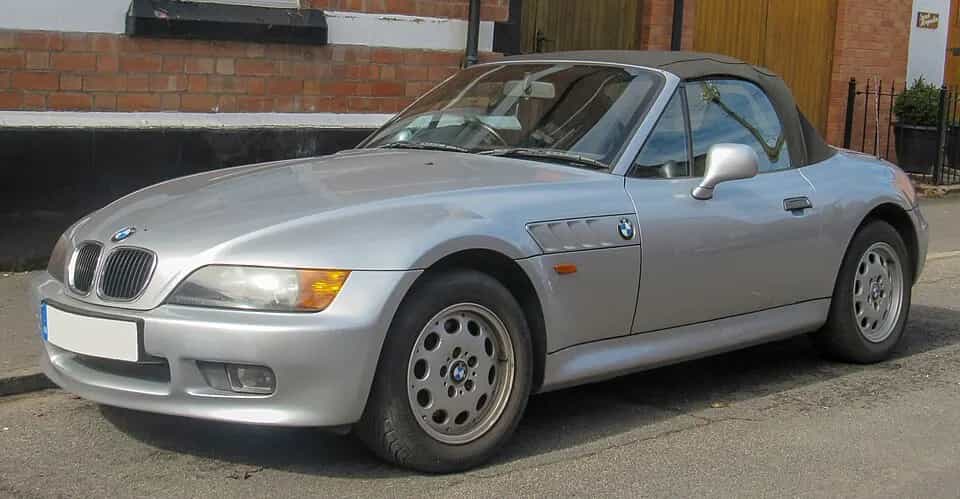
BMW Z3

Importing a used BMW Z3 from the USA

The BMW Z3 holds a special place in the marque's history, and there is a neat twist that makes importing one from the United States particularly logical: the Z3 was the first BMW built entirely outside Germany, at BMW's plant in Spartanburg, South Carolina. That means many US-market cars are, in origin terms, American-built. For a European enthusiast, a well-kept US Z3 can be an appealing route to a rust-free, sun-belt roadster. USCar Trader is an independent broker handling used cars only, with no margin on the vehicle and fully transparent customs and taxes. Here is what to know about the Z3 and its import.

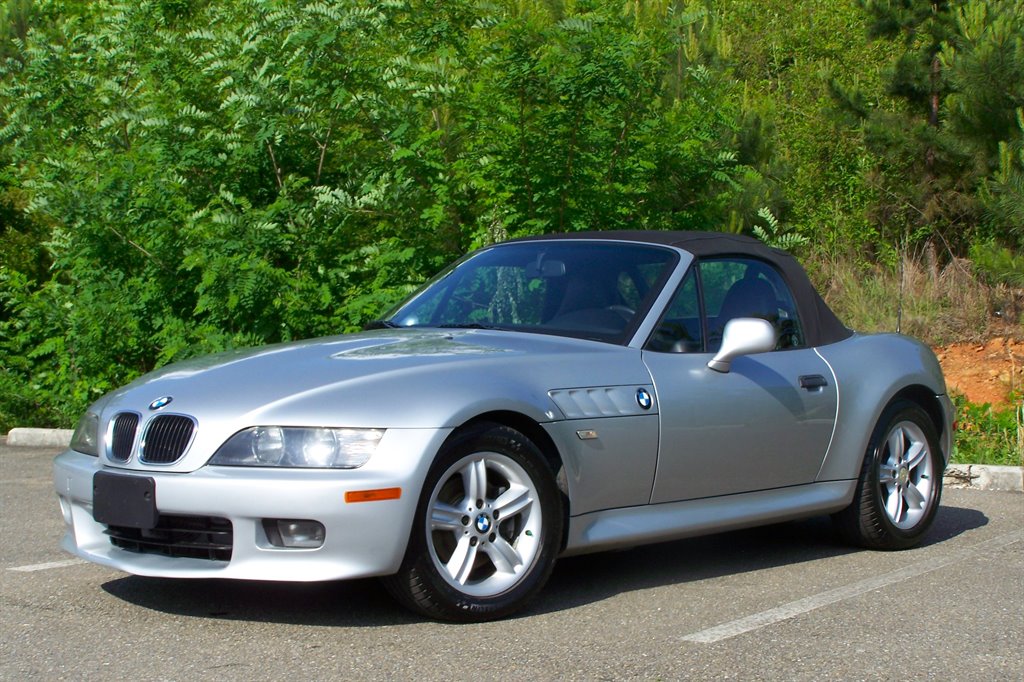
BMW z3 – used car imported from the USA
Photo: Vauxford · CC BY-SA 4.0 · Wikimedia Commons

Generations at a glance

The Z3 launched in 1996 and ran to 2002, famously appearing in the James Bond film GoldenEye before it even reached showrooms. It was built on a platform derived from the E36 3 Series and offered first as a roadster (E36/7) and later, from 1998, as a distinctive shooting-brake-style coupe (E36/8). A visual facelift in 1999–2000 brought wider rear haunches and revised lights. Throughout, the US market received the full breadth of engines, from modest fours to the potent M variants.

Powertrain lineup

Early US cars used the 1.9-litre four (M44) with around 138 hp, but the Z3 came alive with BMW's silky straight-sixes. The 2.8-litre M52 (later 2.5 and 3.0-litre M54 units) offered smooth, torquey performance, the 3.0i producing roughly 225 hp. At the top sat the M Roadster and M Coupe, powered by the S52 and later the high-revving S54 straight-six shared with the M3, delivering well over 300 hp in S54 form. Transmissions were five-speed manuals, six-speeds on the M cars, or a five-speed automatic; drive is always to the rear wheels through a limited-slip differential on the sportier models.

Trims in the US market

Body styles are the open two-seat roadster and the fixed-roof coupe, the latter now especially sought after for its rigid "clownshoe" styling. US trims are defined mainly by engine — 1.9, 2.3, 2.5, 2.8, 3.0 and the M models — with options such as heated seats, a wind deflector, upgraded audio and the sport package. Interiors can be found with body-coloured trim and a variety of leather colours.

The used market stateside

The United States was the Z3's biggest market, so supply of used cars is healthy, and the dry southern and western states hold many rust-free examples that put northern-European survivors to shame. Typical cars are 1997–2002 roadsters with a wide mileage spread; the best have documented histories and a folder of receipts. M variants command a premium and demand extra scrutiny. As with any car now two decades old, condition and history matter far more than the odometer alone.

Who should import one

The Z3 suits the enthusiast who wants a compact, rear-drive, classically analogue roadster with an inline-six soundtrack and genuine collector appeal. It is ideal for someone chasing a rust-free US car, a fan of the M Roadster/Coupe, or a buyer who values the Spartanburg origin story. It is not a car for those wanting modern comfort or safety tech; it is a driver's classic to be enjoyed and preserved.

Key specifications

SpecificationDetail (typical US Z3)
Body styles2-seat roadster (E36/7), coupe (E36/8)
Production years1996–2002
Assembly plantSpartanburg, South Carolina, USA
Engines1.9 M44; 2.5/2.8/3.0 M52/M54 six; S52/S54 (M)
Output rangeapprox. 138–325 hp
Transmission5-speed manual, 6-speed (M), 5-speed automatic
DrivetrainRear-wheel drive
0–100 km/h (3.0i)approx. 6.0 s
Lengthapprox. 4,025 mm
Wheelbaseapprox. 2,446 mm
Kerb weightapprox. 1,175–1,400 kg
FuelPetrol
Suspension (rear)Semi-trailing arm (E36-derived)
Age/classic statusOften 25+ years — H-plate eligibility possible
EmissionsAssessed at individual approval

How reliable is it?

The Z3's mechanicals are robust, but age-related issues are the real story. The best-known weakness is the rear differential mounting and floor reinforcement: on hard-driven cars the subframe area can crack, so inspect the boot floor around the diff carefully. Cooling-system parts (plastic expansion tank, water pump, radiator) are wear items on the sixes, as are the VANOS units, which can rattle. Watch for soft-top wear and a fogging rear plastic window on roadsters, sticky interior trim coatings, and rust in the rocker panels and around the boot even on "southern" cars. On M variants, verify service history and rod-bearing attention on the S54. Sorted examples are dependable; neglected ones are money pits — the usual Z3 common problems reward a thorough inspection.

What US models do differently

US cars run mph clocks, US-spec lighting including side markers, and often catalyst and emissions hardware set for the US. Bumpers and headlights meet US standards and may need attention for German approval. Because the Z3 is closely related to the European E36, parts and specialist knowledge are abundant across Europe.

Seven steps to your import

Select the car, run a VIN and origin check to confirm Spartanburg build, pay via escrow, move the car to a US port, ship by ocean freight to a North European port, clear customs, complete technical inspection and individual approval (TÜV / §21 Einzelabnahme), and register. For a 25-plus-year-old car, historic (H) registration may be an option once approved.

Customs, taxes and costs explained

Remember: no origin proof, no 0% duty – and 19% German import VAT is due on every import.

Two separate charges apply and we never conceal a margin. First, the import duty, whose rate depends on provable origin. Because most Z3s are built in Spartanburg, a US-built car with VIN/plant evidence and direct transport may qualify for the 0% preferential rate under Regulations (EU) 2026/1455 and 2026/1461 within the scheme's window — but this is never guaranteed and must be documented; otherwise the standard duty applies. Second, and always, the 19% German import VAT (Einfuhrumsatzsteuer) is levied on the customs value plus any duty and freight. Both lines are shown openly before you commit.

German TÜV and registration

Typical approval work includes adding a rear fog lamp, headlight and side-marker conformity, converting the speedometer to km/h, and documenting the odometer. On an older car, the inspector will also expect sound structure, brakes and emissions.

The buyer checklist

  • Verify the VIN and confirm Spartanburg build and year.
  • Get a full Carfax or AutoCheck history for accidents, title and mileage.
  • Inspect the rear diff mount and boot floor for cracks.
  • Check for rust in rockers, boot and around the windscreen.
  • Assess cooling system and VANOS condition on the sixes.
  • Confirm soft-top and rear-window condition on roadsters.
  • Ensure a clean title and documented service history, especially on M cars.

Questions and answers

Was the BMW Z3 built in America?

Yes. The Z3 was the first BMW produced entirely outside Germany, at the Spartanburg plant in South Carolina, so most US cars are American-built.

Can a US Z3 qualify for 0% EU import duty?

Potentially, because it is US-built. The 0% preferential rate requires provable US origin via VIN/plant, direct transport and the scheme's conditions; it is never guaranteed. The 19% import VAT always applies.

Which Z3 engine should I import?

The straight-sixes (2.8 and 3.0) offer the classic BMW soundtrack and strong values; the M Roadster/Coupe are the enthusiast's choice but demand careful history checks.

What is the Z3's biggest weak point?

The rear differential mounting and boot floor can crack on hard-used cars, so this area must be inspected closely.

Is a Z3 eligible for German historic (H) plates?

Cars over 25 years old in appropriate condition may qualify for H registration after passing approval.

Are parts easy to find in Europe?

Yes. The Z3 shares much with the E36 3 Series, so parts and specialists are widely available.

How long does the import take?

Usually several weeks, mainly determined by ocean freight and the inspection appointment.

To begin, browse BMW in the Carhub, compare related roadsters such as the BMW Z4, the Porsche Boxster and the Mercedes-Benz SLK-Class, or view current Z3 listings.