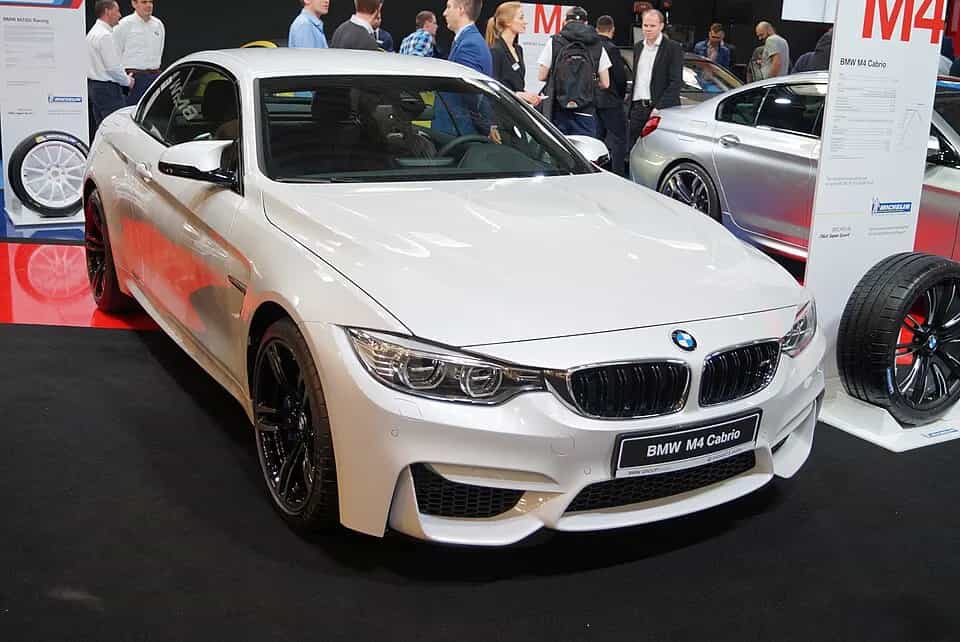
BMW M4 Convertible
Importing a used BMW M4 Convertible from the USA
The M4 Convertible pairs the M division's twin-turbo straight-six with an open roof, and the United States has always been one of its strongest markets. That means a deep pool of well-kept cars in desirable colours and specs. As an independent broker for used US vehicles, USCar Trader helps you find the right M4 Cabrio stateside, verify its history, and manage the move to Germany end to end. Below are the generations, the engines, the US market picture and every import step. If you want to import a used BMW M4 Convertible from the USA, this is the groundwork.
Generations at a glance
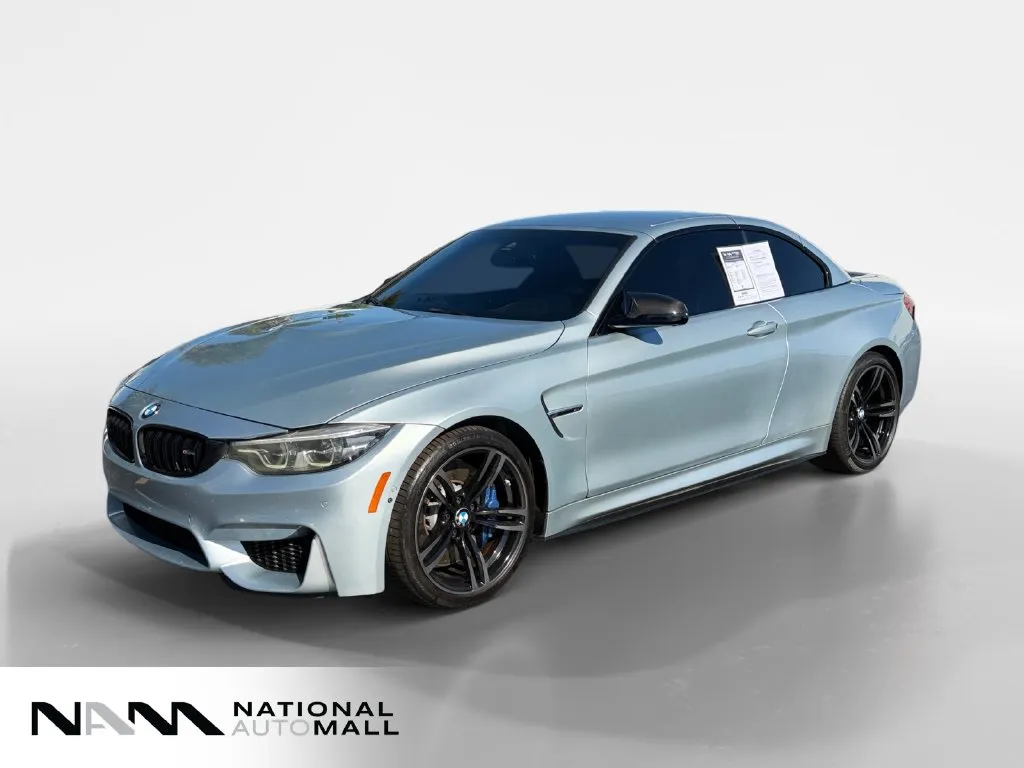
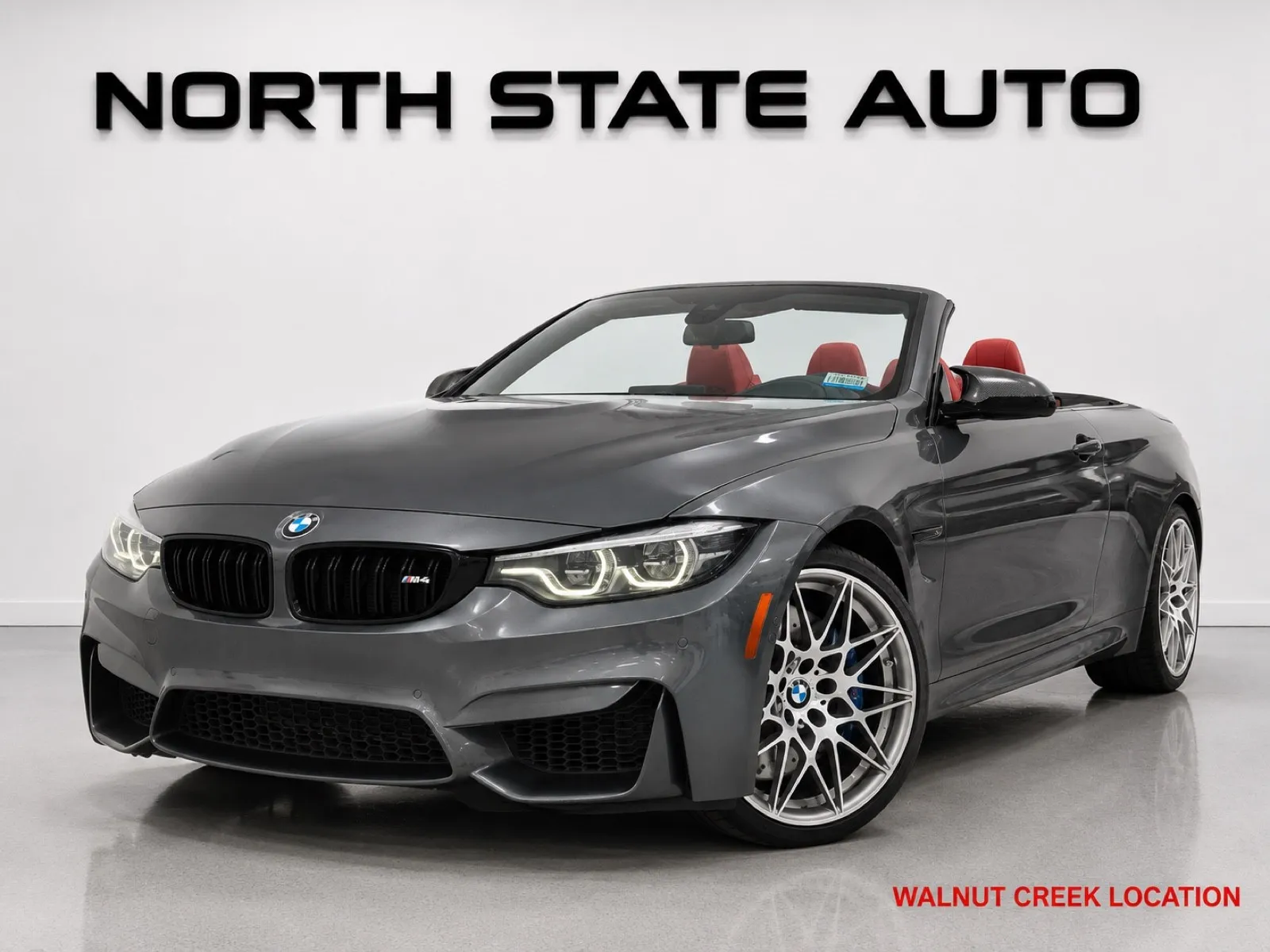
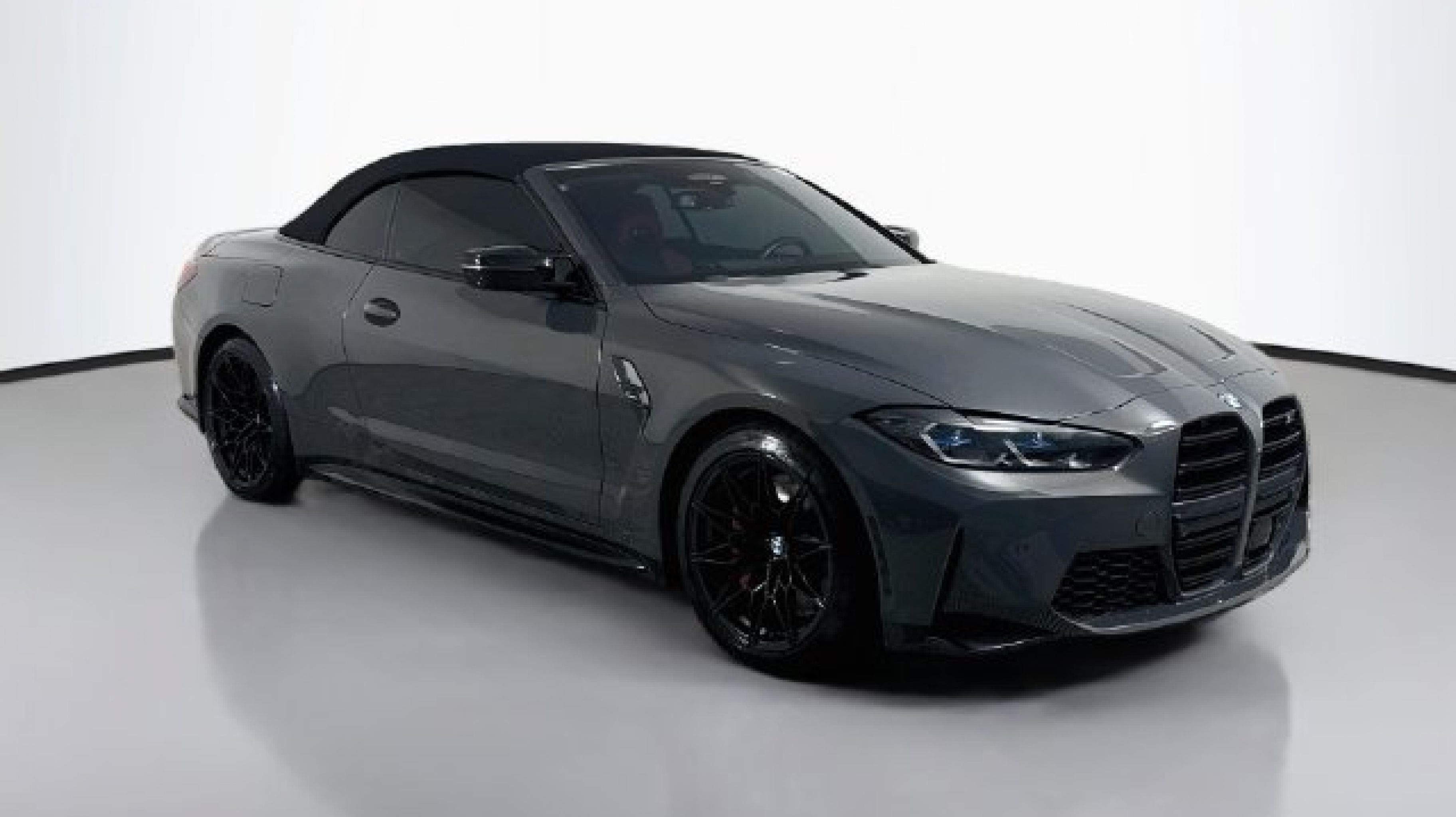
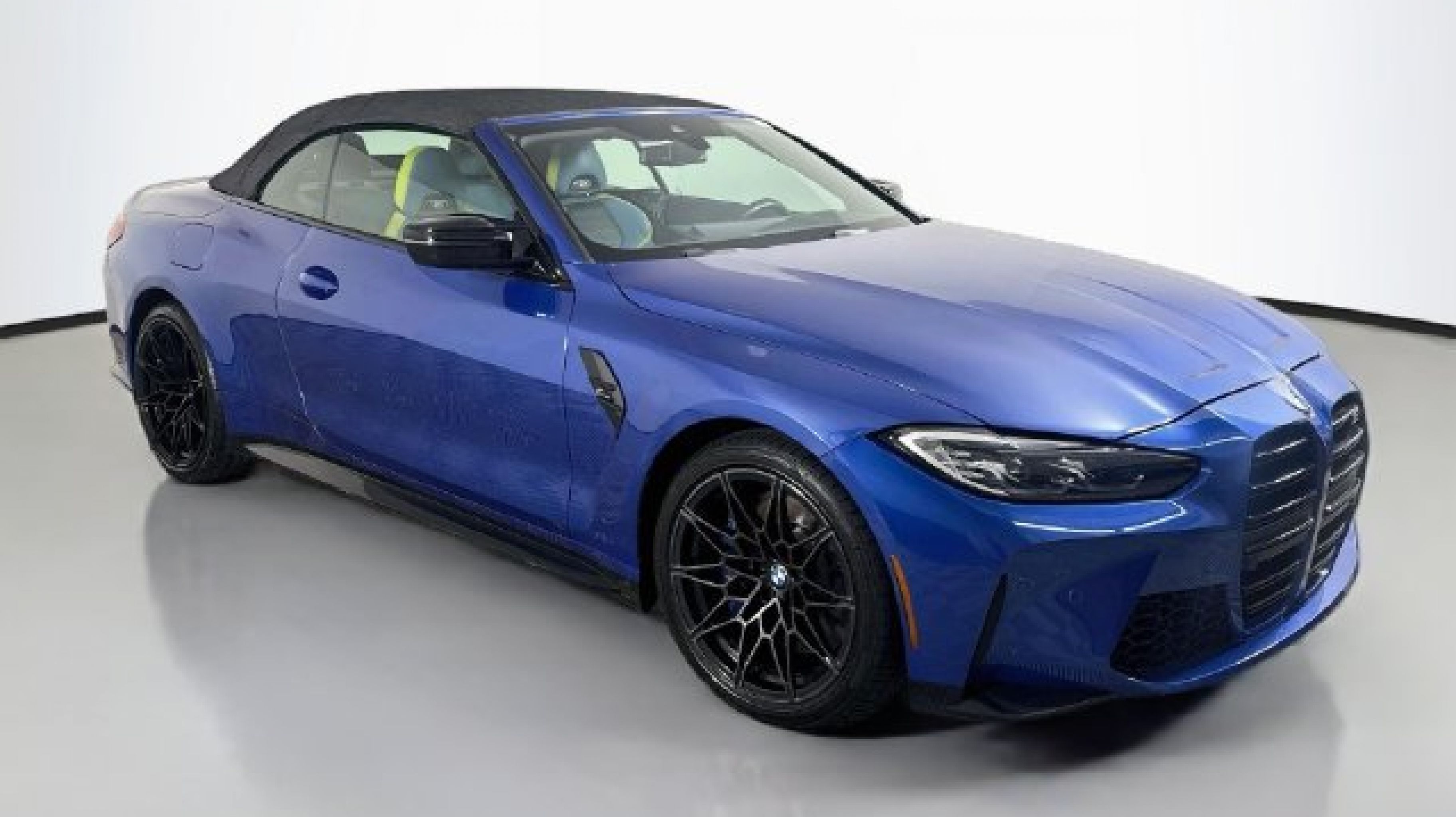
The M4 badge split from the M3 for the 2015 model year. The first M4 Convertible (chassis F83) ran from 2015 to 2020 and used a retractable hardtop. A Competition Package arrived in 2016 and a mild refresh in 2018 brought updated lighting and the M4 CS. The current generation (G83), on sale from 2021, switched to a folding soft-top to save weight and gained the polarising tall kidney grille. In the US the G83 was sold as the M4 Competition Convertible with M xDrive all-wheel drive as standard on the drop-top.
Powertrain lineup
The F83 uses the S55 3.0-litre twin-turbo inline-six, making roughly 425 hp, or about 444 hp in Competition form. Buyers chose between a 6-speed manual and the 7-speed M DCT dual-clutch, driving the rear wheels. The G83 moves to the S58 3.0-litre twin-turbo six with around 503 hp in Competition trim, an 8-speed M Steptronic automatic, and standard M xDrive all-wheel drive that can be set to a pure rear-drive mode. Both generations feature an active M differential and adaptive M suspension.
Trims in the US market
US cars are the Convertible body in base and Competition specs (F83), and Competition xDrive only (G83). Sought-after options include carbon-ceramic brakes, the carbon exterior package, the head-up display, the Harman Kardon or optional B&O audio, and the M Driver's Package. Colour matters for resale — Yas Marina Blue, Sao Paulo Yellow and the individual paints draw the most interest.
The used market stateside
Supply is strong across both generations. F83 cars from 2015-2020 are plentiful and span a wide mileage range; look for service history and evidence of any track use. G83 Competition Convertibles are newer, lower-mileage and often still within their original service plans. Sun Belt cars from California, Arizona, Texas and Florida tend to be rust-free and were frequently garaged, which is exactly what you want in a convertible. Verify the folding roof (soft-top on G83, hardtop on F83) operates through a full cycle.
Who should import one
This is for a driver who wants an open M car in a specific colour-and-option combination that is hard to find locally, or who values the newer G83's all-wheel-drive traction. It rewards buyers comfortable with performance-car running costs — tyres, brakes and premium fuel. If you rarely lower the roof, the stiffer M4 Coupe is worth a look instead.
Key specifications
| Item | Detail (G83 Competition xDrive) |
|---|---|
| Engine | 3.0 L twin-turbo inline-six (S58) |
| Output | approx. 503 hp (G83); approx. 425–444 hp (F83, S55) |
| Torque | approx. 650 Nm (G83) |
| Transmission | 8-speed M Steptronic (G83); 6-sp manual / 7-sp DCT (F83) |
| Drive | M xDrive AWD (G83); RWD (F83) |
| 0–100 km/h | approx. 3.7 s (G83) |
| Top speed | approx. 250 km/h (285 with M Driver's Package) |
| Roof | Soft-top (G83); retractable hardtop (F83) |
| Length | approx. 4794 mm (G83) |
| Width | approx. 1887 mm |
| Kerb weight | approx. 1900 kg (G83) |
| Fuel tank | approx. 59 L |
| Seats | 4 |
| Body style | Convertible |
| Fuel | Petrol (premium) |
How reliable is it?
The S55 in the F83 is strong but has known items: charge-pipe failures (a popular upgrade point), crank-hub concerns on heavily modified or tracked cars, and occasional water-pump and thermostat wear. Check for boost leaks and confirm the DCT shifts cleanly. The newer S58 is more robust; watch for early cars needing software updates and verify the folding soft-top mechanism and its hydraulics work correctly, since roof faults are the most common convertible-specific complaint. On any M4, inspect for track abuse — worn brakes, tyres and bushings. Well-kept examples make M4 reliability a non-issue.
What US models do differently
US cars use a mph-led cluster, amber side markers and US lighting without a rear fog lamp. Headlight aiming follows US standards. The G83's iDrive/connected services and map data are region-specific. Mechanically the cars are the same as the European M4, which makes parts and service straightforward once registered.
Seven steps to your import
Selection of the right car and spec; VIN and plant/origin check plus a history review; escrow payment releasing funds against documents; ocean freight (container recommended for a convertible) to Bremerhaven or Rotterdam; customs clearance; TÜV and individual approval where required; then German registration.
Customs, taxes and costs explained
Bottom line: what matters is the factory shown by the VIN – proven US origin unlocks 0% duty. The 19% import VAT always applies.
The M4 is built in Germany (Dingolfing/Regensburg assembly), so its origin is European, not American. The 0% EU import-duty preference for US-origin vehicles under Regulations (EU) 2026/1455 and 2026/1461 therefore generally does not apply here; the standard third-country passenger-car customs rate (currently 10%) applies instead, always confirmed against the VIN and plant. On top of that, the 19% German import VAT (Einfuhrumsatzsteuer) always applies and is calculated separately. Duty and VAT are shown as their own line items, with no margin added.
German TÜV and registration
Typical work is fitting or activating a rear fog lamp, adapting headlights to European aiming, and switching the speedometer to km/h. The odometer must display kilometres. A COC or individual approval documents compliance before TÜV sign-off and registration.
The buyer checklist
Verify the VIN against title and body; pull a Carfax or AutoCheck history for accidents, title brands and odometer consistency; inspect for track use (brakes, tyres, bushings); confirm full BMW service records; check the title is clean, not salvage or rebuilt; cycle the folding roof fully; and on F83 cars have the charge pipe and crank hub assessed if the car was modified.
Questions and answers
Can I import a used BMW M4 Convertible from the USA?
Yes. We source and verify the car, then handle freight, customs and the paperwork so it can pass TÜV and be registered in Germany.
Is the M4 duty-free because BMW is German?
No. It is built in Germany, so the US-origin 0% preference normally does not apply; the standard car customs rate plus 19% import VAT applies, confirmed from the VIN.
What are common M4 Convertible problems?
On F83 cars, charge-pipe and (when modified) crank-hub issues; on all cars, roof-mechanism faults and track-related wear. A pre-purchase inspection covers these.
Manual or DCT on the F83?
Both import the same. The 6-speed manual is rarer and prized by enthusiasts; the 7-speed DCT is quicker and more common.
Does the G83 Convertible have all-wheel drive?
Yes. US G83 Competition Convertibles come with M xDrive, which can be switched to a rear-drive mode.
Does the 19% import VAT always apply?
Yes. The German Einfuhrumsatzsteuer of 19% always applies on import and is shown separately from any customs duty.
Is a US M4 hard to register in Germany?
No. It needs a rear fog lamp, European headlight aiming and a km/h odometer, plus TÜV/individual approval.
Begin with BMW in the Carhub, compare it with the M4 Coupe, the Z4 and the M2 Coupe, or view current M4 Convertible listings.