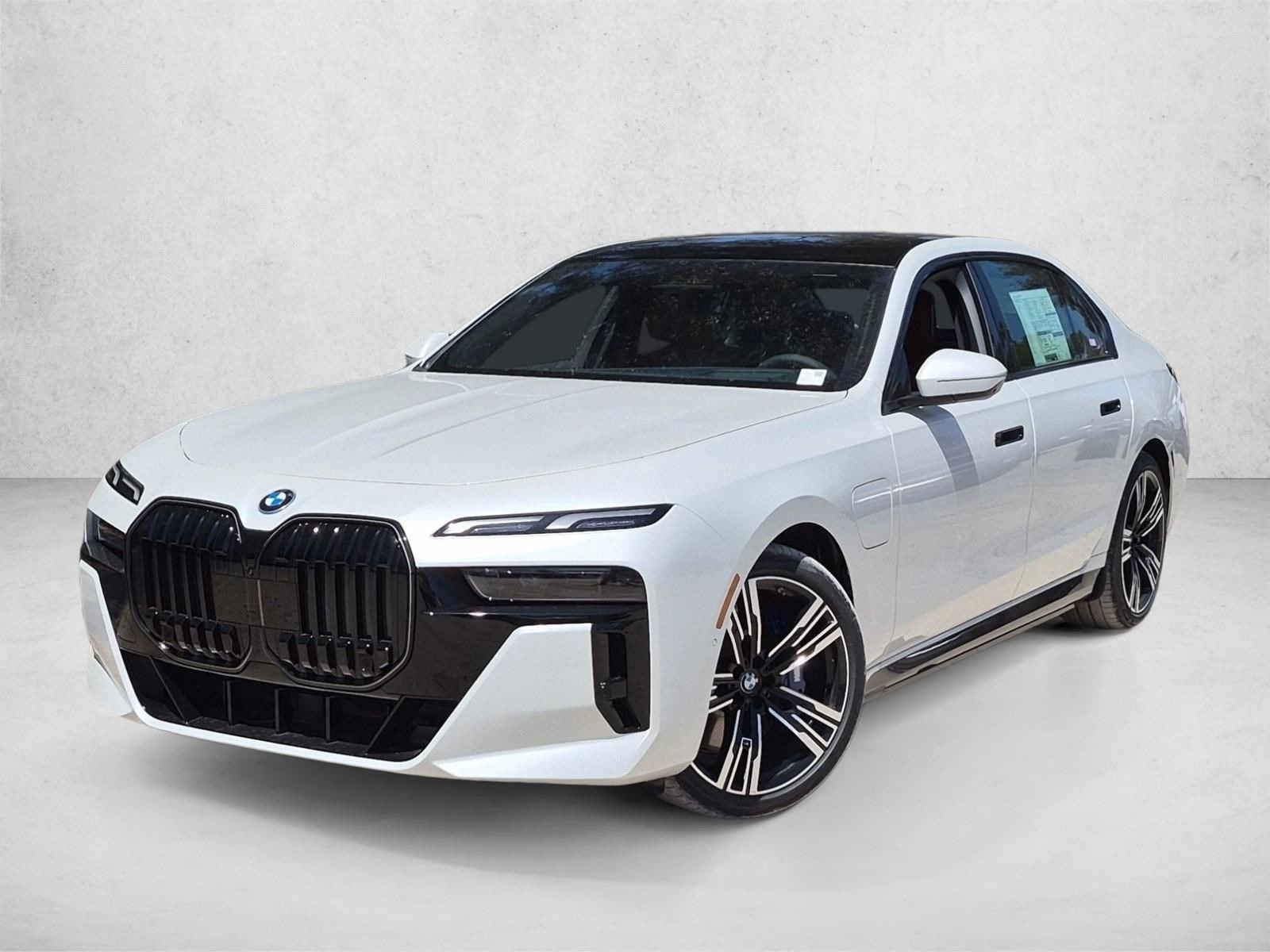
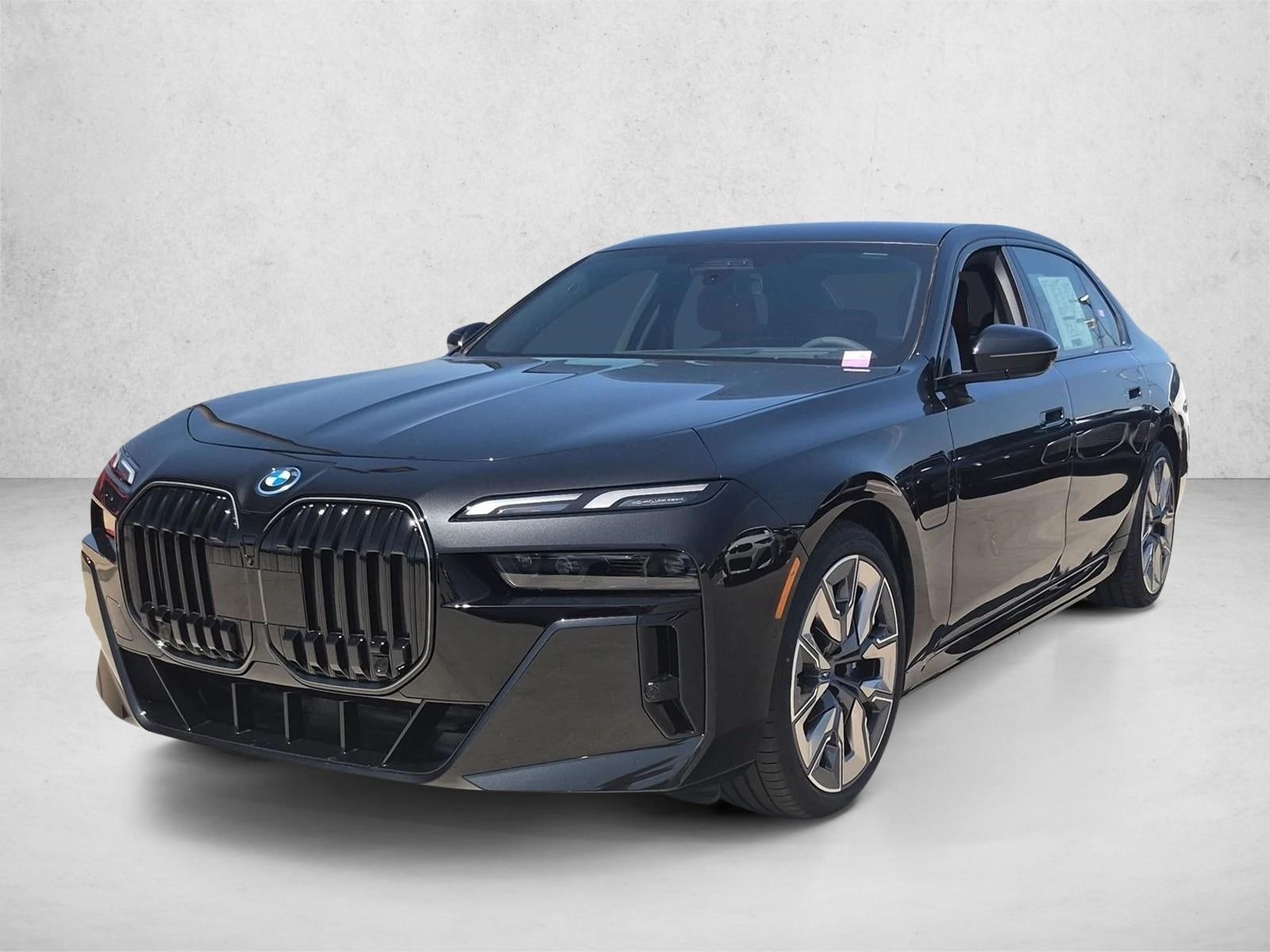
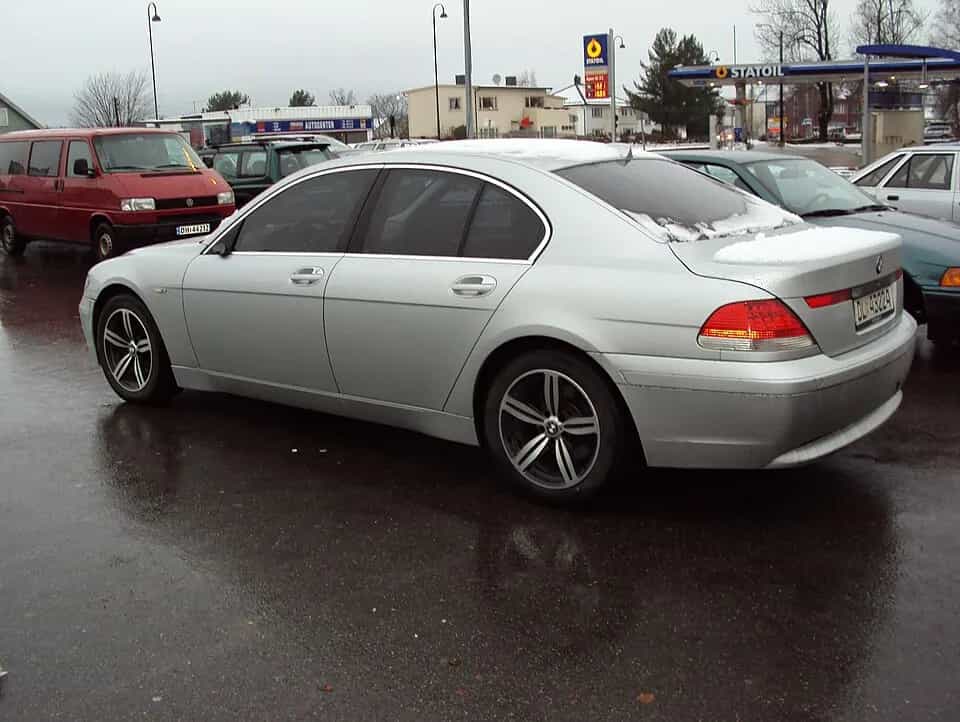
BMW 7 Series

Importing a used BMW 7 Series from the USA

The BMW 7 Series is the brand's full-size flagship, and the American market treats it accordingly: high-specification cars, generous options lists, and a steady flow of well-kept examples coming off lease. For a German buyer, importing a used 7 Series from the USA opens the door to configurations that never reached European showrooms in the same numbers — long-wheelbase 750i xDrive saloons with Executive Lounge seating, the plug-in 745e, and the twin-turbo V12 M760i. USCar Trader works purely as an independent broker: we source, verify and organise the import, we do not sell new cars and we take no hidden margin on the vehicle itself.

BMW 7 Series – used car imported from the USA
Photo: nakhon100 · CC BY 2.0 · Wikimedia Commons

Production years and key changes

The 7 Series line runs from the E23 of the late 1970s through the E32, E38, E65 (the Chris Bangle era with the first iDrive), the F01/F02, and today's G70. For US imports the relevant generations are the F01/F02 (2009–2015), the G11/G12 (2016–2022) and the current G70 (2023 onward). The G11/G12 introduced the Carbon Core body structure, gesture control and the Sky Lounge panoramic roof, and received a substantial facelift for 2020 with the much larger kidney grille and 48-volt mild-hybrid tech. The G70 moved to a shared platform with the fully electric i7 and adopted the split headlight face and the optional 31-inch rear Theatre Screen.

What is under the hood

US 7 Series cars are almost always automatic (ZF 8-speed) and frequently xDrive all-wheel drive. The 740i uses the B58 3.0-litre turbocharged straight-six (around 320–335 hp depending on year). The 750i and 750i xDrive run the N63/S63 4.4-litre twin-turbo V8, rated roughly 445 hp in earlier cars and up to 523 hp after the LCI update. The 745e plug-in hybrid pairs the B58 six with an electric motor for a combined output near 389 hp. At the top, the M760i xDrive carries BMW's N74 6.6-litre twin-turbo V12 producing about 600 hp — a genuinely rare drivetrain that is far more common on the US used market than in Germany.

Trims and body styles

Almost every US 7 Series is a four-door saloon, and long-wheelbase (Li) bodies dominate because American buyers favour rear space. Typical equipment includes soft-close doors, four-zone climate, ventilated and massaging front seats, Bowers & Wilkins Diamond audio, Executive Lounge rear seating on Li cars, laser headlights and the Driving Assistant Professional package. Because these were expensive cars when new, used examples are often loaded — a factor worth remembering when you compare a US car against a more sparsely equipped German one.

What the US market offers

Supply is strong. Three-year-old off-lease 740i and 750i xDrive cars appear in volume, typically with 30,000–80,000 km (US odometers read in miles, so verify the conversion), full dealer service and clean histories. Southern and West Coast cars tend to be rust-free, which matters on a heavy luxury saloon. The M760i and 745e are scarcer but do surface. Always read the Carfax or AutoCheck record for accident and title flags before committing.

Who this import is for

A used BMW 7 Series import from the USA suits a buyer who wants a heavily optioned flagship at used-car value and is comfortable with the running costs of a large twin-turbo BMW. If you specifically want a V12 M760i, a long-wheelbase Executive Lounge car, or a particular colour-and-trim combination that is thin on the ground in Germany, the American market is often where it exists.

Technical data and figures

AttributeTypical US-market figures (G11/G12)
Body style4-door saloon (standard & long-wheelbase)
Generations importedF01/F02 (2009–15), G11/G12 (2016–22), G70 (2023+)
740i engine3.0 L B58 turbo I6, ~320–335 hp
750i xDrive engine4.4 L N63 twin-turbo V8, ~445–523 hp
745e engine3.0 L I6 + e-motor, ~389 hp combined
M760i xDrive engine6.6 L N74 twin-turbo V12, ~600 hp
TransmissionZF 8-speed automatic
DriveRear-wheel or xDrive AWD
0–100 km/h~5.3 s (740i) to ~3.6 s (M760i)
Length~5,120 mm (std) / ~5,260 mm (Li)
Wheelbase~3,070 / ~3,210 mm
Kerb weight~1,900–2,180 kg
Fuel tank~78 L
Seating4–5
FuelPremium petrol (plug-in hybrid on 745e)

Reliability: trouble spots to check

The 740i's B58 six is the most robust choice and generally a strong, long-lived engine; watch for the usual BMW cooling-system wear (water pump, thermostat, expansion tank) and coil packs. The N63 V8 in the 750i is powerful but maintenance-hungry: valve stem seals can cause oil consumption and blue smoke, and BMW ran a Customer Care Package for exactly this on earlier units. Budget for the twin-turbo V8's appetite for oil and for coolant hoses. Across the range the two-axle air suspension can leak from bags or compressor with age, and the electronics — gesture control, rear entertainment, Sky Lounge roof — add complexity. On the M760i, the V12 is durable but any repair is specialist work. For a used BMW 7 Series, a documented service history is worth more than a low odometer reading.

US vs. Europe differences

US cars run amber front side markers and a different rear lighting configuration, headlights are aimed for right-hand traffic, and most US 7 Series lack a rear fog lamp — all points the TÜV will check. American infotainment is set to MPH and US navigation maps; these are usually reconfigurable to km/h and European maps. Radio frequency bands and, on the 745e, the charging connector may differ. Otherwise the mechanical package is the same globally.

How the import works

The process is straightforward when it is organised in the right order: select the specific car and confirm the spec, run a VIN and origin check to establish where the car was actually built, agree terms via secure escrow, arrange ocean freight (usually container or RoRo from a US port to Bremerhaven or Rotterdam), clear German customs, present the car for the TÜV inspection and individual approval (Einzelabnahme), then register it at your local Zulassungsstelle. USCar Trader coordinates each stage as your broker.

Import duty, VAT and fees

Key point: duty depends on the plant of build; only a VIN check secures the 0% rate. Import VAT of 19% applies regardless.

Two separate charges apply. First, the import duty: the 0% preferential EU rate under Regulations (EU) 2026/1455 and 2026/1461 (in force since 1 July 2026 for directly transported goods, through 31 December 2029) applies only where genuine US origin is proven by the VIN and plant records. The 7 Series is built in Dingolfing, Germany, so a US-origin claim generally does not hold — the applicable rate must be checked case by case against the VIN. Second, and always, the 19% German import VAT (Einfuhrumsatzsteuer) is due on the customs value. We never describe an import as duty-free or guarantee a rate.

From modifications to registration

Typical work for German approval includes fitting a rear fog lamp, adjusting or replacing headlights for right-hand traffic, converting the instrument display to km/h, and confirming the odometer reading and its conversion from miles. A COC (Certificate of Conformity) speeds registration if available; otherwise the Einzelabnahme documents the car for the papers. Tyre and rim approvals are checked against the vehicle documents.

Pre-buy inspection points

Verify the VIN against the build data and plant. Pull the full Carfax or AutoCheck history for accidents and title brands (clean vs. salvage/rebuilt). Inspect underbody and suspension for corrosion, especially on cars from northern states. Confirm a complete service record, particularly oil-service intervals on V8 cars. Check the air suspension for leaks and uneven ride height. Confirm the title is clean and transferable. Have a pre-purchase inspection done before funds are released from escrow.

What buyers ask most

Can I import a used BMW 7 Series from the USA to Germany?

Yes. As a used vehicle it is fully importable; the duty rate depends on the VIN/origin and the 19% import VAT always applies.

Does the 0% EU duty apply to a US-market 7 Series?

Only with provable US origin. The 7 Series is built in Germany, so US origin usually cannot be shown — we check each VIN individually and never promise a rate.

Which 7 Series engine is most reliable?

The 740i's B58 straight-six is generally the most durable and cheapest to maintain of the range.

What are common BMW 7 Series problems?

Air-suspension leaks, N63 V8 oil consumption and valve stem seals, cooling-system wear, and electronics faults on complex options.

Is the M760i V12 available on the US market?

Yes, the M760i xDrive with the N74 V12 is more common on the US used market than in Germany.

How is the odometer handled?

US cars read in miles; the reading is converted to kilometres and documented during the TÜV process.

How long does the import take?

Typically several weeks, driven mainly by ocean-freight scheduling and customs clearance.

Do I need a Certificate of Conformity?

A COC helps but is not mandatory; without one the individual approval (Einzelabnahme) provides the required documentation.

Explore more options via BMW in the Carhub, compare it with the BMW 5 Series, the electric BMW i7 and the BMW 8 Series, or browse current 7 Series listings.